
Systems
Thin-Section Bonded Liquid Screed Systems
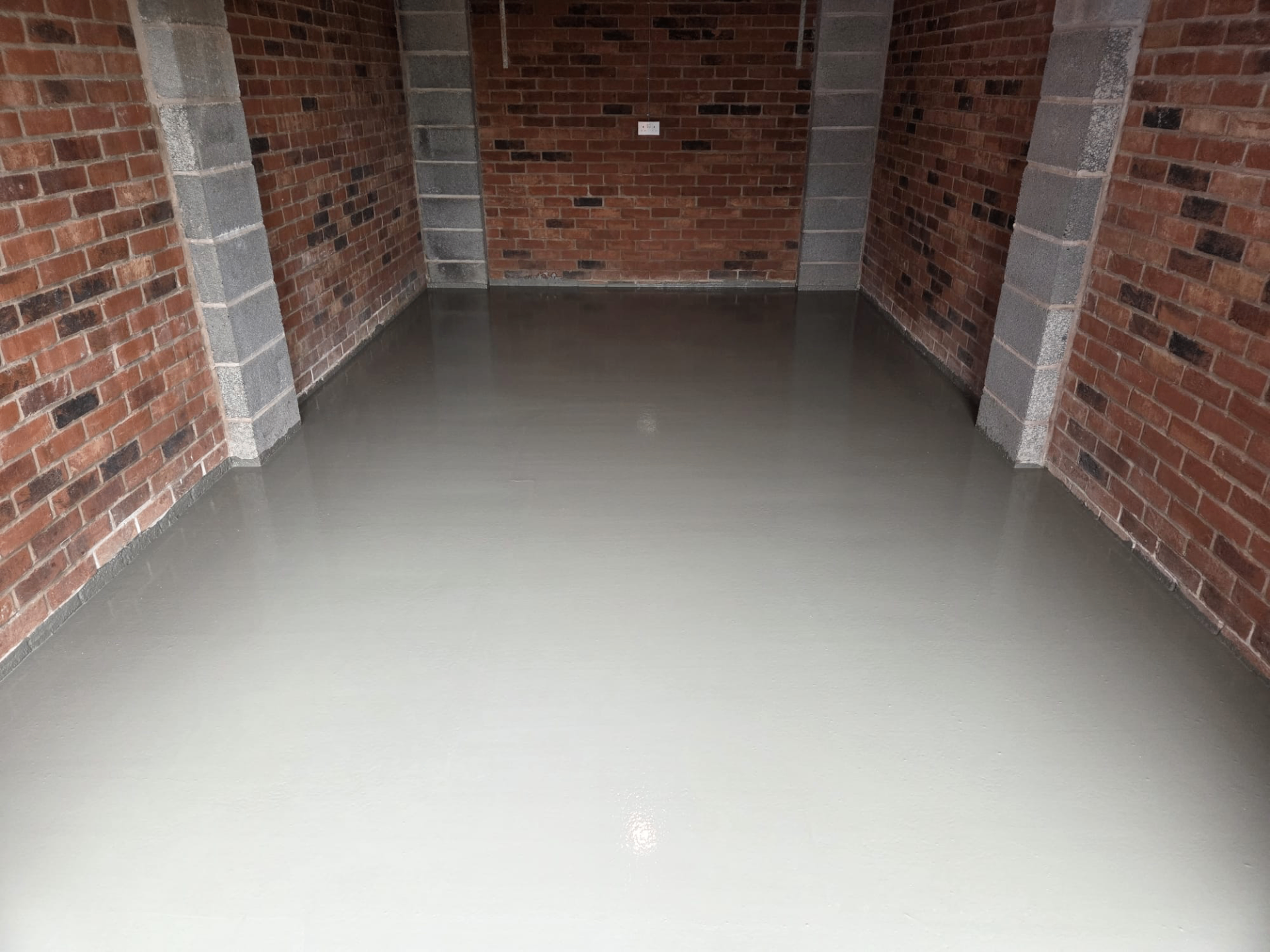
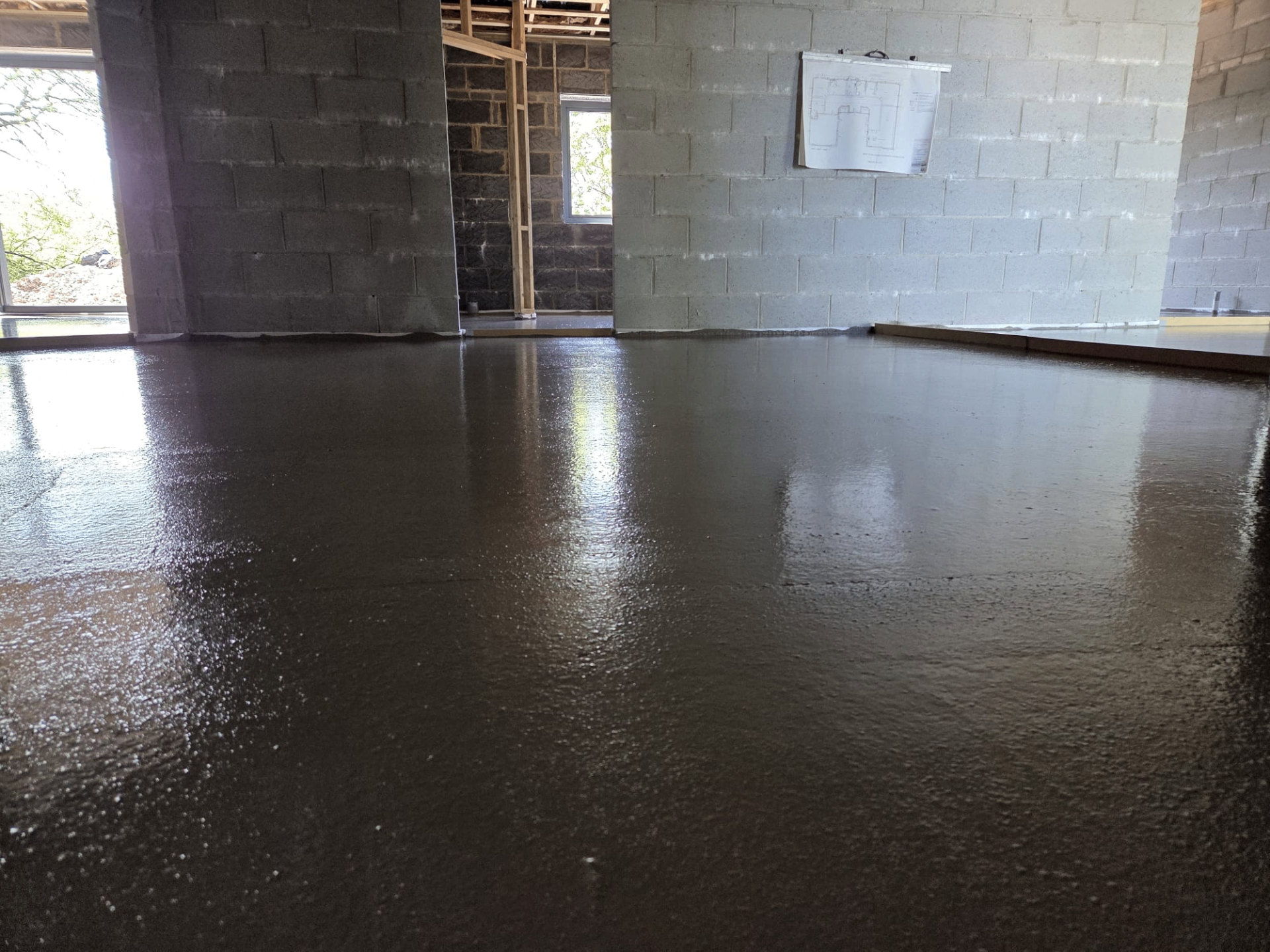
Bonded thin-section screed relies on full adhesion to a sound, mechanically prepared base to achieve reduced depths without a floating build-up.
Considering a bonded screed for a refurbishment?
Talk to us about your substrate and floor build-up constraints before finalising a spec — call 07791 510849.
Or call our landline on 01392 237700
Where floor build-up is tight and a floating or unbonded layer isn't feasible, a bonded thin-section liquid screed can be laid directly onto a mechanically prepared concrete substrate. Because there's no isolating layer, the screed relies entirely on adhesion to perform structurally, so the base has to be sound, laitance-free and correctly primed.
This approach is common in refurbishment where existing slab levels dictate the finished floor height, or in commercial units where a full floating build-up would eat into ceiling clearance. It's not a shortcut for a weak or contaminated substrate — bonded systems are less forgiving of prep shortfalls than floating or floated designs.
Design decisions around bonded thin-section work usually come down to substrate testing, primer selection and minimum depth for the chosen binder, all of which should be confirmed against the manufacturer's datasheet rather than assumed from a previous job.
Considering a bonded screed for a refurbishment?
Talk to us about your substrate and floor build-up constraints before finalising a spec — call 07791 510849.
Or call our landline on 01392 237700
Why choose a bonded approach
Bonded thin-section screed is chosen when depth is the constraint, not thermal or acoustic performance. Typical scenarios include commercial refits where door thresholds and skirting lines are fixed, or domestic refurbishments where raising the floor by the depth of a floating system would compromise stair rises or door clearances.
Because the bonded layer works compositely with the substrate, it can achieve a durable, flat wearing or finish-ready surface at a depth that would be structurally inadequate as an unbonded or floating pour.
Substrate preparation is the deciding factor
Mechanical preparation — typically diamond grinding, shot-blasting or scabbling — is used to open the surface and remove weak laitance, giving the primer and screed something to key into. Dust extraction during this process matters, as residual dust interferes with primer adhesion.
Any existing damp-proof membrane, oil contamination or friable concrete needs addressing before priming. Skipping this step is the most common reason bonded screeds delaminate, so it's worth treating prep as the majority of the job rather than a preliminary to it.
Recognising failure in a bonded screed
A debonded area typically gives itself away with a hollow sound when tapped, sometimes accompanied by fine cracking or a slightly raised patch where the screed has lifted from the substrate underneath. Tapping tests across the floor are a simple, non-destructive way of picking up areas of concern before they progress further.
Most delamination traces back to a prep or priming shortfall rather than a fault in the screed material itself — inadequate mechanical preparation, residual laitance, contamination, or primer applied outside its recommended window are the usual culprits, which is why prep quality is worth verifying rather than assuming on a bonded job.
Compatible finishes and follow-on coordination
Thin bonded sections still need to provide adequate cover and a suitable surface for whatever finish follows, whether that's tile, resin or a floor covering, so the finish should be agreed before the screed depth and mix are finalised rather than assumed afterward.
Because the overall build-up is thin, protection from point loads and trade traffic during drying is particularly important — there's less mass to absorb impact or spread load compared with a thicker floating screed, so site sequencing around a bonded floor deserves the same care as the substrate preparation.
Thin-Section Bonded Screed — the points that decide it
- Full bond relies on mechanical preparation, typically shot-blasting or scabbling, not just a sweep and prime
- Minimum depths for bonded applications are lower than floating designs but binder-specific
- No insulation or acoustic layer sits beneath a true bonded screed
- Surface laitance and any residual coatings must be removed before priming
- Moisture in the base slab needs assessing before overlay, as a bonded screed cannot mask a damp substrate
- Movement joints in the substrate should generally be reflected through the new screed
- Primer choice affects open time and bond strength — always follow the datasheet
- Bonded systems are generally unsuitable where the substrate itself is extensively cracked or structurally unsound
- Typical applications include shop fit-outs, listed building refurbishment and floors with fixed threshold heights
- A reduced depth does not mean reduced attention to mix consistency, placement or curing
Thin-Section Bonded Screed — your questions
In short
Bonded thin-section screed relies on full adhesion to a sound, mechanically prepared base to achieve reduced depths without a floating build-up.
Considering a bonded screed for a refurbishment?
Talk to us about your substrate and floor build-up constraints before finalising a spec — call 07791 510849.