
The Screed Advantage
Why Choose Liquid Screed?
Pumped, self-levelling and engineered for modern builds. Liquid screed outperforms traditional sand-and-cement on every metric that matters to a finished floor.
Key benefits
What makes liquid screed different
Perfect Flatness
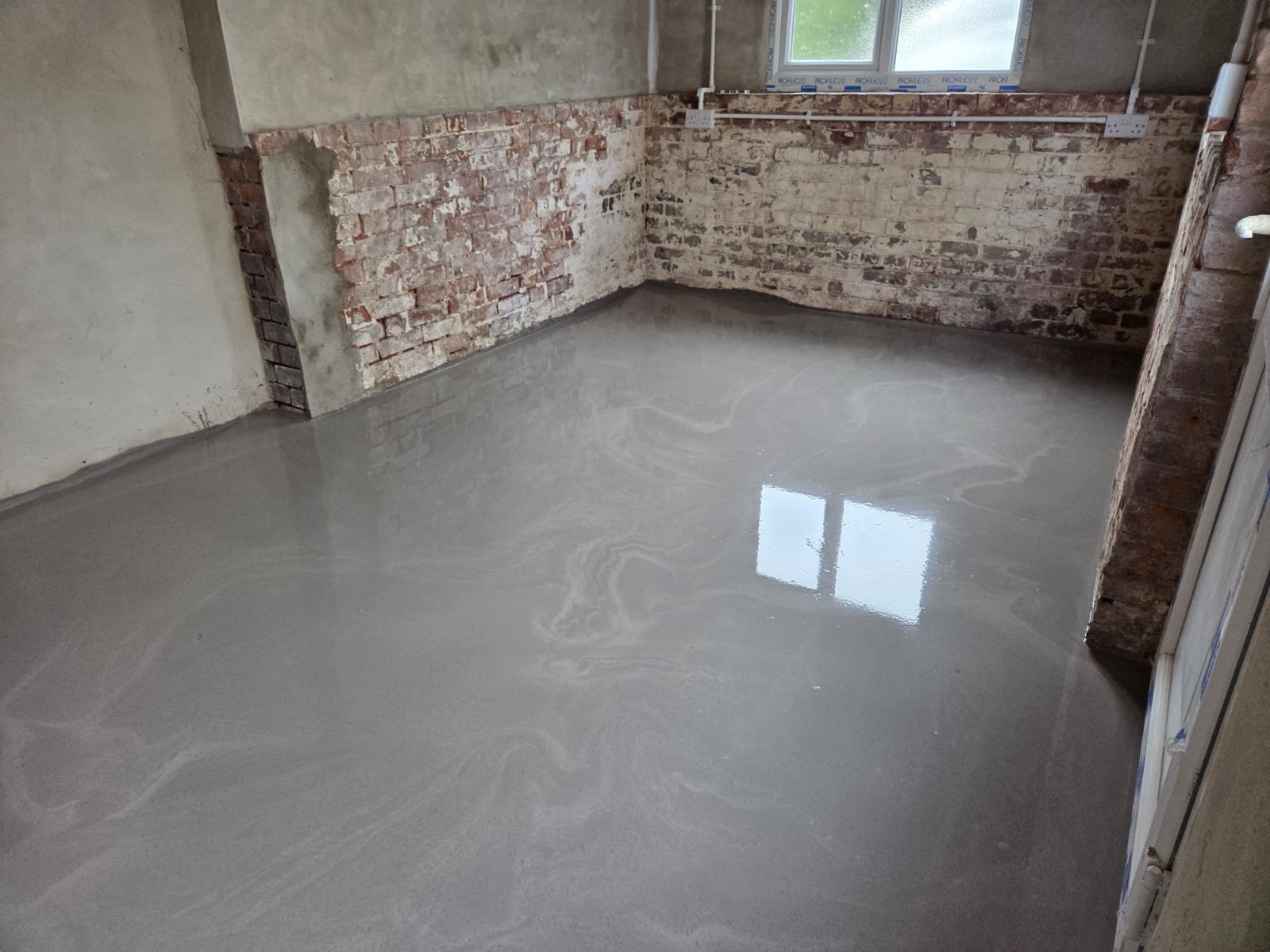
SR1 tolerance within 2mm — seamless finishes and flawless underfloor heating performance.
Superior Strength
Loads distributed evenly to protect floor coverings and the structural slab beneath.
Thermal & Acoustic
Improved heat transfer for UFH and reduced sound transmission throughout the space.
Moisture Resistant
Crack-free floors that guard against damp, mould and long-term damage.
Perfect partner for UFH
Get more from your underfloor heating
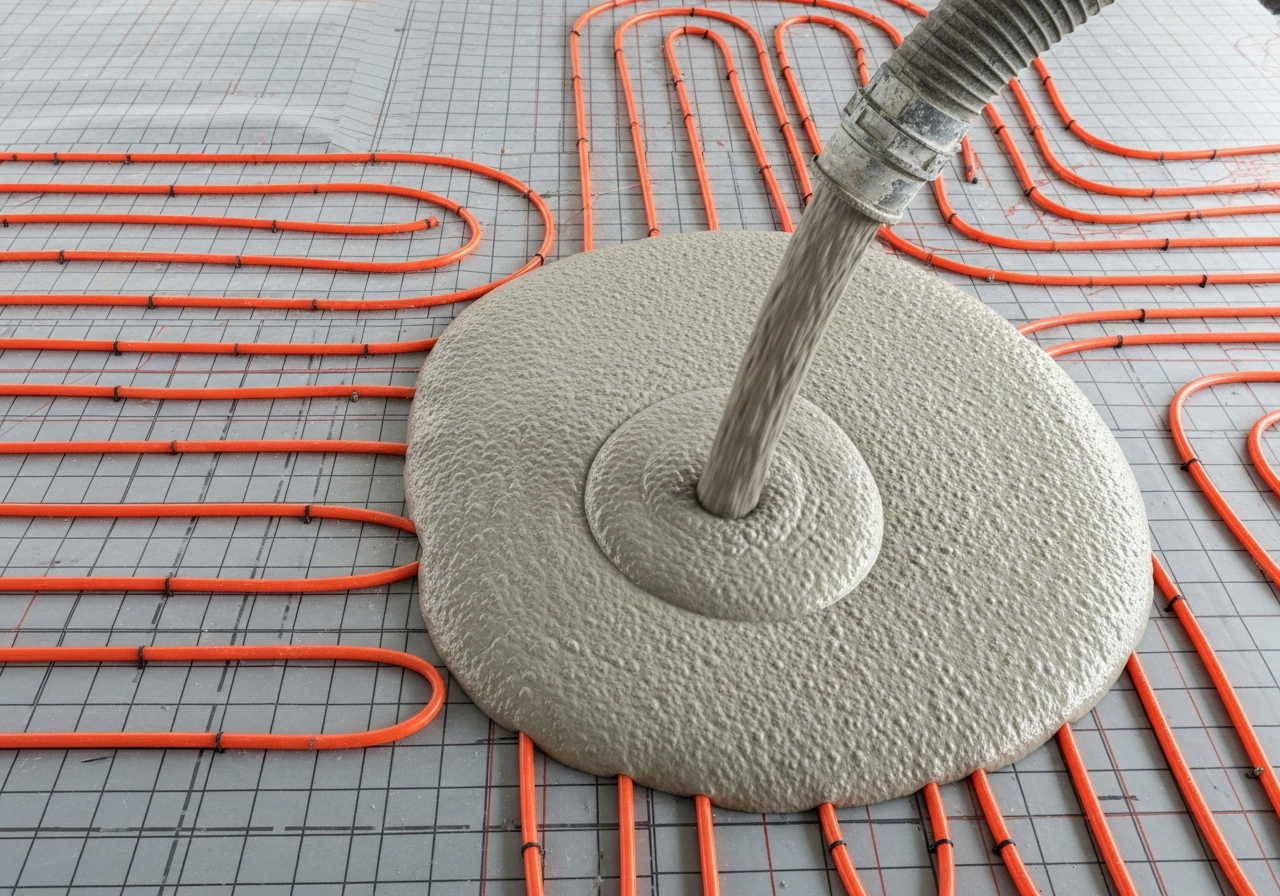
Liquid screed wraps tightly around heating pipes with no voids, delivering up to 40% better heat output and faster response times than traditional screeds. Lower flow temperatures mean cheaper running costs over the life of the floor.
- Encapsulates pipes — no air pockets, no cold spots
- Thinner pour depths free up valuable headroom
- Improved thermal conductivity for efficient running
- Crack-free finish protects your floor covering
Side by side
Liquid screed vs traditional sand & cement
| Performance | Liquid Screed | Traditional Screed |
|---|---|---|
| Flatness tolerance | SR1 — within 2mm over 2m | SR2 / SR3 — often uneven |
| Coverage per day | Up to 2,000m² by a small crew | 150–200m² with a large crew |
| Walk-on time | 24–48 hours | 3–7 days |
| UFH heat output | Higher conductivity, faster response | Lower output, slower response |
| Cracking & shrinkage | Self-compacting, minimal cracking | Prone to shrinkage cracks |
| Depth required for UFH | From 35mm over pipes | Typically 65–75mm |
Ready to upgrade your build?
Tell us about your project and we'll recommend the right mix, depth and timeline.
Request a quote