Systems
Floor Protection Systems After Liquid Screed
Protecting a liquid screed from other trades and site traffic during the drying period reduces the risk of surface damage, contamination and moisture ingress before flooring is installed.
Need your screed protected through a busy build programme?
We can advise on protection strategy so your floor survives to handover in good condition — call 07791 510849.
Or call our landline on 01392 237700
A newly poured liquid screed can look finished within days, but it remains vulnerable to damage for a considerable period afterwards — from foot traffic, dropped tools, other trades' materials, and general site activity, right through until flooring is installed and the floor is in full use. Floor protection is about managing this window, not just the day of the pour.
The right protection method depends on the stage of the floor's drying and the type of activity expected on it. Early on, protection is about preventing surface damage while the screed is still gaining strength; later, it shifts toward keeping the surface clean and free from spills, paint, or adhesive residue ahead of flooring installation.
On live construction sites in particular, screed often needs to survive months of other trades working over it before the final floor covering goes down, so a considered protection strategy — not just a token sheet of board — is usually worth the modest additional cost relative to the risk of damage.
Protecting the screed during early curing
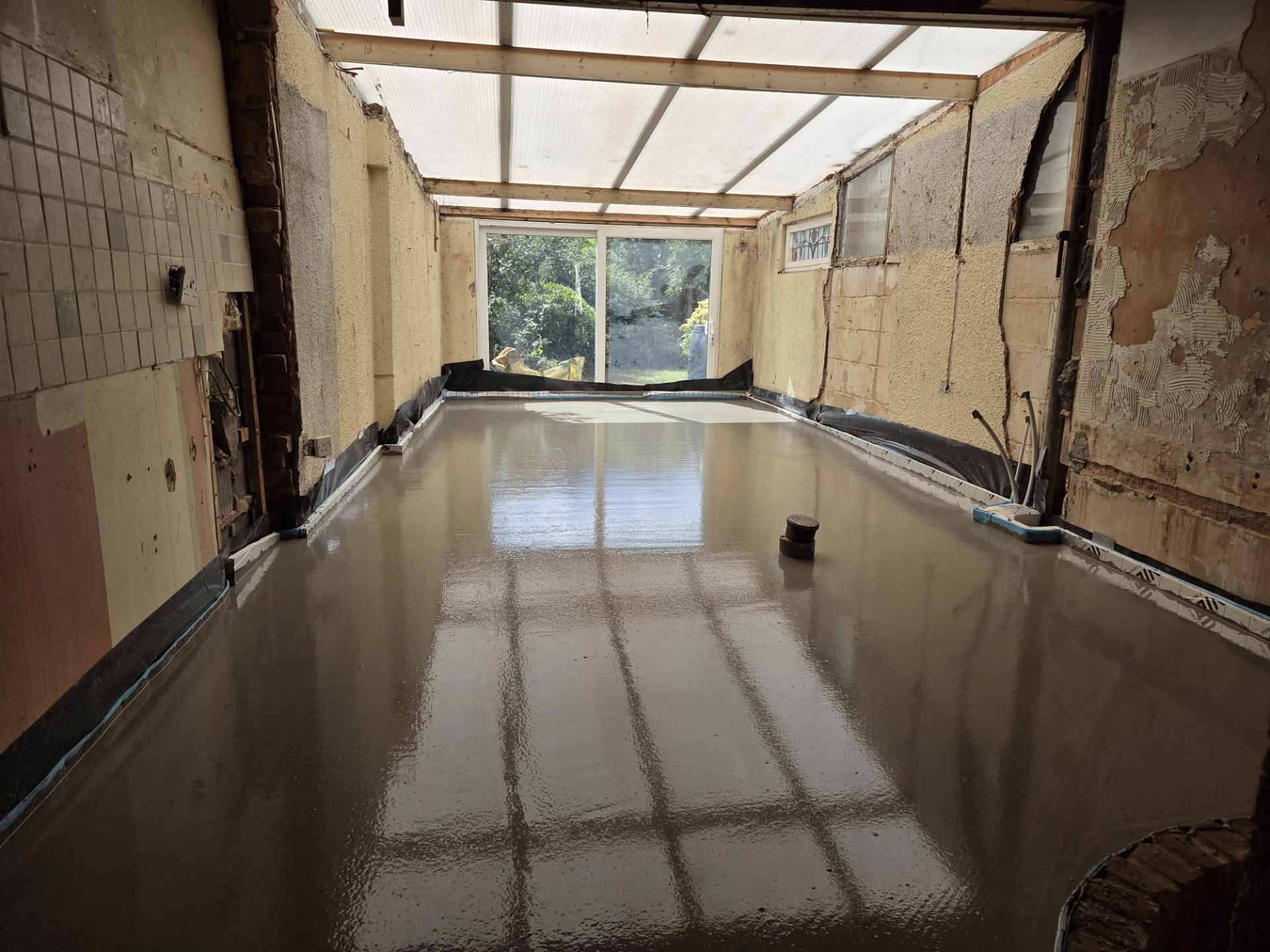
In the first period after pouring, before the screed has developed sufficient strength, restricting foot traffic entirely is usually the priority, with clear boundaries or barriers to prevent accidental access rather than protective boarding, which itself can be disruptive to apply too early.
Once early strength allows controlled access, breathable protection boards are commonly used to spread loads and guard against surface damage from tools or materials, while still allowing the screed to continue drying underneath.
Protecting through the drying period and follow-on trades
As other trades move through the site, the risks shift toward point loads from trestles or stored materials, spills of paint or plaster, and general contamination that could interfere with adhesives or coatings applied later. Continued use of a robust, breathable board system through this period is generally the most reliable approach.
Before flooring installation, protection should be lifted and the surface inspected and, if necessary, cleaned, since contamination trapped under protection can otherwise go unnoticed until it causes an adhesion problem with the final floor finish.
Choosing the right protection material
Breathable protection boards are widely used because they spread point loads and resist tearing while still allowing moisture to escape from the screed beneath, which matters on a floor that's still within its drying period.
Heavier-duty sheet products may be justified in high-traffic zones or where plant and materials are regularly moved across the floor, while lighter protection can suffice in areas seeing only occasional foot traffic — matching the product to the actual risk avoids unnecessary cost.
Coordinating protection with the main contractor's programme
On a multi-trade site, protection works best when it's planned as part of the overall programme rather than left to whichever trade happens to be on site when the screed is poured, since responsibility for maintaining and reinstating protection can otherwise fall between parties.
Agreeing who is responsible for protection, and at what programme stages it needs upgrading or removing, avoids the common situation where a floor is protected on day one but left exposed once attention moves to other trades.
Floor Protection Systems — the points that decide it
- Protection needs differ between the early curing period and the longer drying/build period
- Breathable protection is generally preferred so it doesn't trap moisture against the drying screed
- Heavy point loads (trestles, scaffold feet, stored materials) need distributing to avoid indentation
- Spills from paint, plaster or adhesive can stain or contaminate an unprotected screed surface
- Protection boards should be removed and the floor inspected before flooring installation, not left until the last minute
- Site traffic routes across a curing screed should be planned and, where possible, minimised
- Non-breathable coverings can trap moisture and slow drying if left down too long
- Protection strategy should be agreed with the main contractor as part of the overall site programme
- Different areas of the same floor may need different protection depending on the trade activity expected there
- Protection should be reinstated after any inspection to maintain consistent coverage across the floor
Need your screed protected through a busy build programme?
We can advise on protection strategy so your floor survives to handover in good condition — call 07791 510849.
Or call our landline on 01392 237700
Floor Protection Systems — your questions
In short
Protecting a liquid screed from other trades and site traffic during the drying period reduces the risk of surface damage, contamination and moisture ingress before flooring is installed.
Need your screed protected through a busy build programme?
We can advise on protection strategy so your floor survives to handover in good condition — call 07791 510849.