
Substrates & Preparation
Taping and Sealing Insulation Boards Before Screeding
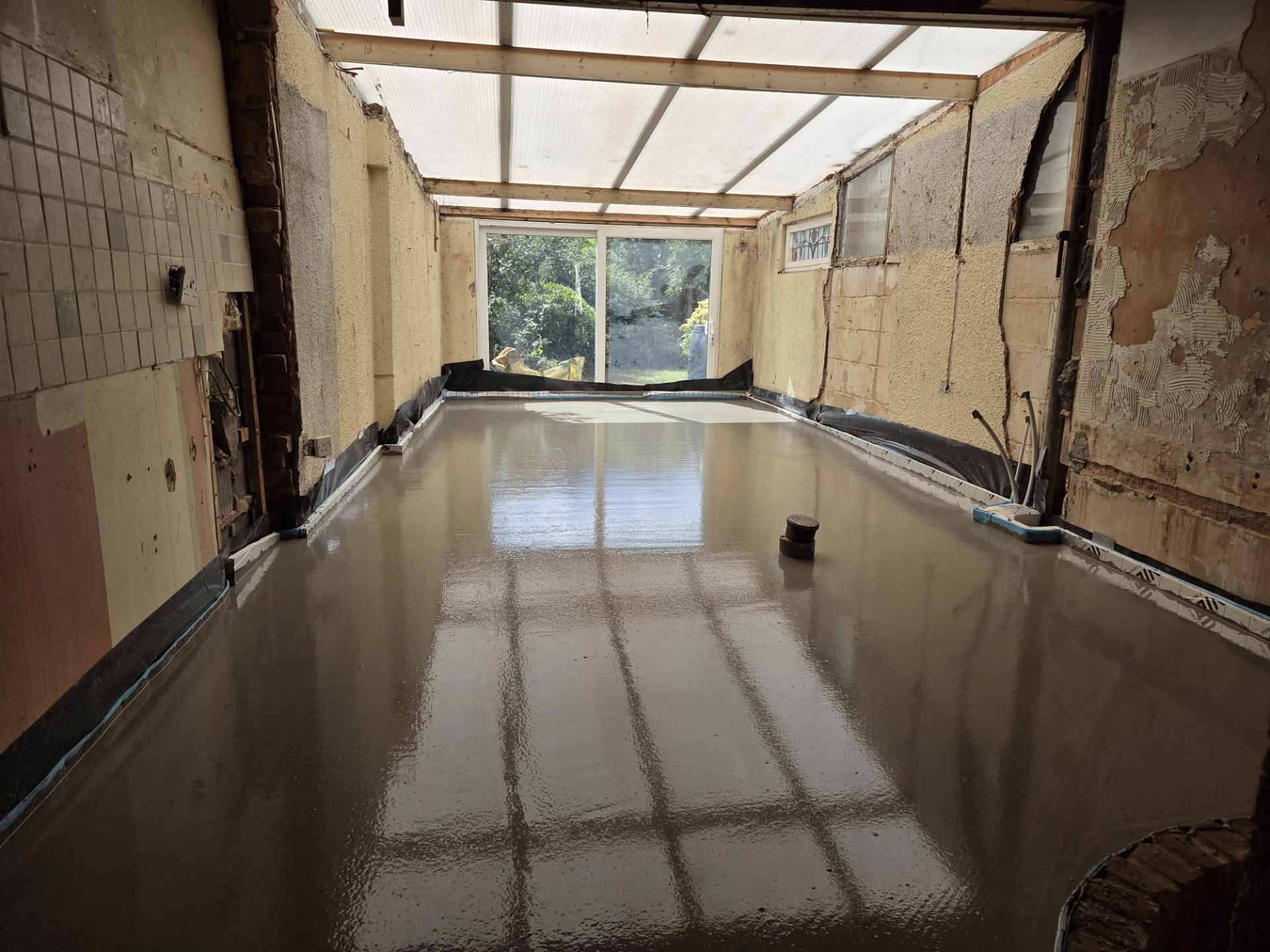
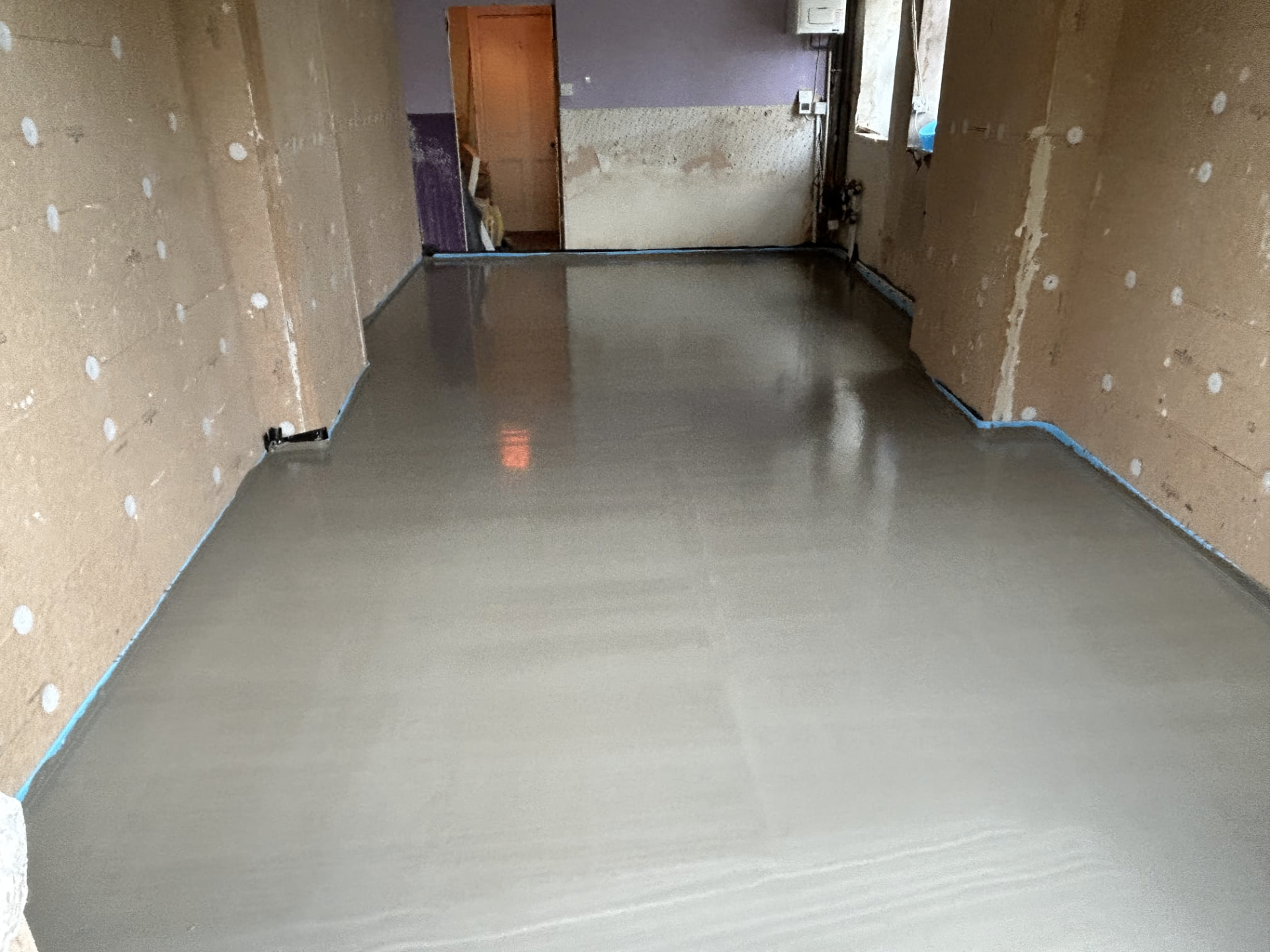
Gaps between insulation boards let liquid screed migrate into the void beneath, so joints are taped or sealed as a routine step before the pour.
A floating screed relies on a continuous, closed layer of insulation sitting beneath it, but insulation boards inevitably meet at joints, and those joints are rarely a perfect seal on their own. Cut boards, boards butted against pipework, and boards meeting at angles around obstructions all leave small gaps that a fluid liquid screed will find its way into if they're left untreated.
Taping the joints, or sealing them with an appropriate compound, closes those gaps before the pour so the screed stays on top of the insulation layer rather than seeping through it and being lost into the void below — which both wastes material and risks leaving voids under the finished floor.
This is one of the last checks carried out before a pour, since it's easier and cheaper to catch a missed joint with the floor still exposed than to discover it later as a hollow patch or thin spot once the screed has cured over the top.
Why gaps matter more than they look
Liquid screed has a fluid consistency specifically so it can self-level, and that same property means it will find and exploit any gap in the layer beneath it. A joint that looks tight to the eye can still allow material through under the head of pressure created by a pour, particularly across a large floor area where flow continues for some time before the mix stiffens.
Small, gradual seepage through an unsealed joint is often not obvious until the screed has cured and a hollow or thin patch shows up during a later inspection, by which point remedial work is far more disruptive than the taping would have been.
What good sealing looks like on site
In practice, taping is usually done as a distinct pass across the whole floor once all boards, service pipes and edge details are in place, rather than being tackled board by board as the insulation goes down. This gives a final chance to check for any gaps that have opened up as boards were walked on or cut around obstructions, before the screed is committed.
A consistent, methodical approach — working room by room or in a set pattern — reduces the risk of missing a joint compared with an ad hoc check, particularly on larger floor areas with a lot of cut boards around pipework and fittings.
Choosing tape and sealant for the board type
Not every tape adheres equally well to every insulation facing — foil-faced boards, paper-faced boards and bare foam surfaces can all behave differently with a given adhesive tape, and a mismatch can mean the tape lifts before the pour even starts. Using a tape genuinely suited to the board being used, rather than whatever is available on site, gives a more reliable seal.
Wider gaps around obstructions or irregular cuts are usually better addressed with an expanding foam or proprietary sealant rather than trying to bridge them with tape alone, since tape stretched too far across a gap is prone to failure under the pressure of the pour.
Final checks before the pour
Because sealing insulation joints is one of the last preparation steps before the screed is poured, it's worth building in a final visual check across the whole floor, ideally by someone other than whoever laid and taped the boards. A second pair of eyes is more likely to spot a missed joint, a lifted piece of tape, or a gap that opened up as other trades moved around the site.
This check is quick relative to the disruption caused by discovering a problem after the pour, and it's a natural point to also confirm that any duct covers, thresholds and perimeter edges are still properly sealed.
Taping & Sealing Insulation Layers — the points that decide it
- Insulation board joints are taped or sealed to stop liquid screed migrating through gaps into the void beneath
- Wider gaps, particularly at cut edges or around obstructions, may need filling with expanding foam or a proprietary sealant rather than tape alone
- Taping is typically carried out methodically across the whole floor immediately before the pour, once all boards are laid and any services are in place
- Perimeter edges where insulation meets a wall or upstand need the same attention as the board-to-board joints
- Poorly sealed joints can lead to a loss of screed volume during the pour and thin or hollow patches once it cures
- Some insulation products are supplied with a tongue-and-groove edge that reduces but doesn't eliminate the need for taping at joints
- Tape selection matters — a general-purpose tape may not adhere reliably to some insulation facings, so a product suited to the specific board is preferable
- A final visual check across the whole floor, ideally by a second person, catches missed joints before the pump arrives
Getting insulation ready for a floating screed pour?
We handle board laying, joint sealing and edge detailing as standard before every floating screed we pour.
Or call our landline on 01392 237700
Taping & Sealing Insulation Layers — your questions
In short
Gaps between insulation boards let liquid screed migrate into the void beneath, so joints are taped or sealed as a routine step before the pour.
Getting insulation ready for a floating screed pour?
We handle board laying, joint sealing and edge detailing as standard before every floating screed we pour.