
Programme planning
Sequencing liquid screed within the wider build programme
Guidance on where a liquid screed pour sits relative to other trades in a build programme, and why sequencing errors are a common cause of delay.
Planning your build programme?
Talk to us early so the screed pour date and drying allowance are built into your programme realistically.
Or call our landline on 01392 237700
Liquid screed sits at a pinch point in most build programmes: it needs earlier trades to be finished, but later trades can't start until it's dry, so its position in the sequence has knock-on effects in both directions. Getting the sequencing right isn't just about picking a date — it's about making sure the trades before and after are genuinely aligned with that date.
Because screed depends on several other trades being complete beforehand, and several more waiting for it to dry afterwards, a programme that treats it as a single line item without considering these dependencies is prone to slipping. Understanding the typical order of trades helps a builder or project manager set a realistic pour date rather than an aspirational one.
This is also an area where communication between trades matters as much as the programme document itself — a written schedule showing a pour date is only useful if the trades feeding into it are actually tracking towards their own deadlines in a way that supports it.
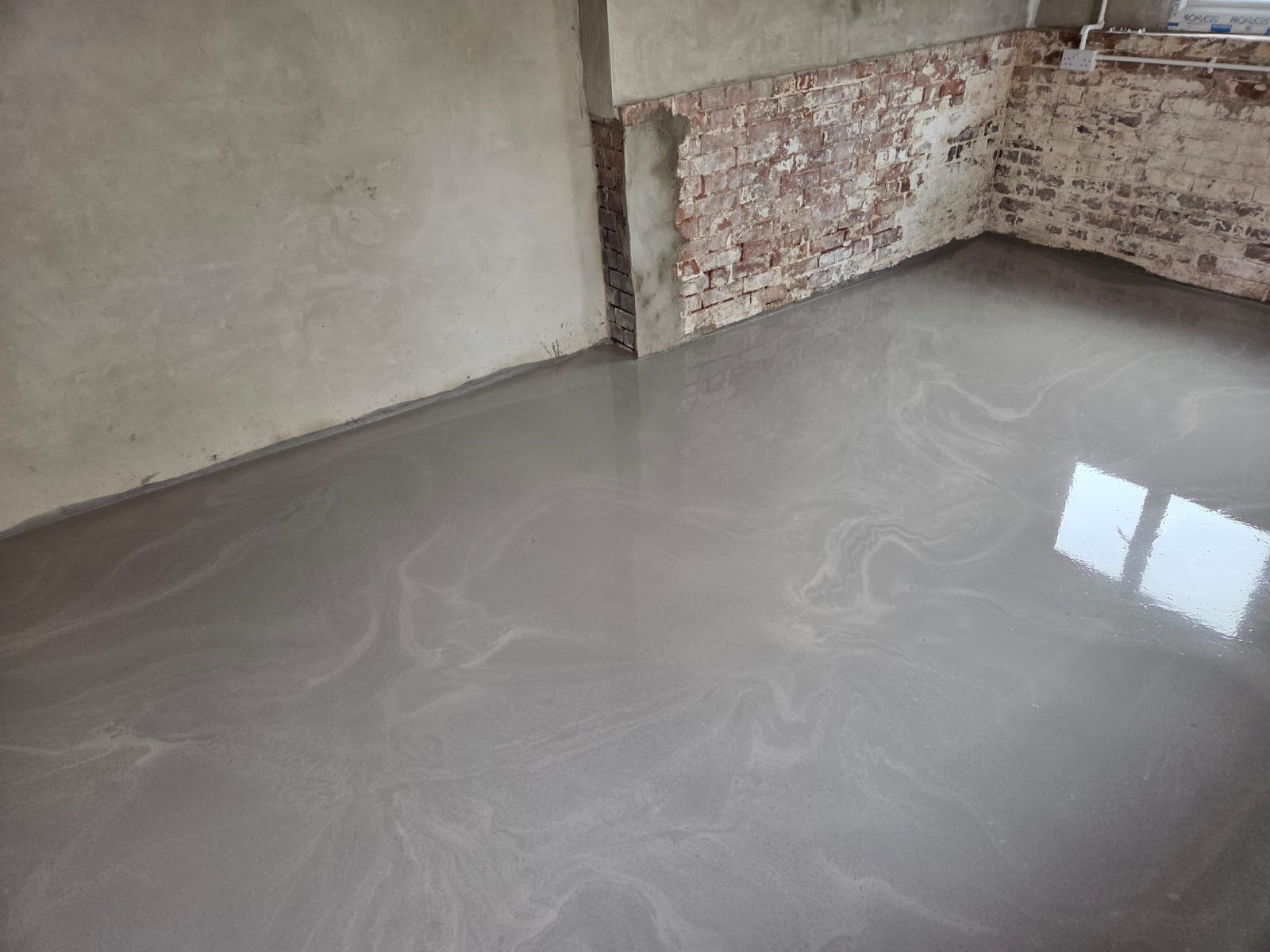
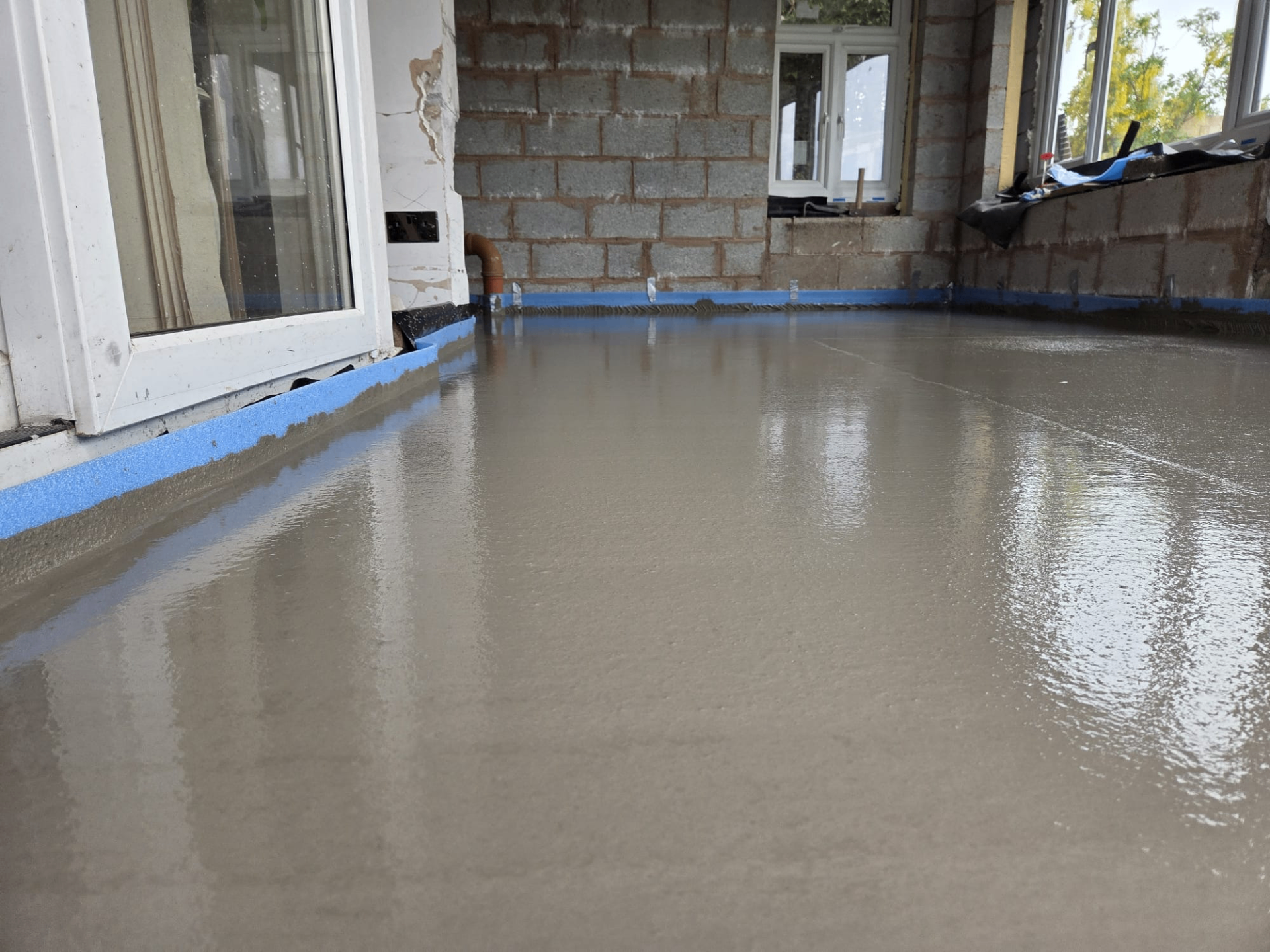
Sequencing screed in the programme — the points that decide it
- The screed pour normally follows first-fix plumbing and electrics below floor level, insulation, membrane and any underfloor heating installation.
- It typically precedes internal partition finishing at floor level, skirting, and floor coverings, though some structural walls may already be up.
- Roof and windows being weathertight before the pour reduces the risk of water ingress affecting a curing floor.
- Plastering and other wet trades are usually best sequenced with an awareness of screed drying, since excess moisture from multiple sources compounds drying time.
- A realistic programme allows for drying time before floor coverings, not just before the next construction trade.
- Sequencing errors, such as pouring before the building is weathertight or before UFH is pressure tested, are a recurring source of avoidable delay.
- Multi-phase builds may sequence different zones on different dates, which needs coordinating with trades working in adjacent areas.
- Reviewing the programme with the screed installer before committing to a date can highlight dependencies that aren't obvious from a generic programme template.
Working backwards from the floor covering date
Rather than fixing the pour date and hoping drying keeps pace, it's more reliable to start from the date floor coverings need to go down, then work backwards through a realistic drying period to establish when the pour needs to happen.
This approach also makes it easier to see where the programme is tight, since a short gap between a proposed pour date and an already-fixed floor covering date is a clear signal that either the pour needs to move earlier or the covering date needs to move later.
Where screed commonly gets out of sequence
Two recurring issues are pouring before the building envelope is weathertight, which risks rain or condensation affecting the floor, and pouring before underfloor heating pipework has been pressure tested, which risks damage that's expensive to trace once covered.
A third common issue is other wet trades, such as plastering, running later than planned and overlapping with screed drying, which extends the overall drying period beyond what a simple screed-only calculation would suggest.
Coordinating with the main contractor's programme
On larger jobs, the screed pour date usually needs to be agreed with the main contractor's overall programme rather than set independently, since it affects the availability of the site for other trades in the days before and after.
Sharing an early indication of likely pour dates, even before they're fully confirmed, allows the main contractor to plan other trades around it rather than discovering a clash close to the date.
Adjusting the programme when things slip
Build programmes rarely run exactly to plan, and a slipping earlier trade often means the pour date needs revisiting. Flagging this as early as possible, rather than waiting until the original date arrives, gives the best chance of finding an alternative slot without significant delay.
Where a delay is unavoidable, understanding which later trades are most affected helps prioritise what needs to be communicated first, since floor covering contractors and others booked around the original date will also need to adjust.
Sequencing screed in the programme — your questions
Planning your build programme?
Talk to us early so the screed pour date and drying allowance are built into your programme realistically.
Or call our landline on 01392 237700
In short
Guidance on where a liquid screed pour sits relative to other trades in a build programme, and why sequencing errors are a common cause of delay.
Keep going — closely linked topics
Planning your build programme?
Talk to us early so the screed pour date and drying allowance are built into your programme realistically.