
Drying management
Building a drying strategy and monitoring plan for a liquid screed floor
A practical look at planning a drying strategy in advance and monitoring progress against it, rather than treating drying as something to check on only near the end.
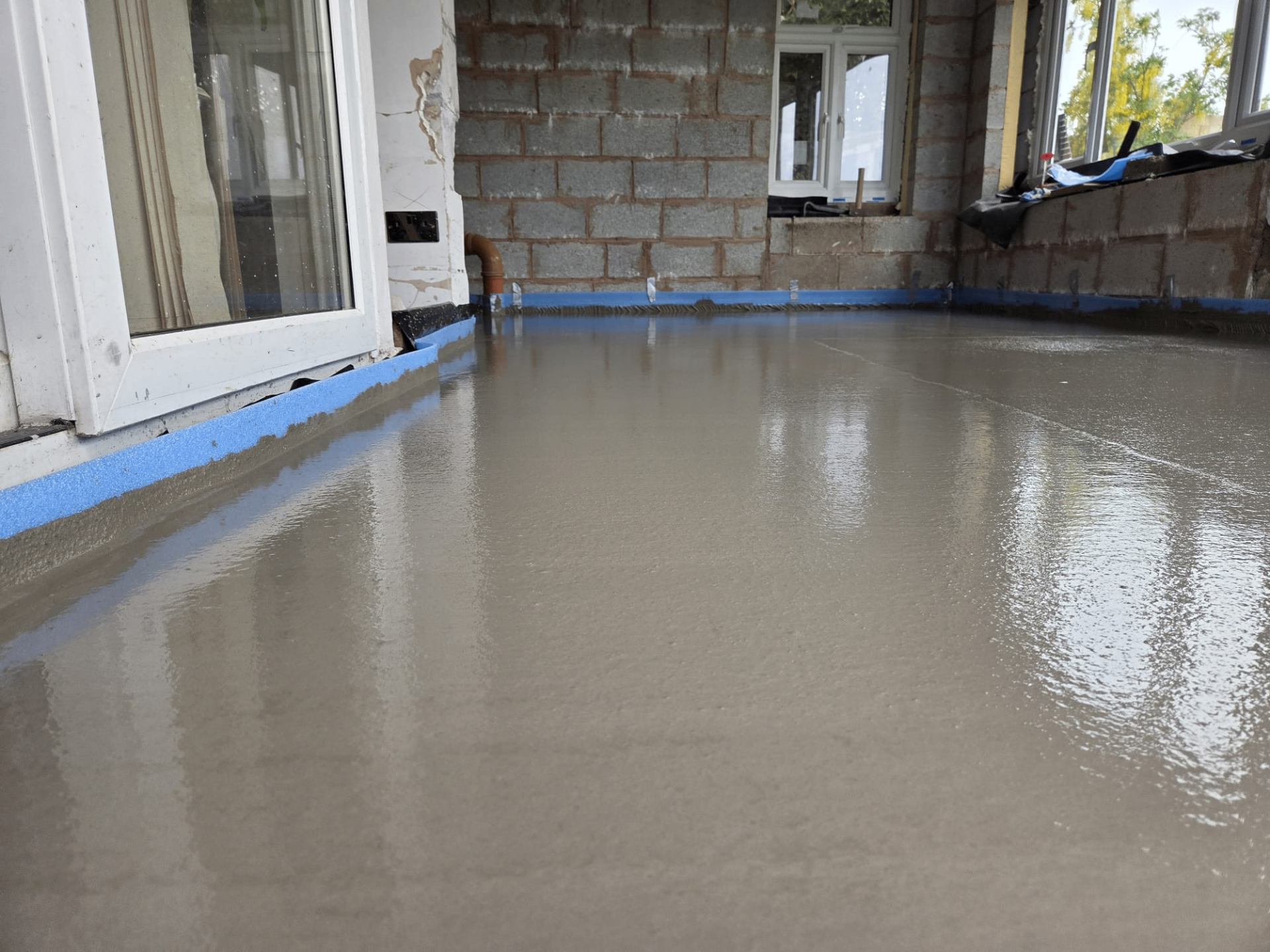
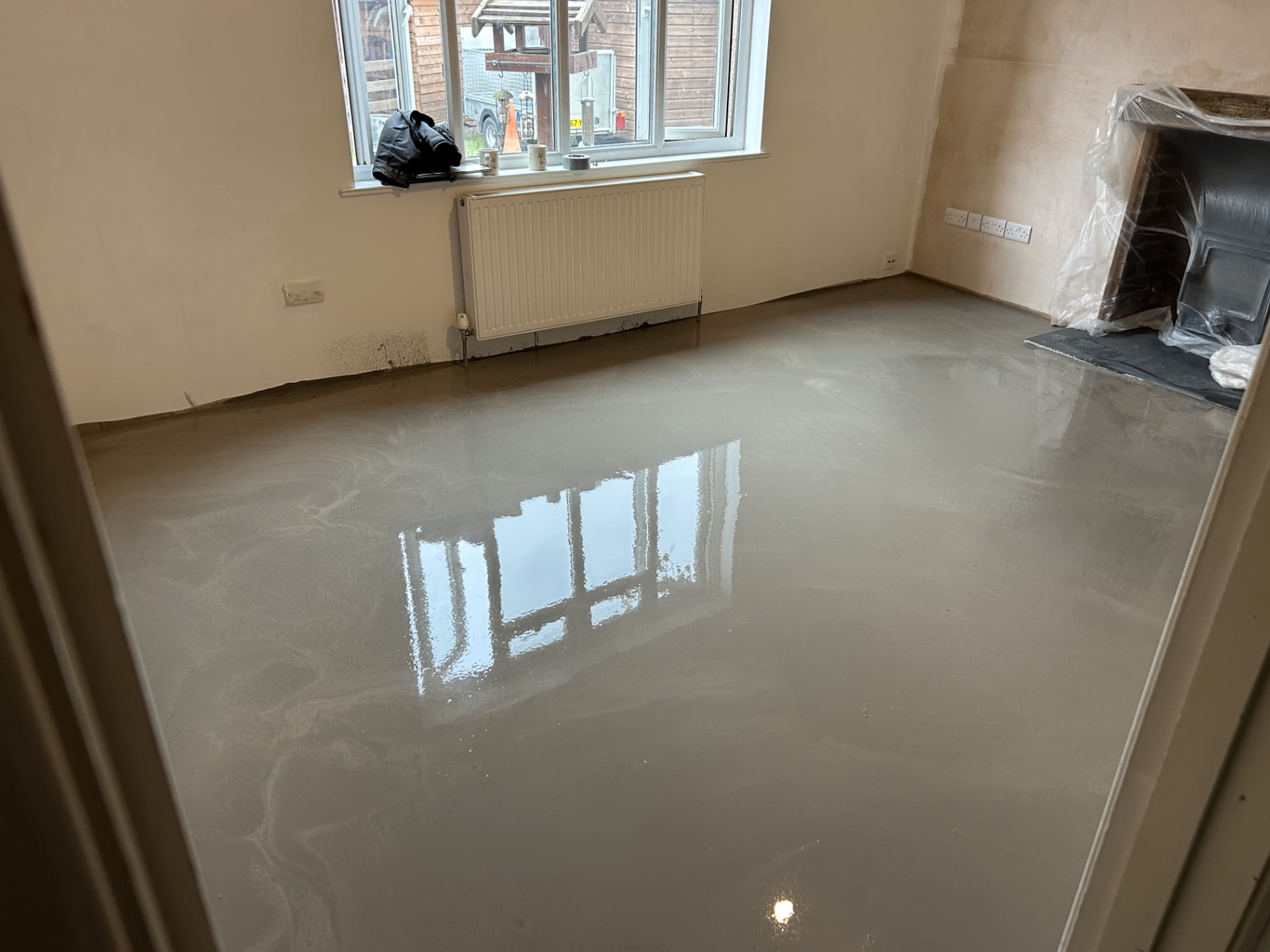
Drying isn't something that just happens in the background — a considered strategy, agreed early, makes it far more likely the floor is ready when the programme needs it to be. Left unmanaged, drying can be slowed considerably by simple factors such as closed windows, unheated rooms or other wet trades working nearby.
Monitoring progress along the way, rather than only testing once floor coverings are imminent, gives time to adjust the approach if drying is running slower than planned. A single test carried out weeks before flooring is due to start is far more useful than discovering a problem on the day the flooring contractor is booked to begin.
A workable strategy usually sits jointly with the main contractor or client rather than resting entirely on the screed installer, since decisions about heating, ventilation and site access throughout the build all influence how quickly the floor actually dries.
Drying strategy & monitoring — the points that decide it
- 1A drying strategy typically covers ventilation, heating, dehumidification (where used) and the target date for testing.
- 2Ambient conditions in the building — temperature, humidity, airflow — should be actively managed rather than left to chance.
- 3Interim checks, even informal ones, help flag early if drying is progressing more slowly than the programme assumed.
- 4The strategy should account for depth and screed type, since these are the biggest single influences on drying duration alongside site conditions.
- 5Force-drying methods, where used, need to follow the manufacturer's specific guidance rather than a generic approach.
- 6The final decision to proceed with floor coverings should rest on proper moisture testing, not on a calendar date alone.
- 7Responsibility for maintaining heating and ventilation through the drying period should be clearly assigned to someone on site.
- 8External weather and season can influence how quickly natural ventilation supports drying, and this is factored into planning.
- 9Records of interim checks and conditions are useful evidence if drying is later questioned or a dispute arises.
Why an early plan beats reactive checking
Treating drying as an afterthought, only checked once flooring is due to start, removes the option to intervene if conditions have been poor. An agreed strategy from the outset, with periodic monitoring, allows adjustments — more ventilation, additional heating — while there's still time to make a difference.
An early plan also sets expectations across the wider site team, so that decisions such as delaying window installation or leaving a building unheated for cost reasons are made with an understanding of how they affect the drying floor.
Aligning the strategy with the wider programme
The drying strategy should be discussed alongside the build programme, not treated as a separate concern managed only by the screed installer, since decisions elsewhere on site — such as when heating is commissioned — directly affect drying conditions.
Where the wider programme changes, for example if commissioning of permanent heating is delayed, the drying strategy needs revisiting rather than continuing on the original assumption that conditions would be as originally planned.
What ongoing monitoring actually involves
Monitoring doesn't need to mean formal testing at every stage; simple checks such as confirming ventilation is actually happening, temperatures are being maintained, and no water ingress or wet trades are undermining progress can catch problems early.
Where a more formal interim check is used, this is generally a simpler indicative method rather than the full test that will ultimately be relied on before covering, used to flag whether the programme is broadly on track.
Adjusting the approach when drying falls behind
If interim checks suggest drying is slower than expected, options such as increasing ventilation, introducing controlled heating, or in some cases dehumidification can be considered, always following guidance appropriate to the specific screed.
Communicating a revised expectation to follow-on trades as soon as slower progress is identified is generally better received than a late, unexplained delay discovered only once flooring was due to start.
Need help planning a drying strategy for your project?
Talk to us about your programme dates and site conditions so we can help plan a realistic drying approach.
Or call our landline on 01392 237700
In short
A practical look at planning a drying strategy in advance and monitoring progress against it, rather than treating drying as something to check on only near the end.
Drying strategy & monitoring — your questions
Other pages that answer this properly
Need help planning a drying strategy for your project?
Talk to us about your programme dates and site conditions so we can help plan a realistic drying approach.