
Occupied sites
Working in occupied buildings during a liquid screed pour
Practical guidance on planning a liquid screed pour in a building that remains occupied, rather than a vacant new build.
Refurbishments and extensions often need to happen around daily life, which changes how a pour is planned compared with an empty new-build shell where nobody is living or working around the crew. The presence of residents, pets, furniture and everyday routines means the same pour has to be handled with a different level of care, even though the screed material and pumping process itself are identical to any other site.
The screed process itself doesn't change, but access routes, timing, dust control and communication with occupants all need extra thought, and small details — where equipment is parked, which door is used, how long a hallway is blocked off — matter more than they would on a vacant site. A conversation held a week or two before the pour, rather than on the morning itself, usually avoids most of the friction that can arise when a household discovers mid-morning that their front door is temporarily unusable.
Getting this right usually comes down to talking through the day in advance with whoever is living or working in the building, so there are no surprises about noise, access restrictions or which rooms will be temporarily out of use. Where a household includes young children, elderly residents or pets, it is worth flagging this early so the crew can plan around any particular sensitivities on the day.
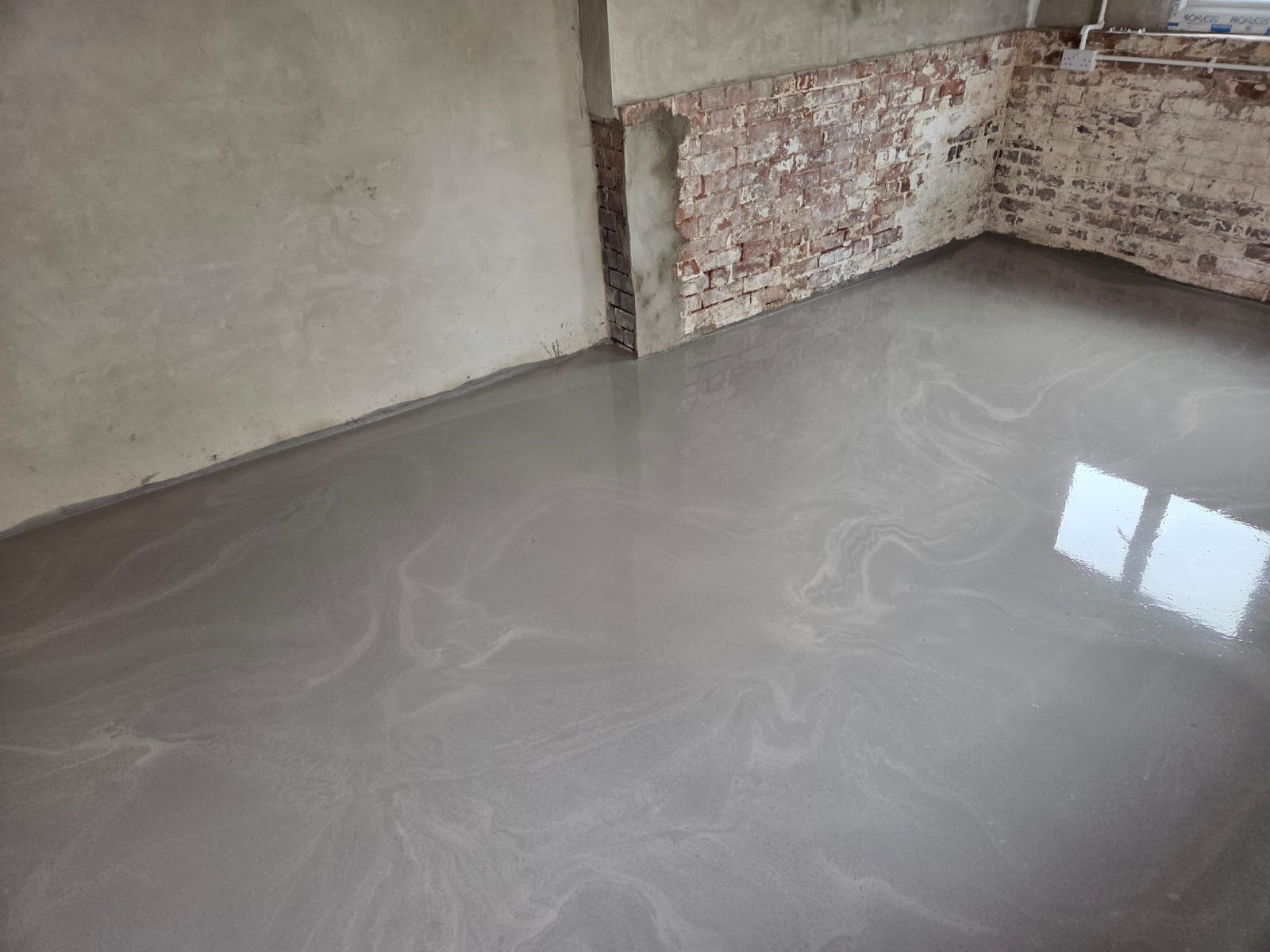
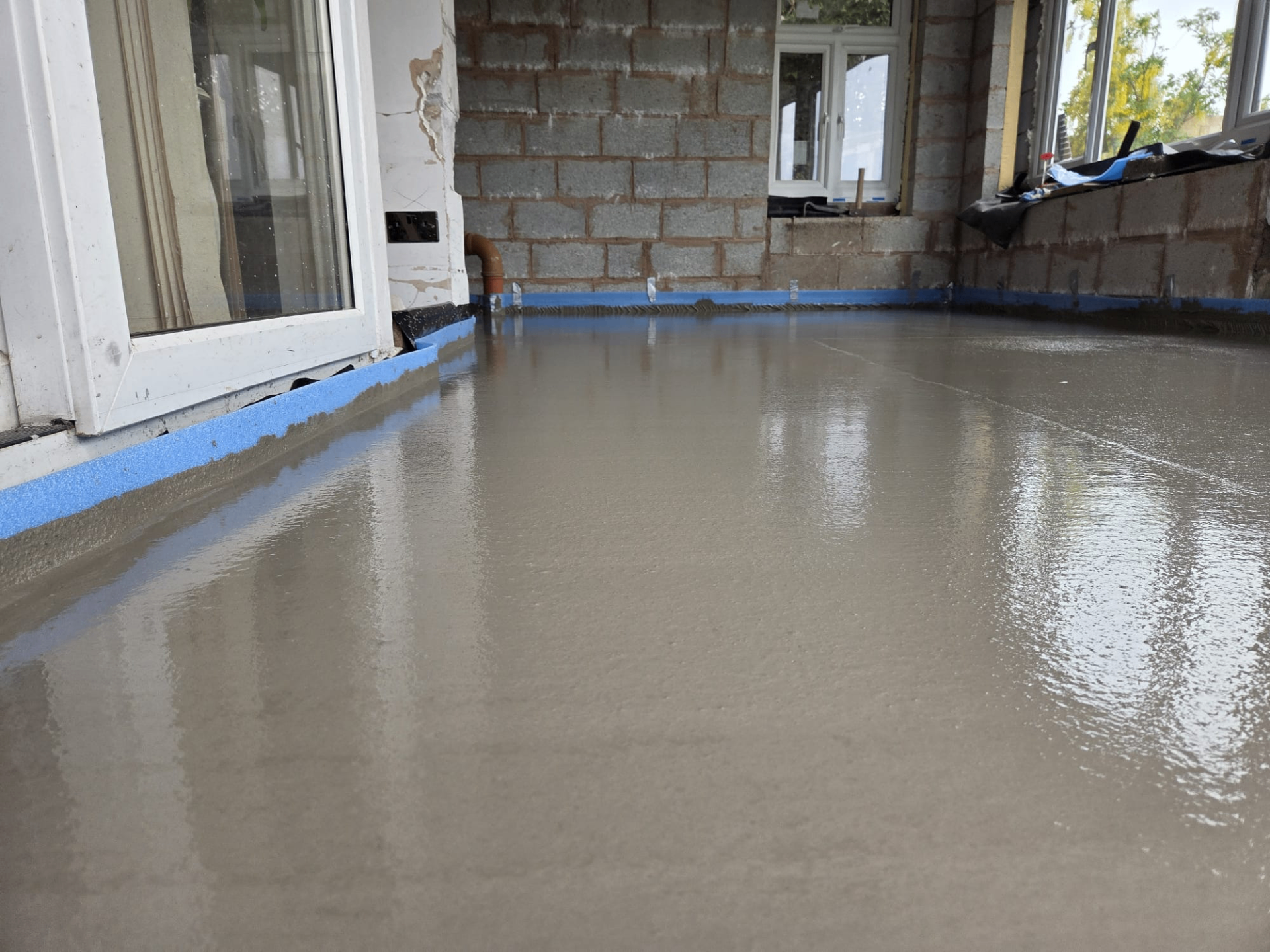
Screeding in occupied buildings — the points that decide it
- Access routes through the building are planned to avoid disrupting rooms that remain in use during the pour.
- Alternative routes in and out of the property are agreed in advance where the usual route crosses the work area.
- Protection of finished floors and furniture along access routes is more extensive than on a bare shell.
- Noise and working hours may need to be agreed with occupants, particularly for pumping equipment running in a domestic setting.
- Curing area needs to be clearly closed off, since an occupied building has more foot traffic risk than a site hoarded off from the public.
- Utilities such as water and electricity for the pump are usually drawn from the existing supply, which is confirmed in advance.
- Pets and young children need particular consideration around open doorways and freshly poured, still-wet floor areas.
- Deliveries and equipment being carried through the property should avoid peak household times such as school runs where possible.
- A single point of contact within the household helps the crew resolve small questions quickly without disrupting the pour.
Protecting the rest of the home, not just the new floor
In an occupied property, hallways, stairs and existing rooms often form part of the access route and need protecting from splashes and foot traffic during the pour, in addition to the room being poured itself. Carpet protection, floor coverings on stairs and dust sheets over nearby furniture are all considered as part of the planning for the day, rather than being an afterthought once the crew arrives.
Where the access route passes close to items of value or sentimental importance, it is worth mentioning this in advance so extra care, or a temporary move of the item, can be arranged rather than relying on the crew to notice on the day.
Communicating timings with occupants
Confirming likely start time, noise expectations and how long the room will be inaccessible helps residents plan their day around the pour rather than being caught unaware. This is particularly useful where someone works from home, has a delivery expected, or needs to leave the house at a specific time that could clash with equipment being carried through.
A short written confirmation of the plan for the day, even a simple message, tends to reduce misunderstandings compared with a verbal agreement made weeks earlier and then half-forgotten by the time the pour date arrives.
Managing dust and mess through the property
Mixing and pumping liquid screed generates far less airborne dust than some other floor build-ups, but preparation work such as cutting insulation or moving materials can still create dust and debris that travels through a lived-in home if not contained. Doorways between the work area and the rest of the property are often temporarily sealed to limit this spread.
Floor protection is usually left in place for a period after the pour as well, since foot traffic near a curing screed and general household movement both carry some risk of tracking material further into the home if surfaces aren't adequately covered.
Keeping pets and children away from the work area
A freshly poured screed is a hazard for pets and young children both because of the wet material itself and because the curing area needs to be undisturbed for the floor to develop properly. Agreeing where pets will be kept during the pour, and for the following curing period, avoids an awkward situation on the day.
Stairgates, closed doors or a temporary arrangement to keep animals in another part of the house or garden are all practical options that are best agreed before the crew arrives rather than improvised at the last minute.
Screeding in occupied buildings — your questions
Planning a pour in a lived-in home?
Tell us about your household's needs and we'll plan the pour day around them where practical.
Or call our landline on 01392 237700
In short
Practical guidance on planning a liquid screed pour in a building that remains occupied, rather than a vacant new build.
Keep going — closely linked topics
Planning a pour in a lived-in home?
Tell us about your household's needs and we'll plan the pour day around them where practical.