
Programme sequencing
When other trades can safely return to a poured floor
Guidance on the different thresholds for trades returning after a pour, since 'can I walk on it' and 'can I load it' are different questions.
One of the most common questions after a pour is simply when work can resume, but the honest answer depends on which trade and what they need to do. A carpenter carrying a box of fixings across the floor is asking a very different question from a scaffolder wanting to stand a loaded tower on it.
Light foot traffic, scaffold loading, storing materials and laying floor coverings all have different thresholds, and treating them as the same question leads to problems. Each threshold is governed by a different aspect of the screed's strength development or moisture content, and confusing them is one of the more common causes of avoidable damage or delay on site.
Because these thresholds vary by product, depth and site conditions, the practical approach is to check with the installer for the specific floor rather than relying on a rule of thumb picked up from a previous project with a different screed type.
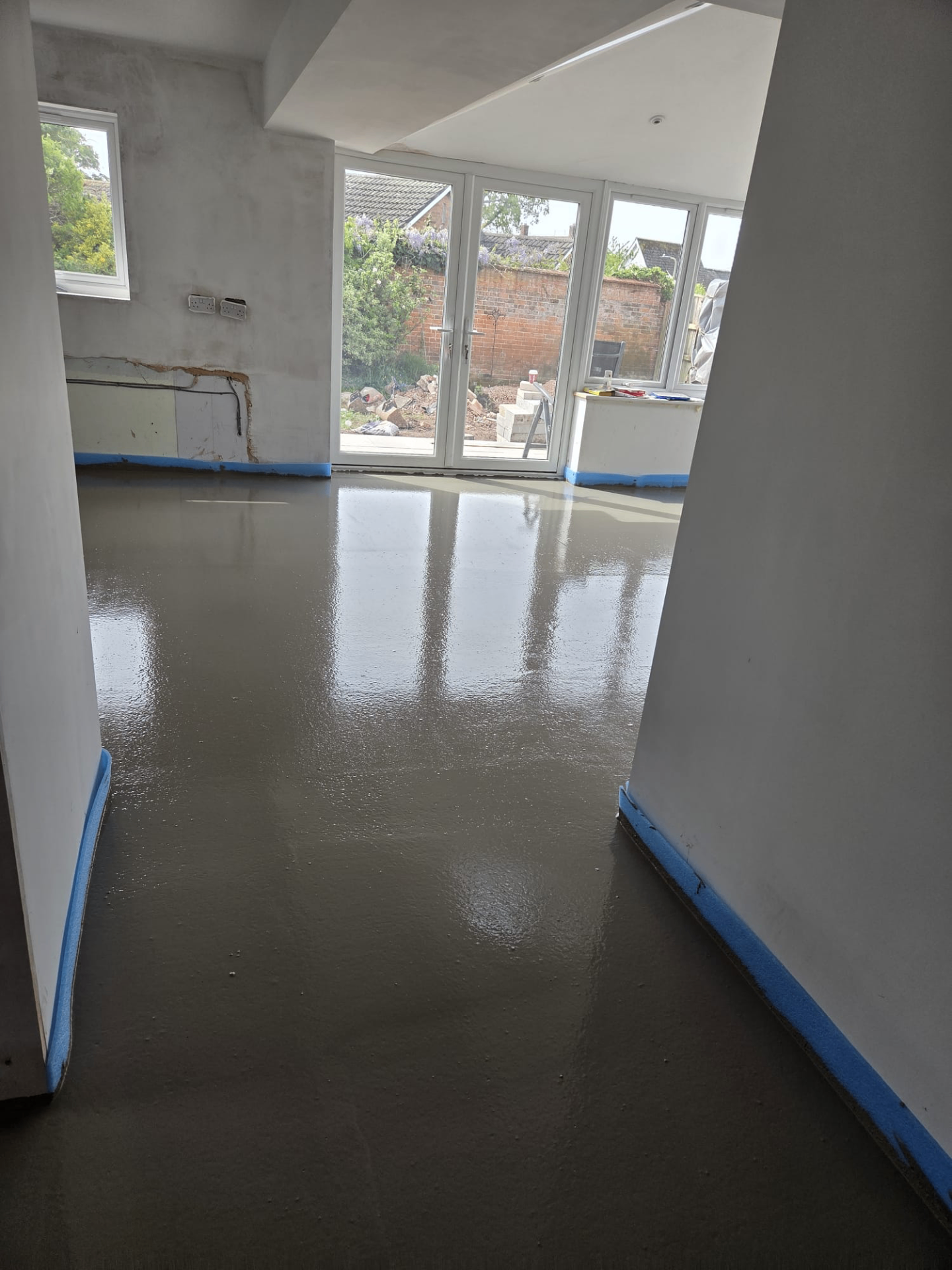
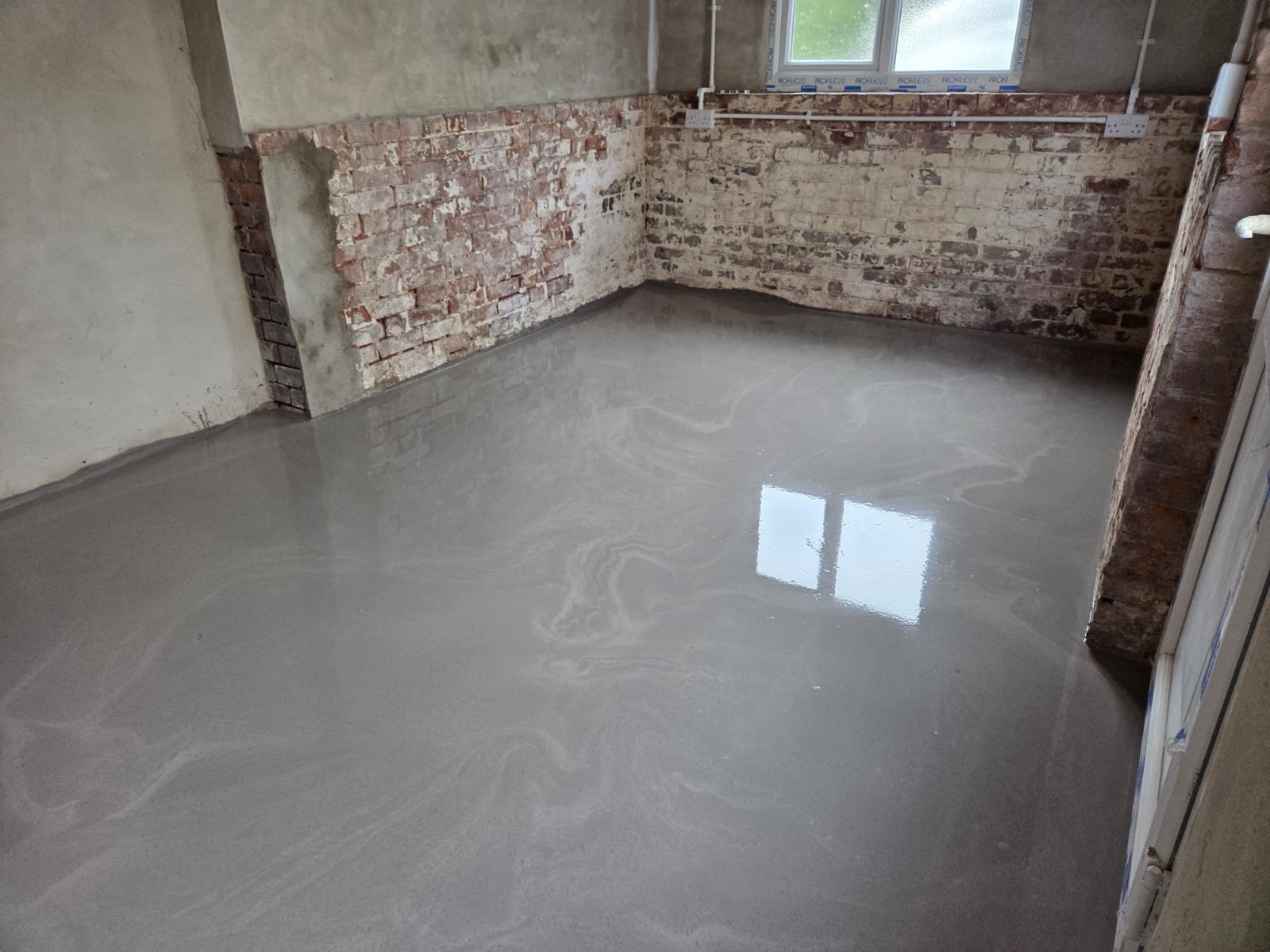
When other trades can return — the points that decide it
- Light foot traffic is usually possible earliest, once the surface has gained enough initial strength to avoid indentation.
- Trades needing to bring tools, ladders or light materials onto the floor typically need to wait longer than for foot traffic alone.
- Point loads, such as scaffold towers or stacked materials, require significantly more strength gain and should not be assumed safe just because the floor looks dry.
- Wet trades working nearby, such as plastering, can add moisture back into the building that slows the screed's own drying, so timing this sensibly matters.
- Floor coverings require the screed to reach a suitable moisture content, which is a separate and generally much longer threshold than structural strength for foot traffic.
- Specific timings should always be confirmed against the product datasheet and site conditions rather than assumed from a generic rule.
- Electricians and first-fix trades needing to cross the floor early should use agreed walkways with protection boards.
- Ladders and step platforms should have wide, load-spreading feet rather than narrow points resting directly on an early-strength floor.
- A brief written confirmation from the installer of what can happen and when helps avoid disputes between trades on a busy site.
Strength gain versus drying: two different clocks
A screed can be strong enough to walk on, or even take some loading, well before it has dried sufficiently for a floor covering to be installed. These are governed by different processes and shouldn't be conflated when planning the programme.
Strength gain is largely about the screed's chemical curing reaction reaching a sufficient stage, while drying is about excess water leaving the material over time; a floor can feel solid and be perfectly walkable while still holding moisture well above the level needed for sensitive coverings.
Why heavy loading needs particular caution
Scaffold towers, stacked pallets of materials or heavy plant concentrate load onto a small area of floor, which can cause local damage even on a screed that would happily support general foot traffic. This is worth flagging explicitly to other trades and site management.
Load-spreading boards or plywood sheets placed under scaffold feet or stacked materials can reduce the risk of local indentation, and are a sensible precaution even once the floor is confirmed able to take some loading.
Sequencing wet trades around the drying floor
Plastering, tiling in adjoining rooms, or other wet trades introduce additional moisture into the building, which can measurably slow the screed's own drying if carried out in the same enclosed space without adequate ventilation.
Where possible, wet trades are sequenced to finish, or at least reach a point of reduced moisture output, before the screed's own drying period is relied upon to hit a fixed handover date.
Setting expectations across the site team
Because different trades have different needs and different questions, it helps to communicate a simple, agreed summary to the whole site team — what can happen now, what needs to wait, and roughly when the next threshold is expected — rather than leaving each trade to ask individually.
Site inductions or toolbox talks are a practical opportunity to pass on this information, particularly on a busy multi-trade site where several different teams may be working in or near the same building at once.
When other trades can return — your questions
Coordinating trades after your pour?
We can advise on realistic timings for foot traffic, loading and other trades returning to site.
Or call our landline on 01392 237700
In short
Guidance on the different thresholds for trades returning after a pour, since 'can I walk on it' and 'can I load it' are different questions.
Process & decision guides
Curing & early protection regime
Process & decision guides
Drawings & screed schedules
Process & decision guides
Tight Site Access
Process & decision guides
Preparing a screed for coverings
Process & decision guides
Screeding in occupied buildings
Screed faults & diagnostics
Screed thickness overrun issues
Coordinating trades after your pour?
We can advise on realistic timings for foot traffic, loading and other trades returning to site.