
Looking after a new floor
Aftercare in the First Weeks After a Screed Pour
The weeks after a liquid screed pour are an important period for protecting the floor while it gains strength and begins to dry out.
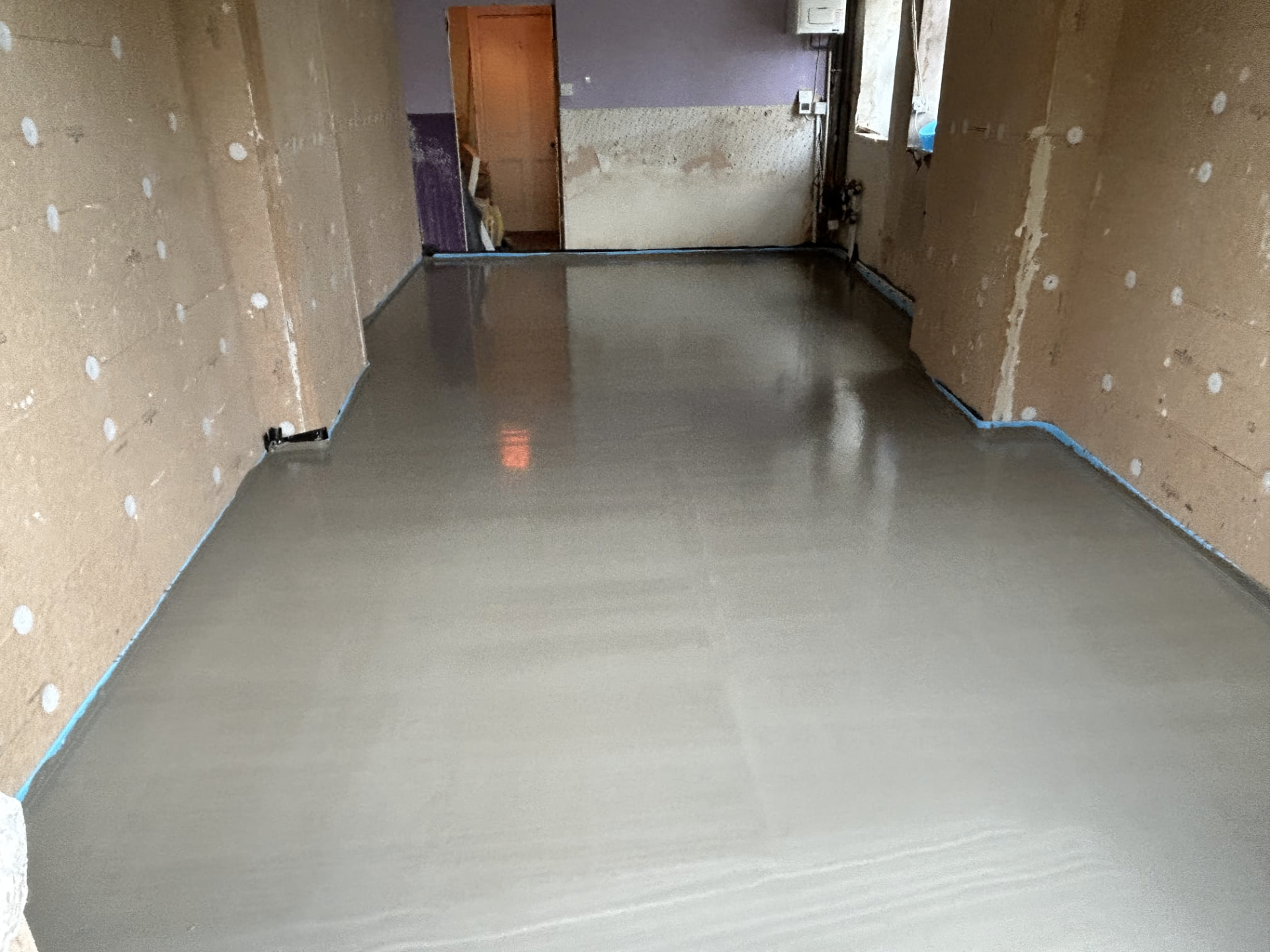
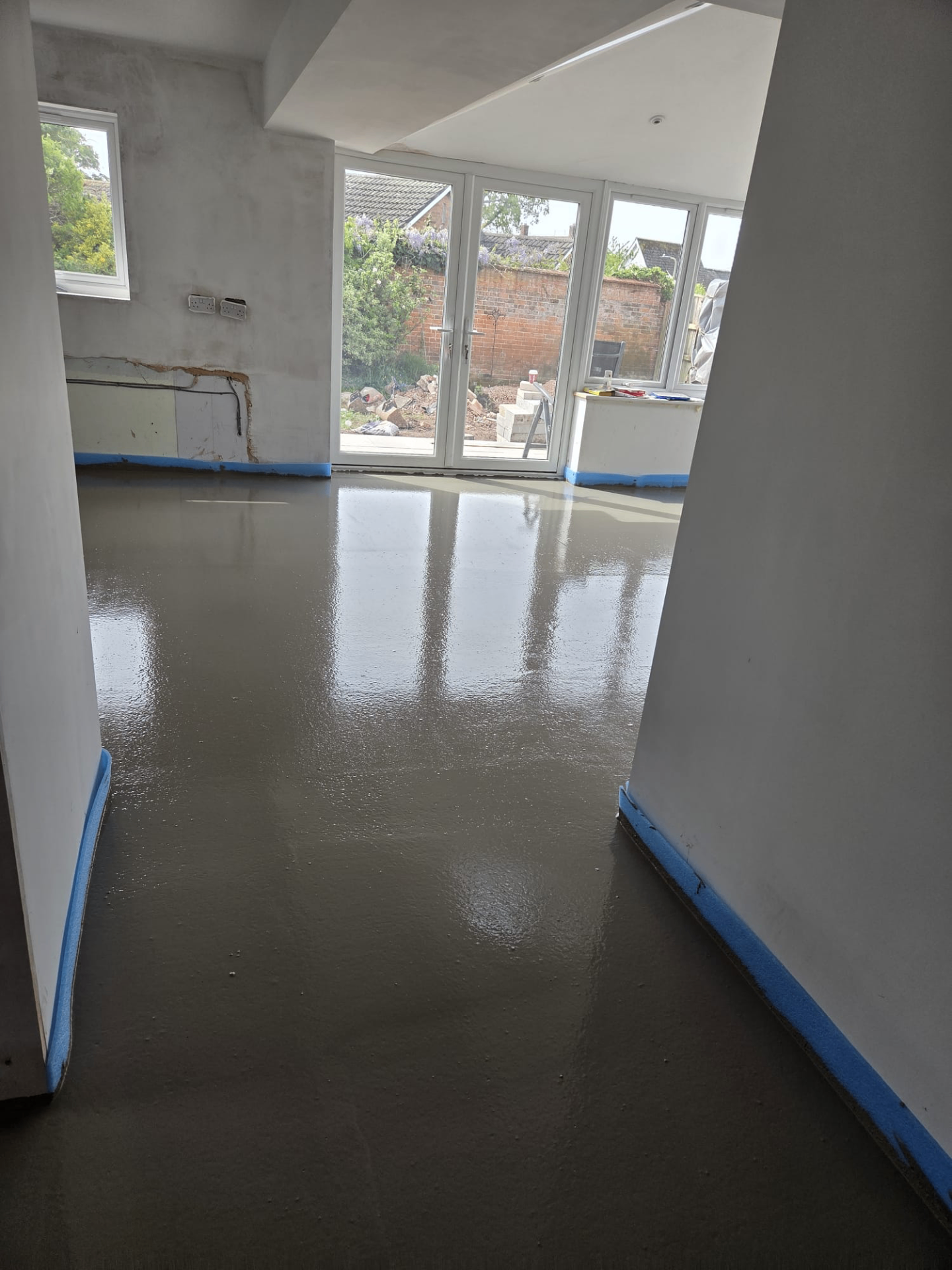
The first few weeks after a liquid screed floor is poured are a formative period. The floor is gaining strength and beginning to release the water used in mixing, and how it is treated during this time can influence both its condition and how smoothly the drying process proceeds. Good aftercare in this period is largely about protection and sensible site housekeeping rather than any specialist intervention.
Sites are often busy during this window, with other trades keen to get back in and continue work, which is understandable but needs to be balanced against the floor's need for reasonable protection while it cures. Clear communication with other trades about what is and is not acceptable on the new floor helps avoid avoidable damage.
This page covers the general principles of looking after a liquid screed floor in the early weeks, alongside the practical housekeeping steps that support the process.
Balancing protection with the working site
It is rarely practical to keep a site completely closed off for weeks after a pour, so protection tends to be about targeted measures — breathable protection boards on main walkways, careful trade sequencing, and clear signage — rather than isolating the floor entirely.
Where other trades need to bring materials or equipment across the floor, using boards to spread the load and protect the surface is generally more practical than trying to restrict access altogether.
Supporting the drying process
Reasonable ventilation and stable ambient conditions generally support even drying across the floor. Avoid extremes in either direction — closing a building up completely with no airflow, or introducing sudden intense heat — as both can lead to uneven results across different areas of the same floor.
Where the building has variable heating, such as some rooms warmer than others, this can lead to uneven drying progress across the floor, which is worth being aware of when interim checks are eventually carried out.
Housekeeping that protects the floor day to day
Simple site housekeeping — sweeping away debris regularly, mopping up any spills promptly, and keeping the area generally tidy — reduces the risk of contamination being ground into the surface by ongoing foot traffic.
Storing materials off the floor on pallets or boards, rather than directly on the screed, avoids both point loading and the risk of trapping moisture or staining beneath stacked items for extended periods.
What to do if the floor is damaged during this period
Accidental damage during the aftercare period, such as a dropped tool or a heavy item dragged across the surface, is best reported promptly rather than left unmentioned, since an early assessment gives more options for remedy than damage discovered much later.
Photographing any damage as soon as it is noticed, along with a note of how it happened, helps the installer assess whether remedial action is needed and reduces uncertainty about when the damage actually occurred.
Early Aftercare — the points that decide it
- Keep foot traffic to a minimum until the installer confirms the floor can bear normal loads
- Avoid dragging heavy materials or equipment directly across the surface
- Maintain reasonable ventilation to support the drying process without extreme draughts
- Avoid sudden, excessive heating that can cause the surface to dry too quickly
- Protect the floor from other trades' spills, particularly paint, adhesives and plaster
- Keep the area free of standing water from other works such as plastering or tiling
- Avoid covering the floor with impermeable sheeting for extended periods where drying is required
- Use load-spreading boards on main walkways where trades need to bring materials or tools across
- Report any accidental damage promptly so it can be assessed before it is built over
Not sure how to protect your new floor?
Contact us for aftercare guidance specific to your screed and site conditions.
Or call our landline on 01392 237700
Early Aftercare — your questions
In short
The weeks after a liquid screed pour are an important period for protecting the floor while it gains strength and begins to dry out.
Not sure how to protect your new floor?
Contact us for aftercare guidance specific to your screed and site conditions.