
Making the right choice
Choosing a Liquid Screed Contractor
Selecting the right liquid screed installer affects programme, finish quality and how well drying and aftercare are managed once the pour is done.
Liquid screed looks straightforward from the outside — a pump, a hose and a smooth grey floor — but the quality of the finished job depends heavily on the experience and preparation of the team carrying it out. Two contractors quoting for the same job can arrive at very different prices and very different outcomes, and the difference usually comes down to how much attention is paid to the details before the pump ever arrives on site.
Because liquid screed is poured wet and self-levels, mistakes made in preparation — a poorly taped edge, an unchecked underfloor heating loop, an unclear damp-proof membrane detail — are baked into the floor once it has gone off. There is very little scope to correct problems after the fact, so choosing a contractor who understands the whole process rather than just the pour itself matters.
This guide sets out some of the practical questions worth asking before committing to a contractor, along with the kind of answers that suggest a team is set up to deliver a reliable floor rather than just get concrete on the ground quickly.
Choosing a Contractor — the points that decide it
- Ask how they handle a site survey and what they check before quoting
- Find out who supplies and fits edge insulation, DPM and movement joint detailing
- Check whether underfloor heating loops are pressure tested and photographed before the pour
- Ask what happens if the pour has to be postponed due to weather or access issues
- Find out what aftercare and drying advice is provided once the screed is down
- Ask for clarity on who is responsible for protecting the floor after the pour
- Check how they communicate on pour day, particularly for multi-trade sites
- Ask how many operatives will attend and whether they regularly work together
- Confirm whether a written quotation sets out scope, exclusions and assumptions clearly
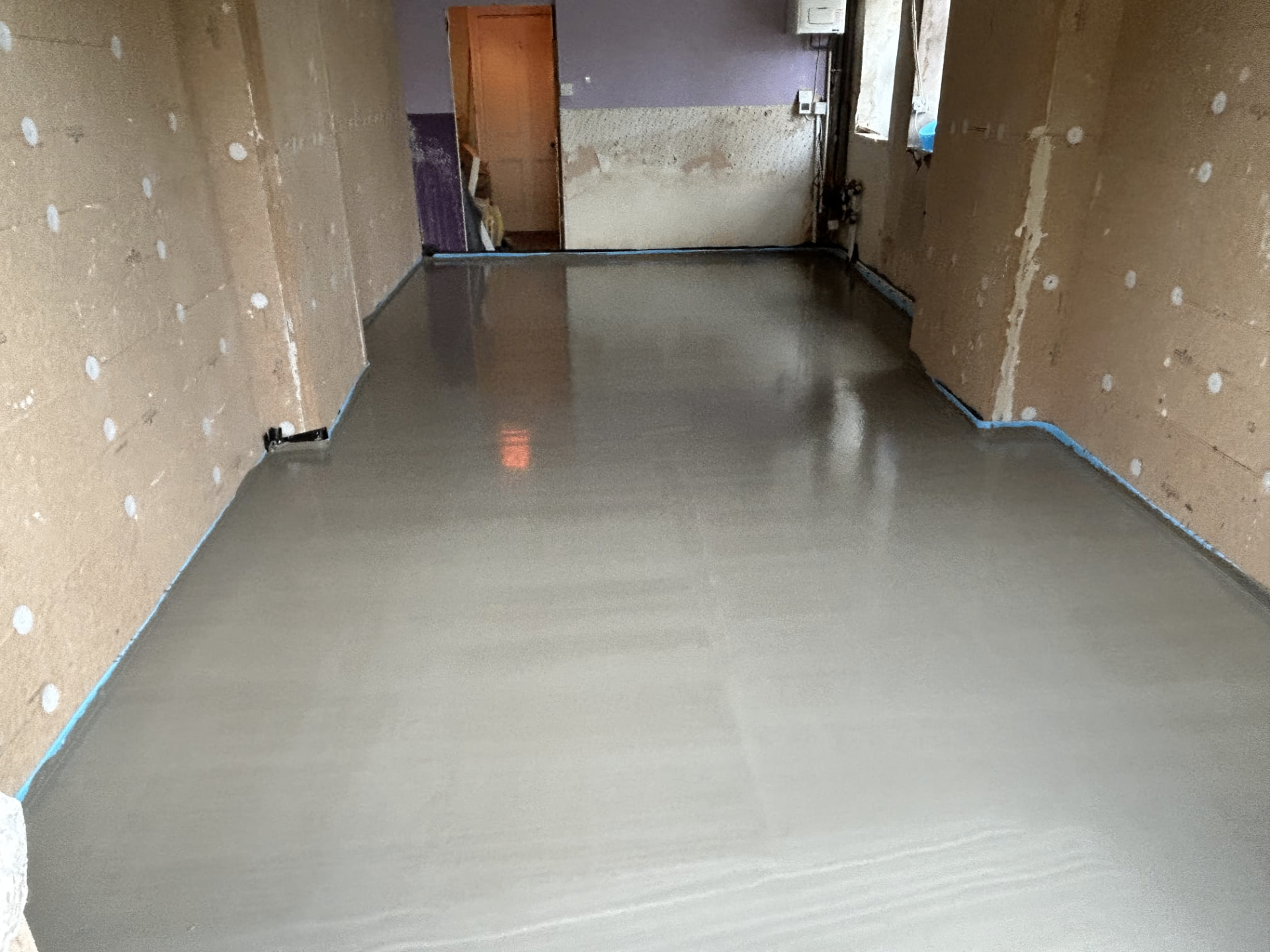
Questions worth asking at quote stage
A good contractor should be able to explain, without prompting, how they intend to protect adjoining areas, how they plan pump and hose routes through the building, and how many operatives will be on site for the pour. Vague or rushed answers to these questions are often a sign that the same care will not be applied on the day.
It is also worth asking how the contractor handles substrates they have not worked with before, and whether they will flag any concerns about the base build-up ahead of the pour rather than raising them on the day when there is less room to resolve them calmly.
Looking beyond the pour itself
The pour is only one part of the job. A contractor who provides clear guidance on curing, protection and drying — and who is contactable if questions come up in the weeks afterwards — is generally a better bet than one who disappears once the wagon has left site.
Ask specifically what happens after the pour: how curing instructions are communicated, whether a follow-up call or visit is offered, and how questions about drying progress are handled if they arise during the following weeks.
Assessing experience and site suitability
Not every contractor has equal experience with every building type; a team used to straightforward new-build slabs may approach an occupied Victorian conversion differently to one who works regularly on such projects. Asking about similar past work, in general terms, helps gauge fit for your specific site.
It is reasonable to ask how the contractor plans to handle any unusual features of your site — restricted access, an occupied building, a phased handover — during the initial conversation, rather than discovering their approach only once booked.
Weighing price against scope and service
A lower price is only meaningful once you understand exactly what it includes; comparing quotations line by line, rather than by headline figure alone, is the most reliable way to see whether you are comparing like with like.
Consider the whole service being offered — communication, aftercare advice, clarity of documentation — alongside price, since the cheapest quote is not always the best value once these factors are taken into account.
Considering liquid screed for your project?
Speak to our team about your site and we will talk you through how we approach preparation, pouring and aftercare.
Or call our landline on 01392 237700
In short
Selecting the right liquid screed installer affects programme, finish quality and how well drying and aftercare are managed once the pour is done.
Choosing a Contractor — your questions
Considering liquid screed for your project?
Speak to our team about your site and we will talk you through how we approach preparation, pouring and aftercare.