
Logistics
Scheduling ready-mix screed deliveries around a pour
An explanation of how delivery timing is coordinated with pumping rate and site access on larger liquid screed pours.
Planning a larger pour with multiple deliveries?
Talk to us about your site access and we'll plan a delivery schedule that keeps the pour moving smoothly.
Or call our landline on 01392 237700
On larger pours, screed usually arrives as a series of deliveries timed to keep the pump supplied without long gaps or a queue of wagons waiting on site. Getting this timing right depends on realistic assumptions about pumping rate, travel time and site access, agreed before the day rather than worked out as deliveries arrive.
The scheduling itself involves coordination between the ready-mix plant, the pump operator and whoever is managing the site, since each has a different piece of the timing puzzle — production and dispatch, pumping rate, and physical space on site to receive wagons.
Getting this coordination right matters because both extremes cause problems: too many wagons arriving at once creates congestion and pressure to rush, while too few risks the pump running dry and the crew having to pause partway through an area.
Ready-mix delivery scheduling — the points that decide it
- Deliveries are usually scheduled at intervals matched to the expected pumping rate for the specific screed and site conditions.
- Site access constraints, such as a single narrow entrance, affect how many wagons can be accommodated at once.
- A realistic allowance is made for wagon turnaround time, since screed pumped too slowly can affect finish quality across a large area.
- Weather and traffic conditions on the delivery day can affect timing and are factored into contingency planning where possible.
- Communication between the plant, the pump operator and the site is maintained throughout the day to adjust timing if the pour runs ahead or behind schedule.
- Overordering or underordering material is avoided by careful area and depth calculations agreed in advance.
- Neighbouring roads or shared access with other properties are considered when planning wagon movements to avoid unnecessary disruption.
- A point of contact on site is usually agreed in advance who can direct wagons and confirm access on arrival.
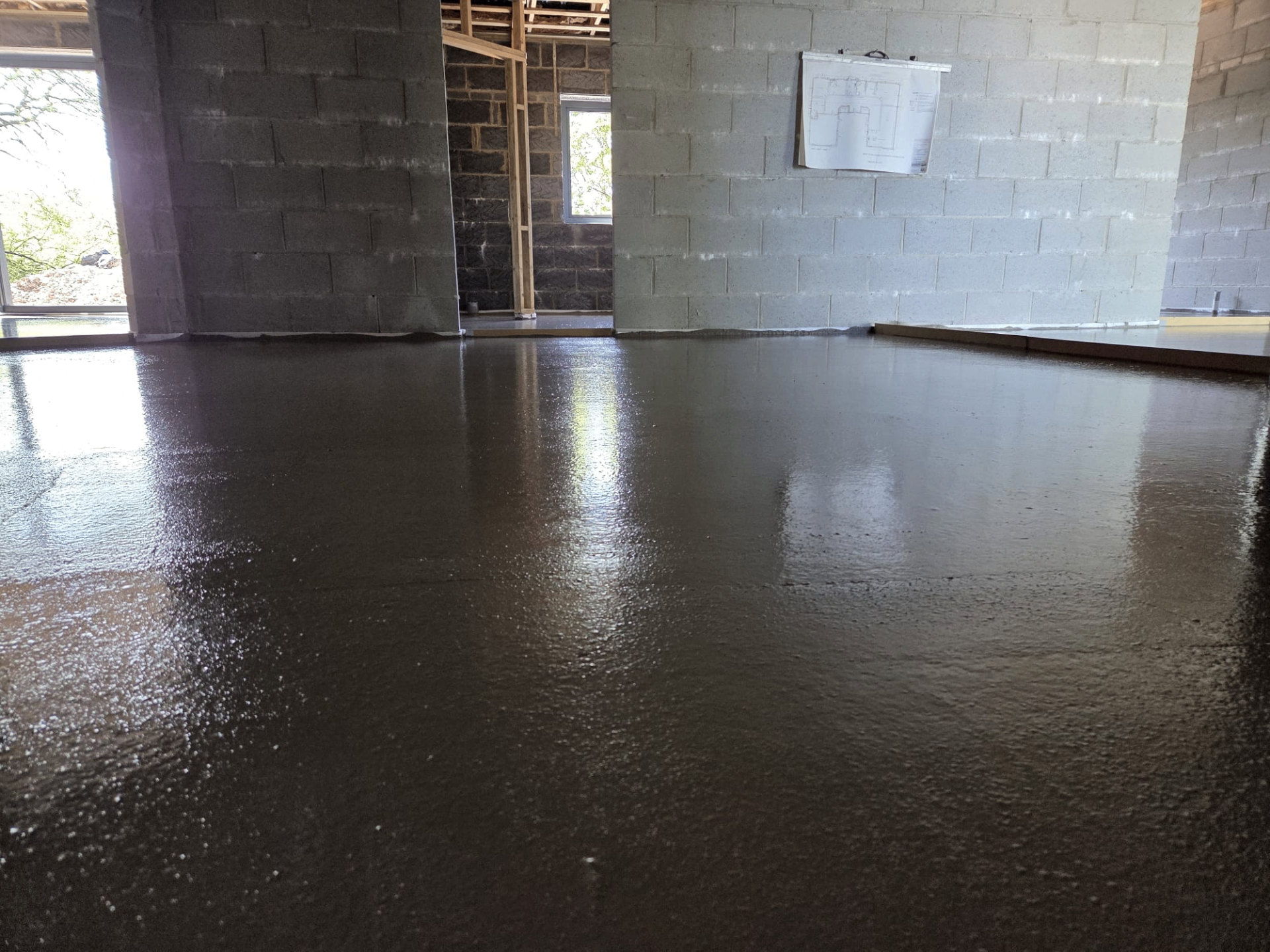
Why timing gaps matter for finish quality
A gap between deliveries that's too long can mean the pump sits idle or the crew has to manage a partially poured area for longer than ideal, which can affect how consistently the surface levels and finishes. Scheduling aims to avoid this by matching supply to pumping rate.
Where a gap is unavoidable, for example due to plant distance or traffic, the crew will plan the pour sequence to manage this as well as possible, though avoiding the gap in the first place through good scheduling is always the better outcome.
Site access as a scheduling constraint
Sites with limited turning space or a single access point may only be able to accommodate one wagon at a time, which shapes the delivery schedule and sometimes the overall pour sequence for a large floor area.
This is one of several reasons access is assessed at survey stage, since it feeds directly into how deliveries can realistically be scheduled on the day rather than being an afterthought once a pour date is booked.
Coordinating between plant, pump and site on the day
Throughout the pour, ongoing communication between the ready-mix plant, the pump operator and the site allows the schedule to be adjusted in real time if the pour is running ahead of or behind the original plan.
This flexibility matters because pumping rate can vary through the day depending on the specific area being poured, so a schedule that can't adapt slightly on the day is more likely to result in either a gap or a queue.
What happens with larger or multi-day pours
On pours large enough to require deliveries across more than a single day, scheduling needs to account for how each day's work relates to the next, including where the pour was left off and how that affects the following day's sequence.
This kind of phased delivery schedule is usually planned well in advance as part of the wider quotation and booking process, rather than being worked out once the first day's pour is already underway.
Planning a larger pour with multiple deliveries?
Talk to us about your site access and we'll plan a delivery schedule that keeps the pour moving smoothly.
Or call our landline on 01392 237700
In short
An explanation of how delivery timing is coordinated with pumping rate and site access on larger liquid screed pours.
Ready-mix delivery scheduling — your questions
Planning a larger pour with multiple deliveries?
Talk to us about your site access and we'll plan a delivery schedule that keeps the pour moving smoothly.