
Trade coordination
Coordinating underfloor heating, electrical and plumbing trades before a screed pour
An overview of the coordination needed between UFH, electrical and plumbing trades in the run-up to a liquid screed pour, and where responsibility typically sits.
Getting trades aligned before your pour?
We can talk through what needs to be confirmed from other trades before your pour date is locked in.
Or call our landline on 01392 237700
By the time a screed pour happens, several trades have usually already worked in the same floor zone, and their work needs to be complete, tested and protected before the screed goes down. Coordination failures at this stage are one of the most common causes of pour-day delay or post-pour disputes about damaged pipework and cables.
The trades most commonly involved below floor level are underfloor heating installers, electricians running below-floor containment, and plumbers with pipework routed under the screed. Each has its own checks that should be completed before insulation and screed are laid, and each depends on clear communication with whoever is coordinating the site.
Because these checks happen out of sight once the screed is poured, there's little opportunity to correct an oversight afterwards without breaking out the finished floor. This makes the pre-pour coordination stage disproportionately important relative to how little time it typically takes on the day itself.
Coordinating trades before screed — the points that decide it
- Underfloor heating pipework should be pressure tested and, ideally, kept under pressure during the pour so any accidental damage is spotted immediately.
- Electrical containment and cabling below floor level should be complete, secured and protected before insulation and screed go in.
- Plumbing pipework routed under the floor needs to be pressure tested and clipped down to prevent movement or floating during the pour.
- Manifold positions and pipe centres for UFH should be checked against the drawing before covering, since errors are far harder to fix afterwards.
- A pre-pour walk-round with relevant trades helps confirm everything below floor level is finished, tested and fixed down.
- Responsibility for confirming trades are complete usually sits with the main contractor or client, though the screed team will generally flag anything visibly incomplete before pouring.
- Photographic records of pipework and cabling positions before covering are a useful reference for later maintenance or alterations.
- Any last-minute changes to fixtures or fittings that affect below-floor routing should be communicated before, not during, the pour.
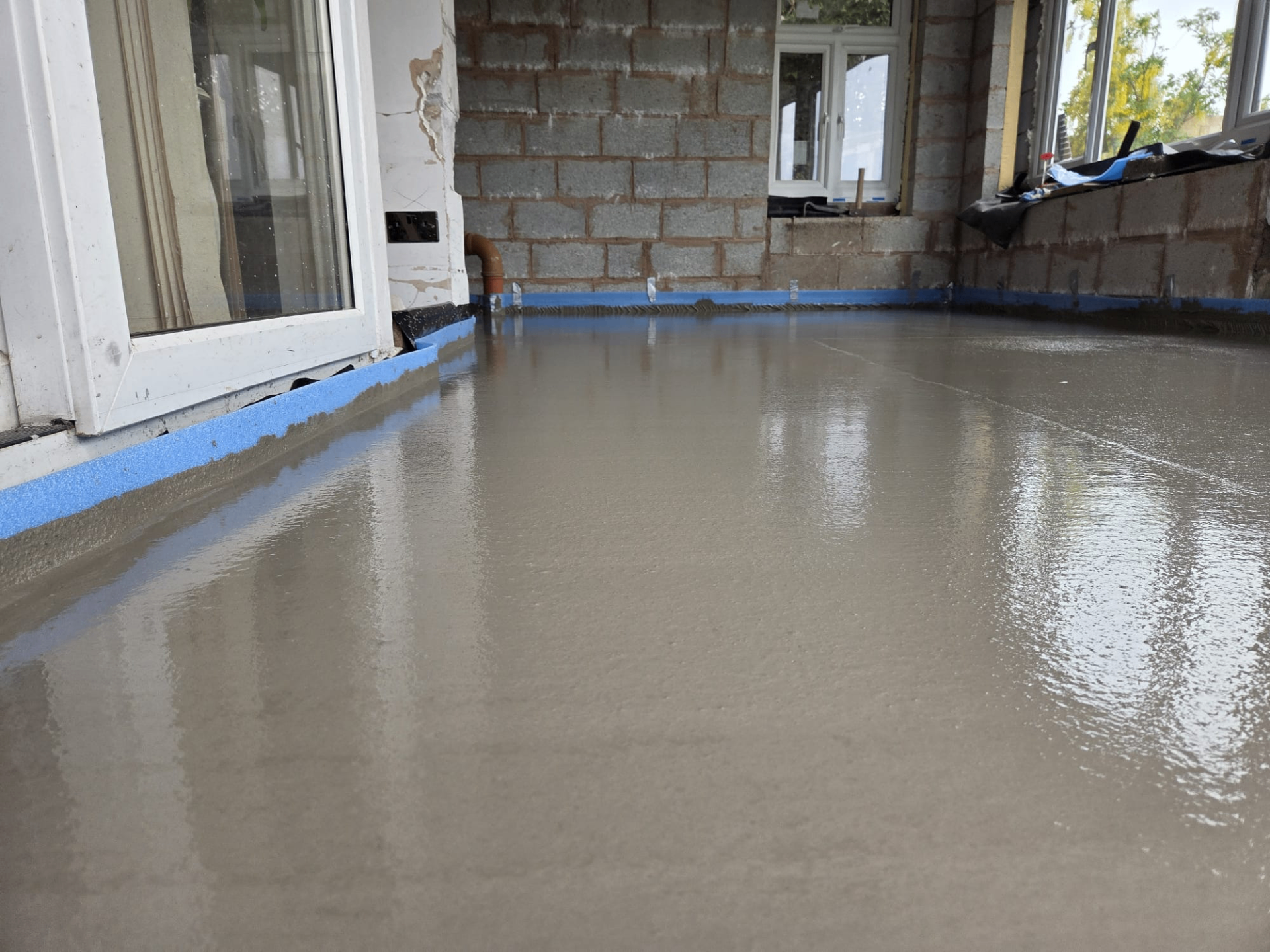
Why pressure testing before the pour matters
A pipe that leaks after being covered in screed is a significantly more disruptive and costly problem than one caught before the pour. Keeping the system under test pressure during the pour itself gives an extra layer of reassurance that nothing has been damaged during the pour process.
Pressure testing should be documented, with a record of the test pressure and duration kept as part of the project file, since this evidence can be useful if a query arises later about whether a fault developed before or after the screed was laid.
Fixing down loose pipework and cables
Anything not adequately clipped or restrained below floor level risks moving, floating, or being disturbed as the liquid screed flows and self-levels, which is why fixing standards are checked as part of the pre-pour walk-round.
Loose containment is a particular risk with liquid screed because of how freely the material flows compared with a traditional sand and cement mix, so fixing centres that might be adequate for one screed type aren't automatically sufficient for another.
Communication between trades and the screed team
Ideally, each trade working below floor level confirms completion directly to whoever is coordinating the site, who in turn passes this on to the screed installer ahead of the pour date rather than leaving it to be discovered on arrival.
Where trades are working to their own separate programmes without a shared point of coordination, gaps are more likely to appear, since no single party has visibility of every trade's actual progress against the pour date.
What happens if something isn't ready
If pressure testing hasn't been completed or containment isn't adequately fixed when the crew arrives, the pour may need to be delayed until it's resolved, since proceeding with known outstanding work below floor level risks damage that's expensive to trace afterwards.
Flagging concerns as early as possible, ideally days rather than hours before the booked pour date, gives the best chance of resolving an issue without losing the slot altogether.
In short
An overview of the coordination needed between UFH, electrical and plumbing trades in the run-up to a liquid screed pour, and where responsibility typically sits.
Getting trades aligned before your pour?
We can talk through what needs to be confirmed from other trades before your pour date is locked in.
Or call our landline on 01392 237700
Coordinating trades before screed — your questions
Other pages that answer this properly
Getting trades aligned before your pour?
We can talk through what needs to be confirmed from other trades before your pour date is locked in.