
Site readiness
The pre-pour checklist, and who is responsible for each item
A practical look at who typically takes responsibility for each item on a pre-pour checklist, to avoid items falling between trades.
Want to confirm your site is pour-ready?
Get in touch ahead of your booked date and we'll run through what needs checking beforehand.
Or call our landline on 01392 237700
A pre-pour checklist is only useful if it's clear who is responsible for each item — otherwise it becomes a list that everyone assumes someone else is managing, and gaps only show up on the morning of the pour when it's too late to fix them without delay.
This is a general guide to how responsibility is typically split across a client, main contractor, screed installer and other trades such as insulation and underfloor heating fitters; the specifics should always be confirmed for your project rather than assumed, since arrangements vary between domestic jobs run by a homeowner and larger contracts with a formal main contractor.
Where the checklist is genuinely shared between several parties, naming a single point of contact who chases confirmation from each trade tends to work better than circulating a list and hoping everyone checks their own items in time.
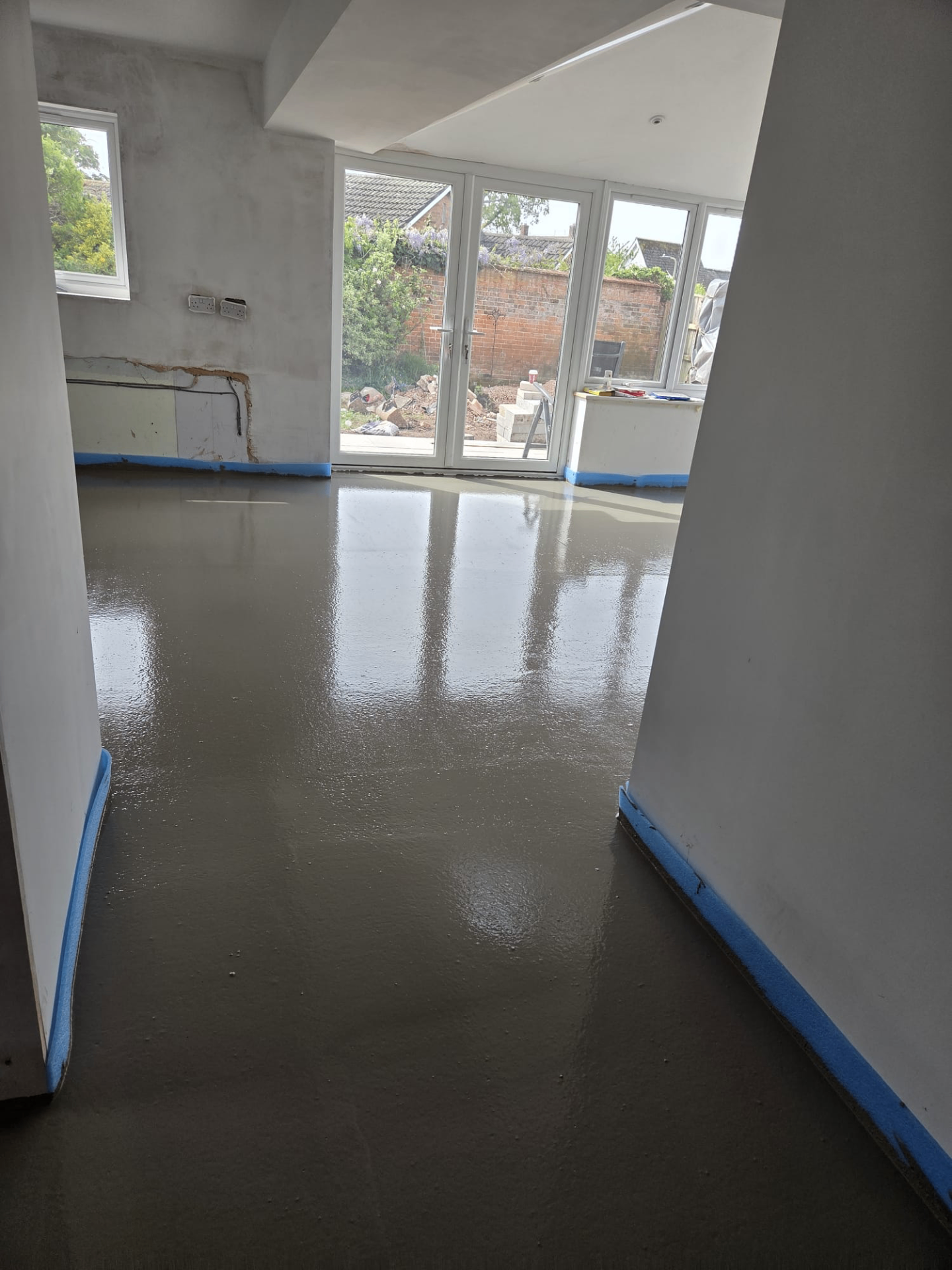
Pre-pour checklist ownership — the points that decide it
Why a single owner per item matters
Checklists that list an action without naming who does it tend to fail exactly at the point they're needed, because everyone assumes it's covered. Assigning a named party — even informally — to each item is what actually prevents last-minute surprises.
This is particularly important on jobs involving several separate trades or subcontractors who don't otherwise communicate directly with each other, since there's no natural point where gaps would be noticed without someone actively coordinating them.
What the screed installer typically checks on arrival
On the morning of the pour, the crew will typically walk the area to confirm insulation, membrane and pipework are as expected, access is clear, and nothing has changed since the survey. This isn't a substitute for the client or main contractor's own checks beforehand.
If something is found to be incomplete or different from what was expected, this is raised immediately so a decision can be made about whether to proceed, delay part of the pour, or reschedule entirely, rather than discovering the issue partway through pouring.
Adapting the checklist for domestic versus contract jobs
On a homeowner-managed extension, the client often ends up owning several items that would otherwise sit with a main contractor, simply because there isn't a formal contractor role on site coordinating other trades.
On a larger contract, a main contractor typically takes on most of the coordination role, but it's still worth confirming which specific individual is responsible for chasing each item, rather than assuming the company as a whole has it covered.
Using the checklist as a communication tool
Beyond simply ticking items off, sharing the checklist with everyone involved ahead of the pour date gives each party visibility of what others are relying on them for, which tends to surface gaps earlier than a private list kept by one person.
Revisiting the checklist a few days before the pour, rather than only on the day itself, gives enough time to resolve an outstanding item without it forcing a last-minute change to the booking.
Pre-pour checklist ownership — your questions
Want to confirm your site is pour-ready?
Get in touch ahead of your booked date and we'll run through what needs checking beforehand.
Or call our landline on 01392 237700
In short
A practical look at who typically takes responsibility for each item on a pre-pour checklist, to avoid items falling between trades.
Want to confirm your site is pour-ready?
Get in touch ahead of your booked date and we'll run through what needs checking beforehand.