
Fault Diagnosis
Screed Cracked After First Turning On Underfloor Heating
Cracking that appears specifically at first heat-up usually points to the heat-up procedure being rushed or skipped rather than to a defect present in the screed since installation.
Cracking appeared straight after heating up?
Talk us through your heat-up process and the crack location and we can help you understand what likely happened.
Or call our landline on 01392 237700
A floor that looked perfect for weeks and then develops a crack the first time the underfloor heating is switched on is a familiar and frustrating scenario. It feels like the heating has caused damage, and in a sense it has, but the underlying cause is almost always that the screed was heated up too quickly or before it had reached a suitable state to accept heat, rather than a fault inherent to the screed material itself.
Liquid screed needs to go through a controlled, gradual commissioning heat-up before it is used as a normal living-condition floor. This process drives off residual moisture slowly and lets the screed expand in a controlled way as it warms for the first time. Skipping or rushing this step subjects the screed to thermal stresses it has not yet been conditioned to handle.
Because the crack appears at a specific, identifiable trigger point — first heat-up — it is usually possible to trace the cause back to the commissioning record, or lack of one, for that particular installation.
Cracking After First Heating — the points that decide it
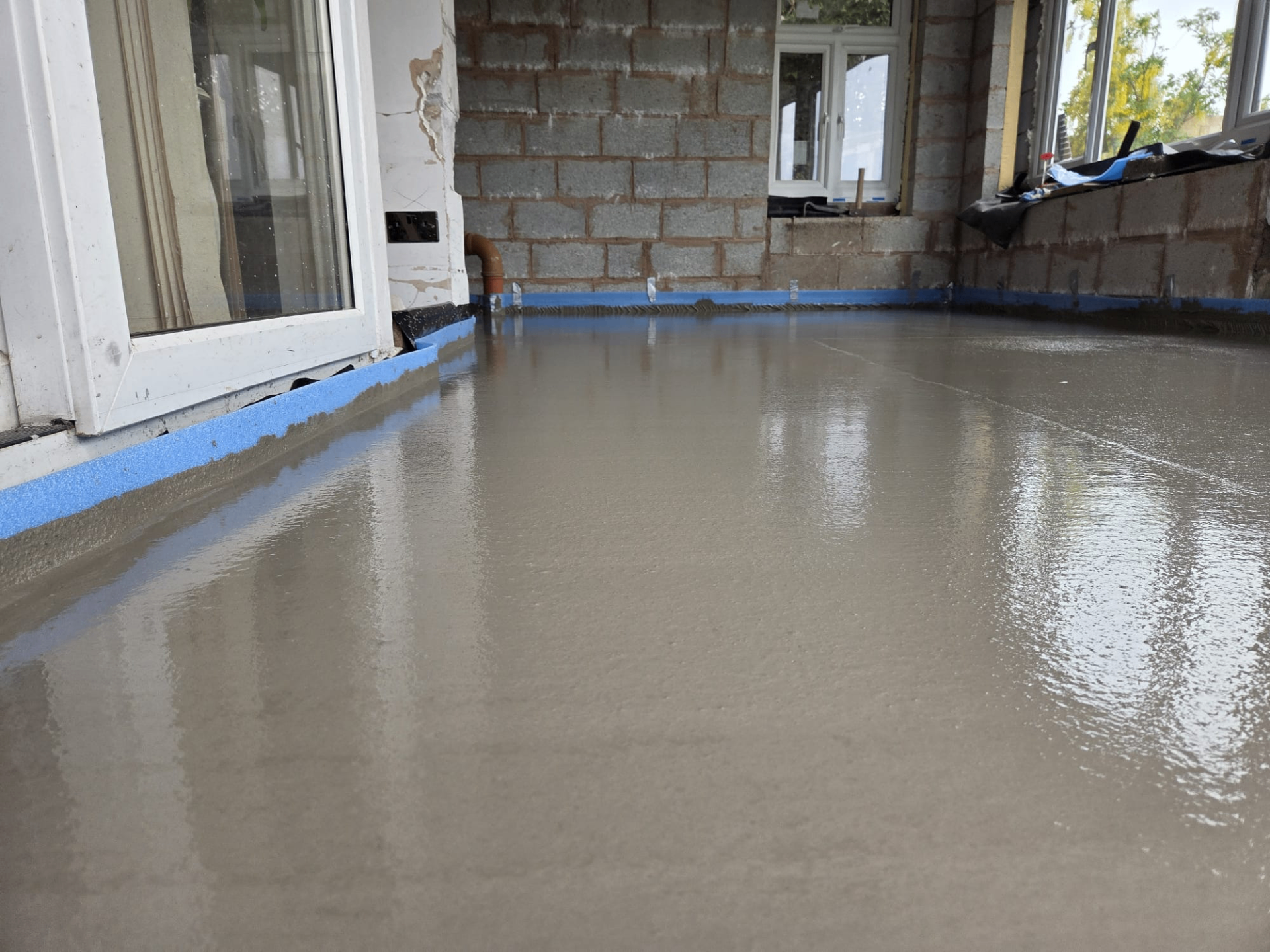
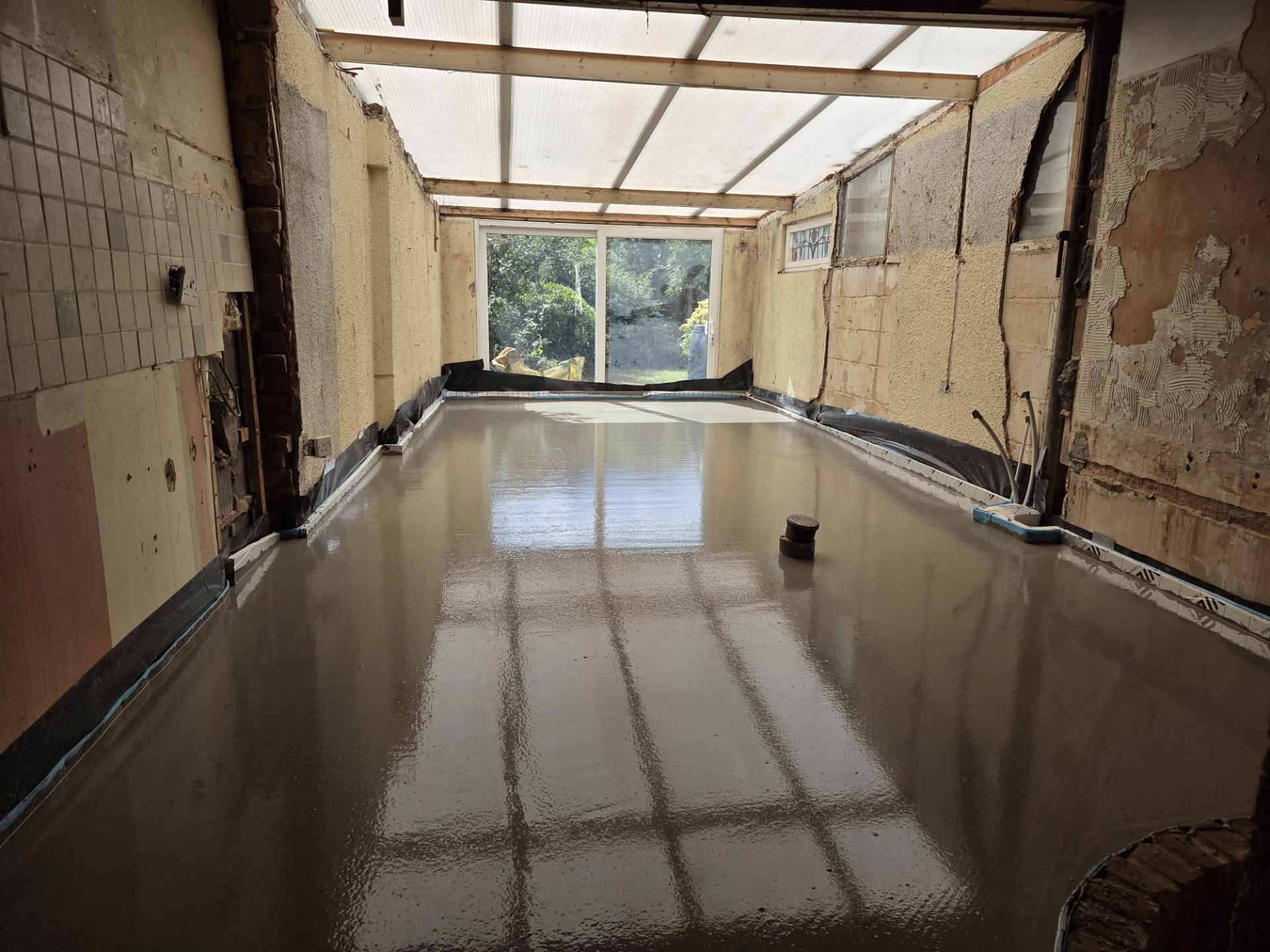
Why the heat-up sequence matters
The commissioning heat-up is designed to bring the screed up to operating temperature in gradual steps, typically starting a few degrees above ambient and increasing incrementally, holding at intervals to let the whole floor mass respond evenly. This gentle ramp reduces the thermal shock on the screed and helps confirm the system and floor are functioning correctly before flooring finishes are committed.
Where this step is skipped, or the heating is switched straight to a full comfort setting, the screed and the pipes within it expand rapidly and unevenly, and any weak point in the floor — a restrained corner, a poorly formed joint, or an area of shallow cover — becomes the site of a new crack.
What to look at if cracking follows first heat-up
It is worth establishing whether a documented commissioning heat-up took place at all, and if so, over what timescale and to what temperatures. It is also worth checking whether the crack sits over a known joint or corner, which would tie the failure to a pre-existing weak point exposed by the thermal event rather than a random location.
Going forward, any repair should be paired with confirmation that a proper gradual heat-up (and cool-down) protocol is followed for the system, since a repaired crack subjected to the same rapid heating risk could reopen or a new one could form nearby.
The role of screed readiness before heat-up begins
Heat-up commissioning is normally timed against the screed's own drying and curing programme, not just a fixed number of days after the pour, since a screed that has not built sufficient strength or lost enough moisture is more vulnerable to thermal shock. Starting the heat-up too early, before the manufacturer's minimum waiting period has elapsed, effectively compounds two stresses at once: ongoing drying shrinkage and new thermal expansion.
Where records show the heat-up began close to, or before, the recommended minimum period, this timing mismatch is often a stronger candidate for the cause of cracking than any single step in the heat-up ramp itself.
Coordinating screed and heating trades
Because commissioning sits at the boundary between the screed installation and the heating system, it is common for responsibility to become blurred between the two trades, particularly if they were engaged separately. Establishing early on who is responsible for producing and following the heat-up schedule avoids a situation where neither party has actually managed the process end to end.
Where a crack has already appeared, bringing in both the screed contractor and the heating installer to review commissioning records together tends to produce a clearer picture than investigating the screed alone, since the heat-up log itself is usually held by the heating side of the project.
In short
Cracking that appears specifically at first heat-up usually points to the heat-up procedure being rushed or skipped rather than to a defect present in the screed since installation.
Cracking appeared straight after heating up?
Talk us through your heat-up process and the crack location and we can help you understand what likely happened.
Or call our landline on 01392 237700
Cracking After First Heating — your questions
Other pages that answer this properly
Cracking appeared straight after heating up?
Talk us through your heat-up process and the crack location and we can help you understand what likely happened.