
Screed Fault Diagnosis
Ridging Over Insulation Boards
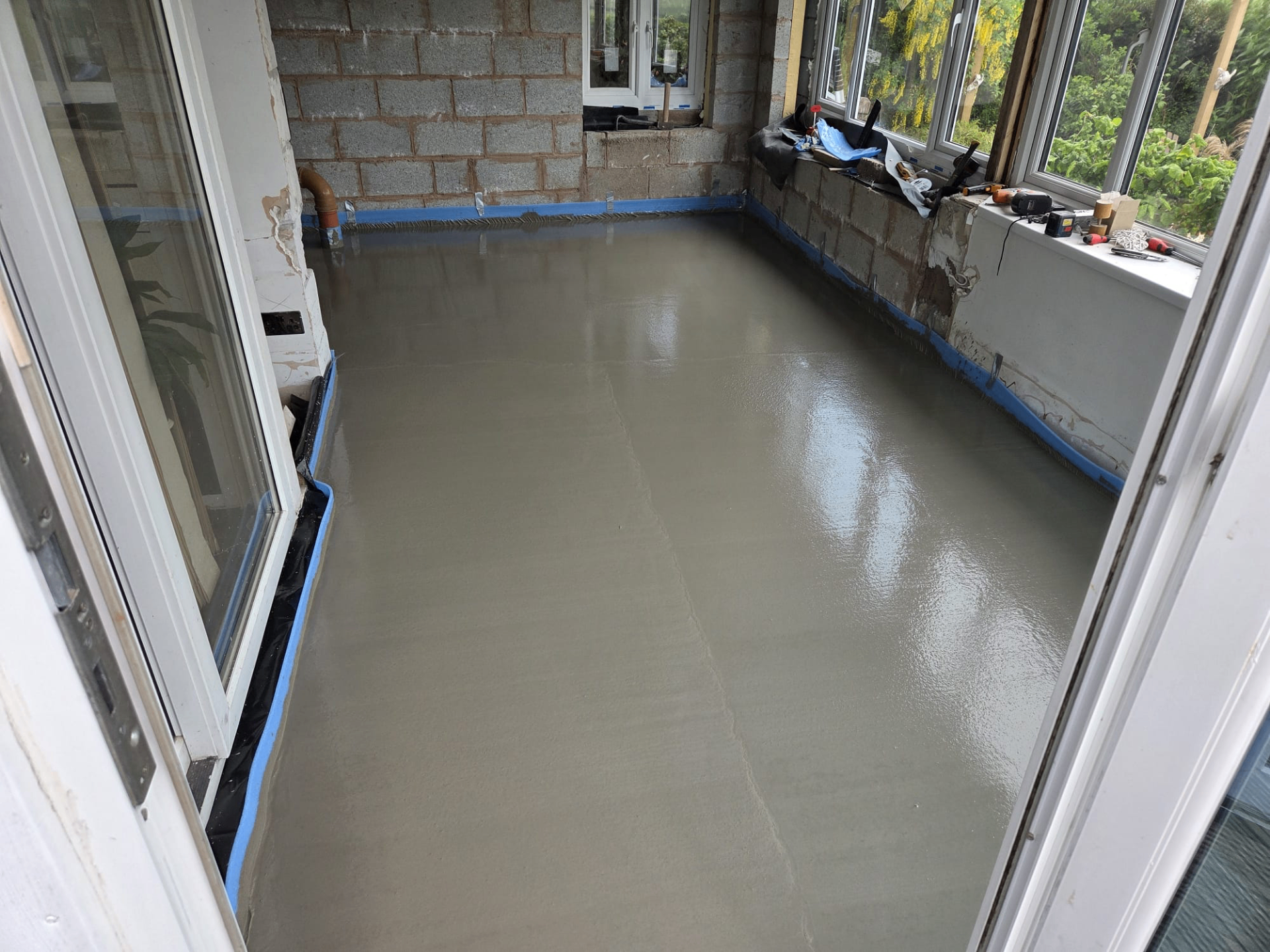
Ridging along a grid pattern usually traces the joints between insulation boards, arising from gaps, poor taping, or board movement during the pour.
Seeing a faint grid pattern in your screed floor?
Call Exeter Liquid Screeders on 07791 510849 to check whether it's cosmetic or needs closer investigation.
Or call our landline on 01392 237700
A subtle but recognisable ridge pattern across a floor, often forming a grid that matches standard insulation board sizes, points strongly to the boards beneath rather than the screed mix itself. Gaps between boards, insufficient taping, or boards shifting slightly as the liquid screed was poured over them can all create a thin, slightly proud line that telegraphs through to the finished surface.
This is largely a cosmetic and levelling issue rather than a structural one, but it's worth diagnosing properly, since it can also correlate with other insulation-related issues such as localised low spots or, in the worst cases, insufficient screed cover in isolated areas.
Because the root cause sits below the screed and can't be undone after the pour, ridging is one of the clearer examples of a fault best addressed through installation practice rather than remedial work after the fact.
Seeing a faint grid pattern in your screed floor?
Call Exeter Liquid Screeders on 07791 510849 to check whether it's cosmetic or needs closer investigation.
Or call our landline on 01392 237700
Why insulation board joints telegraph through
Where boards are butted with small gaps, or joints aren't taped, liquid screed can seep slightly between boards or the boards can flex marginally under the weight and flow of the pour, creating a faint line that reflects through the drying screed above. Staggering board joints and taping them thoroughly before pouring is the standard way installers prevent this.
In more pronounced cases, a board that has lifted or shifted noticeably can also create a genuine thin spot in screed cover at that line, which is a more significant concern, particularly over underfloor heating pipework, and is worth checking alongside any ridging.
Living with, or correcting, ridging
Once the screed has cured, faint ridging can often be reduced by light grinding across the affected lines, bringing the surface within the flatness tolerance needed for the intended floor finish. For resilient or thin floor finishes especially, checking the floor with a straight edge against BS 8204 tolerances before installation is worthwhile.
On future projects, specifying and checking board-fitting quality — tight joints, staggered layout, taping — before the pour is by far the more effective route than trying to correct ridging afterwards.
Ridging Over Insulation Boards — the points that decide it
- Ridging typically follows a grid pattern matching insulation board joints
- Common causes: gaps between boards, inadequate taping, or board movement during the pour
- Usually a cosmetic/levelling issue rather than a structural defect
- Can correlate with localised thin spots in screed cover if boards have lifted
- Prevention relies on correct board fitting, staggered joints and taping before pouring
- Minor ridging can be ground back once the screed has cured sufficiently
- A level survey helps distinguish ridging from more significant level variation
Ridging Over Insulation Boards — your questions
In short
Ridging along a grid pattern usually traces the joints between insulation boards, arising from gaps, poor taping, or board movement during the pour.
Keep going — closely linked topics
Seeing a faint grid pattern in your screed floor?
Call Exeter Liquid Screeders on 07791 510849 to check whether it's cosmetic or needs closer investigation.