Screed Fault Diagnosis
Soft Weak Surface Layer
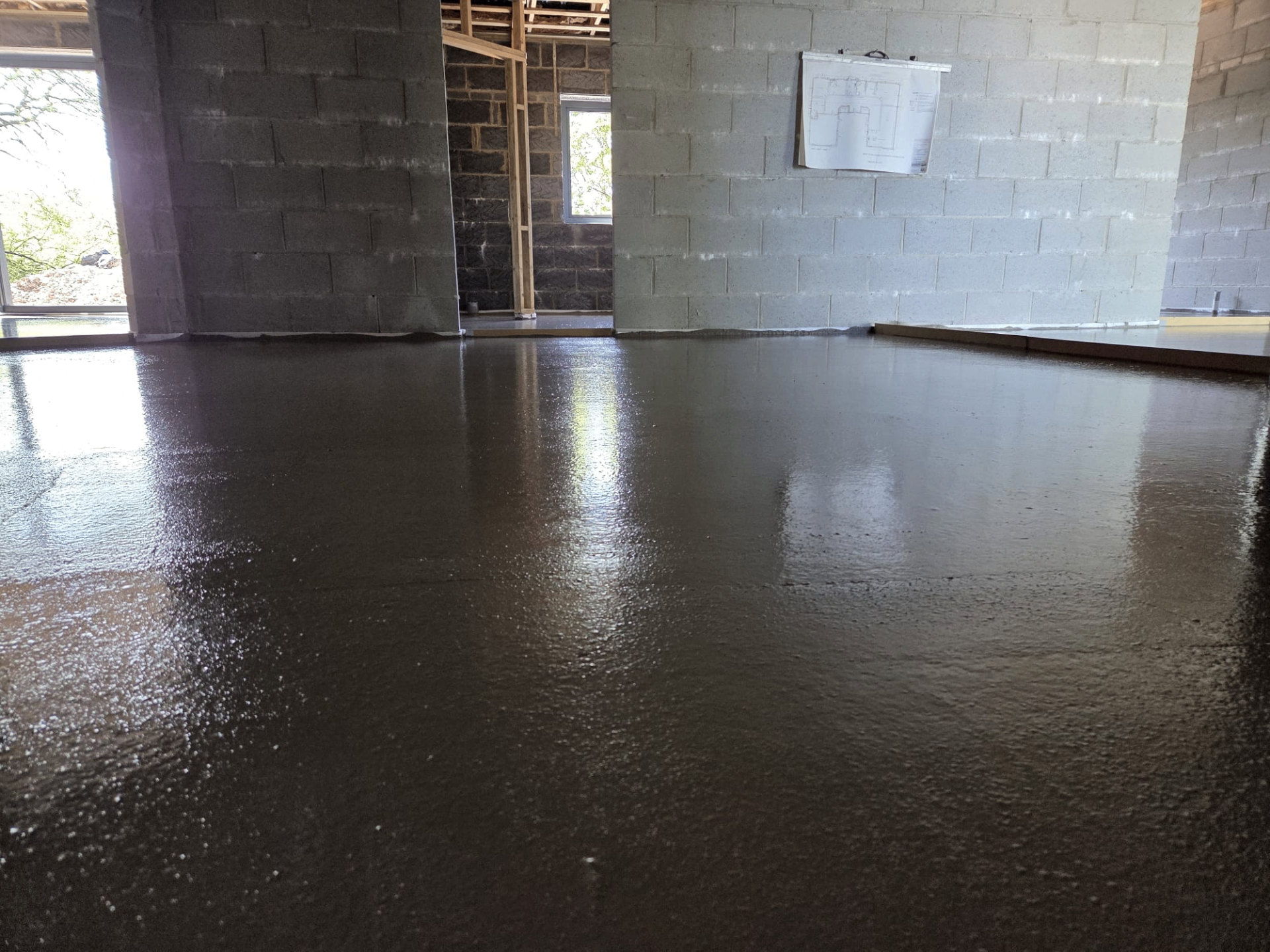
A genuinely soft surface, rather than a thin dusting layer, usually points to mix issues, over-wetting or premature exposure to moisture during curing.
Suspect your screed surface is softer than it should be?
Call Exeter Liquid Screeders on 07791 510849 for a proper strength assessment before any flooring is committed.
Or call our landline on 01392 237700
Where laitance is a thin, fine surface film, a soft weak surface layer goes deeper — the top few millimetres of the screed lack the strength expected of the specified mix, and can be scored or dented relatively easily with a key or screwdriver. This is a more significant issue than ordinary laitance and needs a proper cause assessment rather than routine preparation alone.
Common contributing factors include an incorrectly proportioned or over-wet mix at the point of pumping, rapid or premature drying that prevents proper curing reactions from completing, or exposure to rainfall or standing water before the surface had gained enough strength.
Because floor finishes rely on the top layer of the screed for adhesion and load transfer, a soft surface needs to be properly diagnosed and, where necessary, corrected before any flooring, tiling or coating work proceeds.
Establishing the depth and cause
A simple scratch or scrape test at several points across the floor gives an initial indication of how deep the weak layer extends, and whether it's isolated to certain areas (which might suggest localised water exposure) or widespread (more likely a mix-wide issue). Where a formal assessment is needed, a surface pull-off adhesion test provides a more quantified reading against BS EN 13813 expectations for the specified screed grade.
Reviewing what happened on site during and immediately after laying — weather conditions, whether the pour was protected, and how the mix was supplied and pumped — often points directly to the likely cause.
Correcting a soft surface
Where the weak layer is shallow, grinding back to sound, adequately strong material and confirming this with a further scratch or pull-off check can be sufficient before proceeding with floor preparation as normal.
Where weakness extends deeper or across a significant area, cutting out and replacing the affected screed is usually the more reliable route, since grinding alone won't resolve an underlying mix problem.
Soft Weak Surface Layer — the points that decide it
Suspect your screed surface is softer than it should be?
Call Exeter Liquid Screeders on 07791 510849 for a proper strength assessment before any flooring is committed.
Or call our landline on 01392 237700
Soft Weak Surface Layer — your questions
In short
A genuinely soft surface, rather than a thin dusting layer, usually points to mix issues, over-wetting or premature exposure to moisture during curing.
Suspect your screed surface is softer than it should be?
Call Exeter Liquid Screeders on 07791 510849 for a proper strength assessment before any flooring is committed.