Screed Fault Diagnosis
Surface Laitance and Dusting
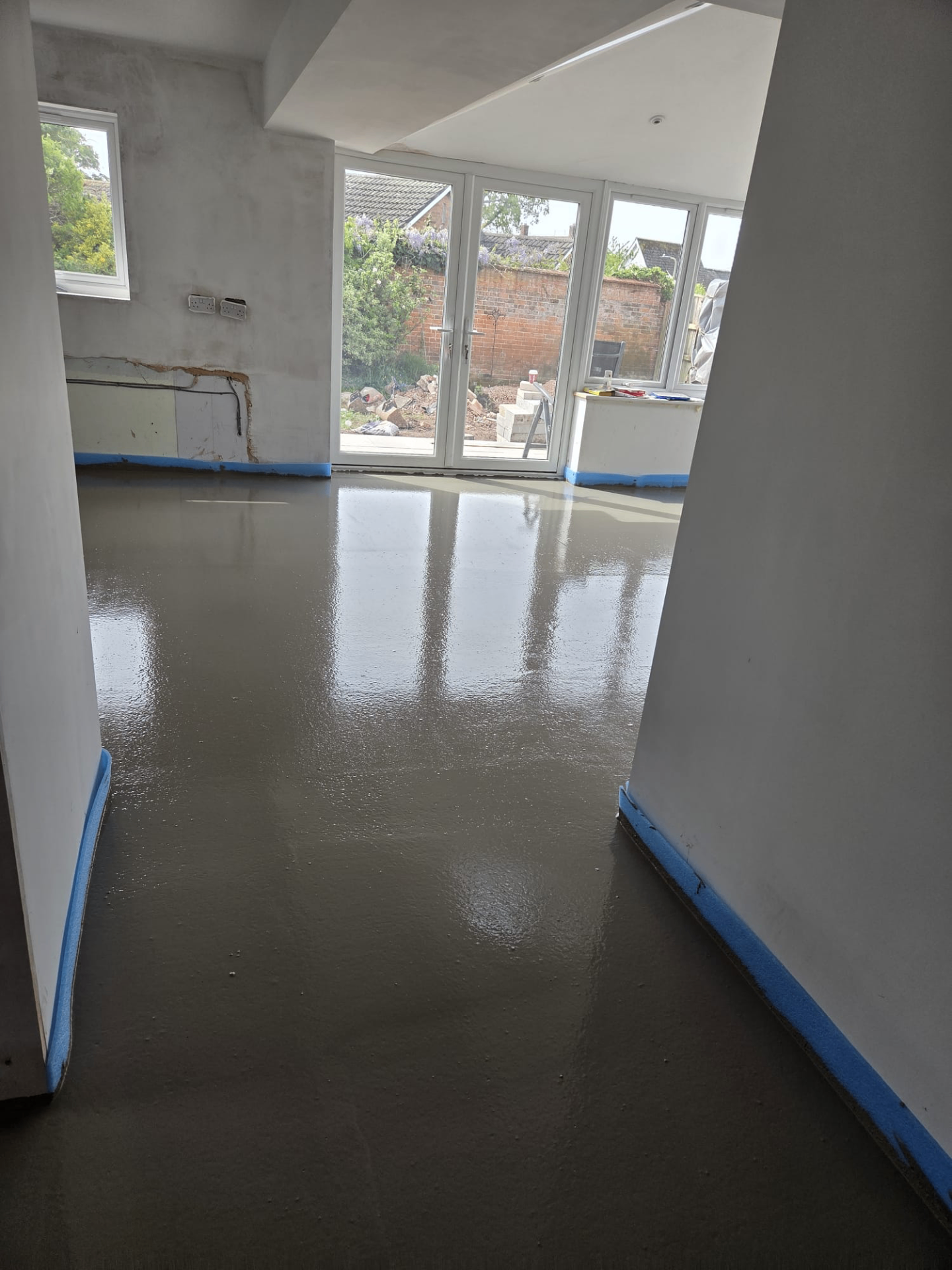
Laitance is a weak, fine layer that can form on the screed surface and leads to dusting; it must be removed before flooring, tiling or coatings are applied.
Laitance is a thin layer of fine cement or binder particles and water that can rise to the surface of a screed as it's laid and as heavier aggregate settles below. Once dry, this layer is weaker than the bulk of the screed and often presents as a fine dust or a slightly powdery, low-strength surface film.
It's a normal part of how many screeds cure, and a degree of surface preparation is expected on virtually every project before a floor finish is applied. Problems arise when laitance is thick, extensive, or left untreated before adhesives, coatings or self-levelling compounds are applied over it.
Because laitance sits right at the interface where adhesion to the next layer needs to happen, ignoring it is one of the more common causes of later flooring adhesion failure, even when the screed itself is structurally sound.
Surface Laitance and Dusting — the points that decide it
- Laitance is a weak surface layer of fine particles that rises during curing
- Presents as dusting, a powdery texture, or a slightly glossy weak film
- Must be mechanically removed before adhesives, tiling adhesive or coatings are applied
- Common removal methods include shot-blasting, diamond grinding or scarifying
- Testing surface strength (e.g. adhesion pull-off) after removal confirms readiness
- Excess laitance can indicate over-working or over-wetting the surface during laying
- Left untreated it is a leading cause of flooring adhesive failure, not screed failure
Identifying laitance versus a healthy surface
A simple tape or scrape test — pressing adhesive tape onto the surface and checking how much fine dust lifts off, or lightly scraping with a trowel edge — gives a quick indication of laitance. A sound, well-cured screed surface should be firm and largely free of loose powder once fully dried.
It's worth distinguishing laitance from soft weak surface layers caused by over-watering or poor mix control, which go deeper than a thin surface film and require a different assessment.
Removing laitance correctly
Mechanical preparation — typically shot-blasting or diamond grinding for cementitious screeds — removes the weak surface layer and exposes sound material, and also improves mechanical key for subsequent adhesives or coatings. Calcium sulfate screeds usually require sanding to remove the surface laitance specific to that material, following the screed manufacturer's guidance.
After preparation, the floor should be thoroughly vacuumed to remove dust before any primer, adhesive or self-levelling compound is applied, since residual dust undermines adhesion just as much as the laitance itself.
Surface Laitance and Dusting — your questions
Dusty or powdery screed surface before flooring goes down?
Call Exeter Liquid Screeders on 07791 510849 to check whether preparation is needed before your flooring contractor starts.
Or call our landline on 01392 237700
In short
Laitance is a weak, fine layer that can form on the screed surface and leads to dusting; it must be removed before flooring, tiling or coatings are applied.
Dusty or powdery screed surface before flooring goes down?
Call Exeter Liquid Screeders on 07791 510849 to check whether preparation is needed before your flooring contractor starts.