Fault Diagnosis
Liquid Screed Contaminated by Site Traffic Before Curing
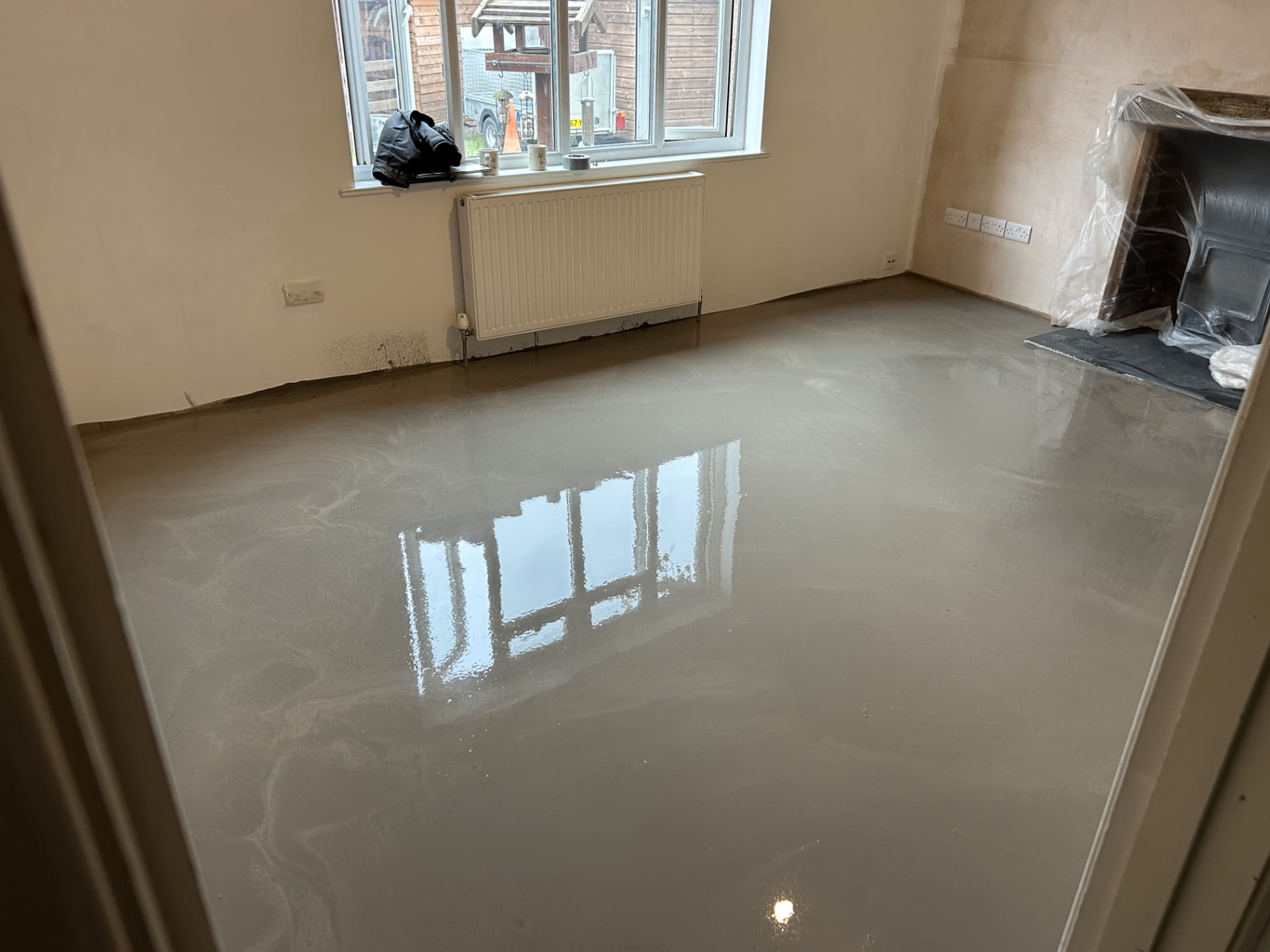
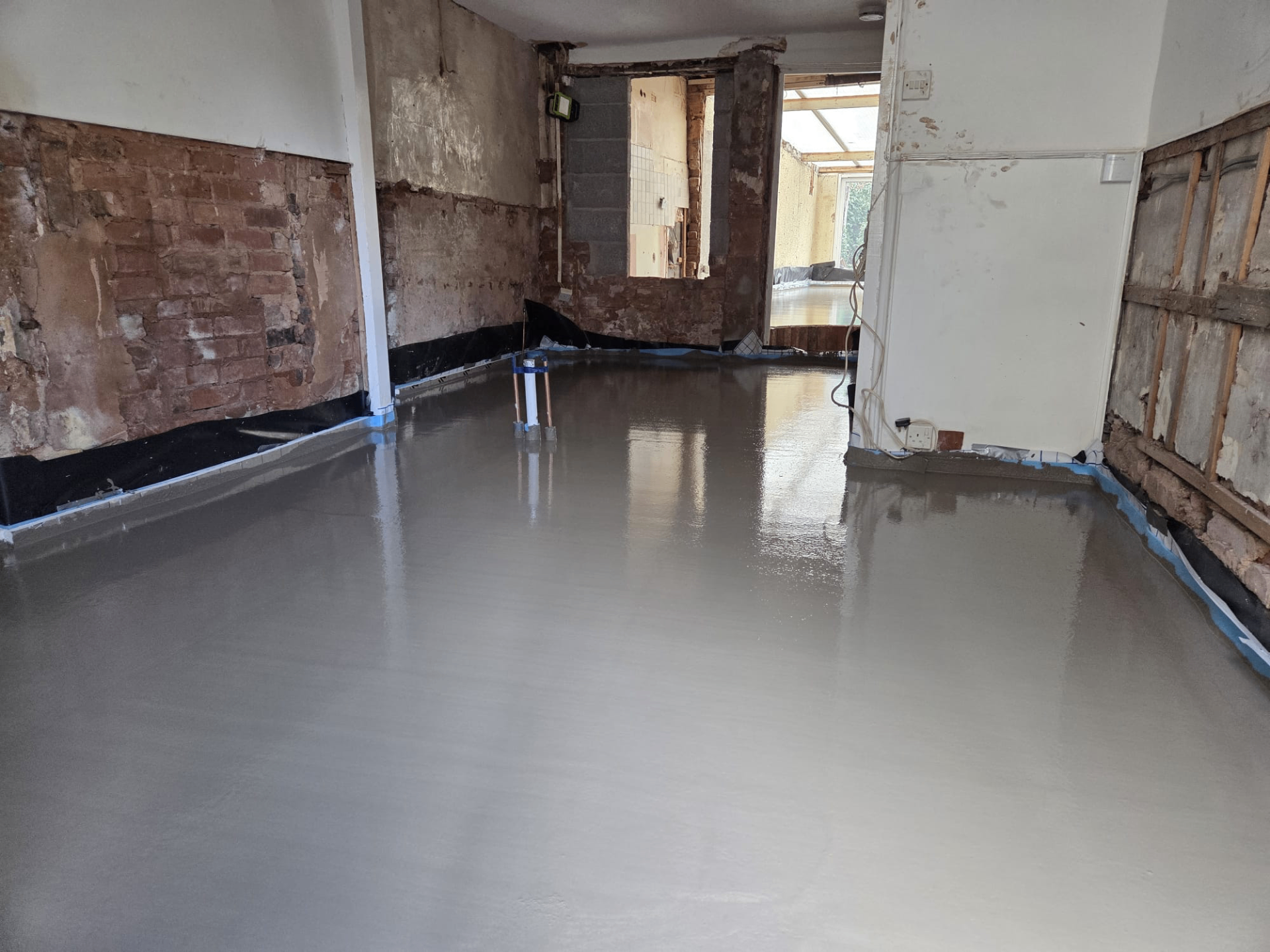
Access onto a liquid screed before it has reached adequate strength introduces footprints, tool marks, debris and localised surface damage that can affect both appearance and the performance of a later floor finish.
Screed been walked on too early?
Let us know when the damage occurred relative to the pour date and we can help you assess the likely impact on the floor.
Or call our landline on 01392 237700
Liquid screed needs a protected curing period immediately after installation, during which foot traffic must be kept off the floor entirely, followed by a longer period where only very light, controlled foot traffic is appropriate before the floor is ready for its intended use. When this protection breaks down — often because other trades need access to a site and the screed area is in the way — the consequences can range from minor cosmetic marking to genuine surface damage.
This is one of the more avoidable faults in a screed installation because it has nothing to do with the mix design or the pour itself, and everything to do with site management and communication once the screed contractor has left the property. A floor that was installed correctly can still end up damaged if access control afterward is not managed properly.
Because the damage happens after handover of a freshly poured floor, establishing what occurred and when is often about site diary records, delivery dates and who had access during the vulnerable curing window.
Why timing of access matters so much
A liquid screed gains strength progressively over the days and weeks after pouring, and its surface is at its most vulnerable in the earliest part of that period, when it may still be relatively soft even though it looks set. Walking on the screed too soon can leave permanent indentations, while wheeled loads or dropped tools concentrate far higher pressure on a small area, risking a genuine dent or crack rather than just a surface mark.
As curing progresses the risk reduces, but the floor typically remains more vulnerable to marking and contamination than a fully cured, protected floor right up until it is ready for final finishes and full site traffic.
Managing site access properly
Good practice includes clear signage or barriers restricting access immediately after the pour, protection boards laid down before any necessary early access by other trades, and clear communication with the principal contractor or site manager about the screed's specific access timeline for that project.
Where contamination has already occurred, the assessment needs to separate cosmetic marking — which can often be addressed as part of surface preparation before flooring — from deeper indentation or cracking, which may need a more involved repair before the floor can be finished as intended.
Typical contamination scenarios on live sites
Multi-trade sites are particularly exposed to this fault because scaffolders, plasterers or electricians often need to move through a property on a schedule set independently of the screed's curing programme, and a poured room can look deceptively finished well before it can safely take traffic. Ladders, trestles and material deliveries dragged or dropped across a curing floor tend to leave the most concentrated damage.
Dust and debris settling on a curing screed is a lower-severity but still relevant form of contamination, since it can affect the surface that a later primer or adhesive needs to bond to, making a proper clean before flooring works an additional, sometimes overlooked, step.
Assessing and repairing contaminated areas
A sound assessment starts with identifying every mark, indentation or debris patch and noting its depth and location relative to where flooring or a rigid finish is planned, since cosmetic marking in an area to be covered by carpet underlay carries a different priority to a deep indentation beneath a proposed tiled area.
Surface grinding or light preparation can resolve shallow marking, while a deeper indentation or associated cracking may call for cutting out and reinstating a small area of screed, matched carefully to the surrounding depth and finish before flooring proceeds.
Site Traffic Contamination — the points that decide it
- Liquid screed has a no-access curing period immediately after pouring, followed by light-traffic-only access
- Footprints, indentations and tool drops during this period can permanently mark or weaken the surface
- Wheeled site traffic (barrows, trolleys, ladders) causes more concentrated, damaging point loads than foot traffic
- Debris and dust from other trades can also compromise a surface intended for direct-to-finish bonding
- Damage severity depends heavily on how early in the curing period the contamination occurred
- Site protection boards and clear signage reduce the risk of accidental early access
- Repair options depend on whether damage is purely surface-level or has affected the screed's structural integrity locally
- A written access schedule shared with the principal contractor reduces confusion between trades
- The screed installer can usually advise quickly whether marking is cosmetic or needs more involved repair
Site Traffic Contamination — your questions
Screed been walked on too early?
Let us know when the damage occurred relative to the pour date and we can help you assess the likely impact on the floor.
Or call our landline on 01392 237700
In short
Access onto a liquid screed before it has reached adequate strength introduces footprints, tool marks, debris and localised surface damage that can affect both appearance and the performance of a later floor finish.
Screed been walked on too early?
Let us know when the damage occurred relative to the pour date and we can help you assess the likely impact on the floor.