
Fault diagnosis
Screed Thickness Overrun and Its Consequences
Where the finished screed ends up significantly thicker than specified, drying time extends, structural loading increases and material costs rise.
Thickness overrun is the mirror image of a thin patch: instead of falling short, the poured screed ends up deeper than intended across some or all of the floor. Because liquid screed volume is usually calculated from a surveyed base level, an inaccurate or incomplete substrate survey is the most common root cause, particularly on refurbishment projects with an uneven existing slab.
Overrun matters because screed drying time is heavily influenced by depth, so an area that's 20-30mm deeper than specified can extend the drying programme meaningfully, with knock-on effects for the rest of the build programme and for floor coverings waiting to go down.
There are also structural and cost implications: additional dead load on suspended floors needs to be checked against the design, and the extra material used has a direct cost impact that wasn't in the original estimate, which is often what first draws attention to the problem.
Why overrun happens
A liquid screed pour is calculated to fill to a level datum across the floor, so any part of the substrate that sits lower than surveyed, whether due to an inaccurate initial survey, subsequent excavation, or insulation that compresses more than expected under the wet screed, results in extra depth in that area. On larger or more uneven floors this can add up to a meaningful volume difference from the original take-off.
Overrun is sometimes only noticed once the drying programme runs longer than expected, at which point it's worth checking pour records or a core sample to confirm actual depth against specification.
Recognising the symptoms early
The most common early sign is a drying programme that simply isn't tracking to plan: moisture readings that were expected to reach target by a certain date are still elevated, and the pattern of slow readings often maps onto the parts of the floor that were known to have an uneven or lower substrate level before the pour. A pump operator's delivery record showing more screed used than the original take-off calculated is another early clue worth checking.
On suspended floors, overrun can sometimes be noticed structurally before it's noticed through drying delay, for example as a slight deflection or a query raised by a structural engineer reviewing as-built loading against the original design assumptions.
Assessing the structural and programme impact
Once overrun is suspected, the practical next step is to establish its extent, using core samples at representative points or a review of pump delivery volumes against the surveyed floor area, so the scale of the issue is understood rather than assumed. This figure then feeds two separate assessments: a revised drying timeline based on actual average thickness, and, on suspended floors, a dead load check against the structural design.
Where the overrun is modest and confined to a cementitious screed on a ground-bearing slab, the practical consequence is usually limited to extended drying time; the more serious implications tend to arise on suspended floors or where overrun is combined with an already tight structural loading margin.
Managing the consequences
Where overrun is identified before or during the pour, adjusting subsequent drying programme expectations and confirming structural loading are the immediate priorities. On suspended floors with a meaningful increase in dead load, a structural check is a sensible precaution rather than an optional extra.
After the fact, the main practical response is to extend the drying and testing programme to reflect the actual thickness present, since forcing a covering onto an over-thick screed before it has genuinely dried carries the same moisture-related risks discussed elsewhere on this site.
Reducing the risk of overrun on future pours
A thorough, up-to-date level survey of the substrate immediately before ordering, rather than relying on drawings or an earlier survey that may not reflect site changes, is the single most effective way to avoid overrun. Checking insulation specification and installation quality, since compressible or poorly supported boards can settle unpredictably under wet screed, closes off a secondary source of unplanned depth.
Agreeing in advance who absorbs the commercial impact of overrun caused by a late design change or an inaccurate survey, rather than leaving it to be argued after the pour, avoids a straightforward technical issue turning into a contractual dispute.
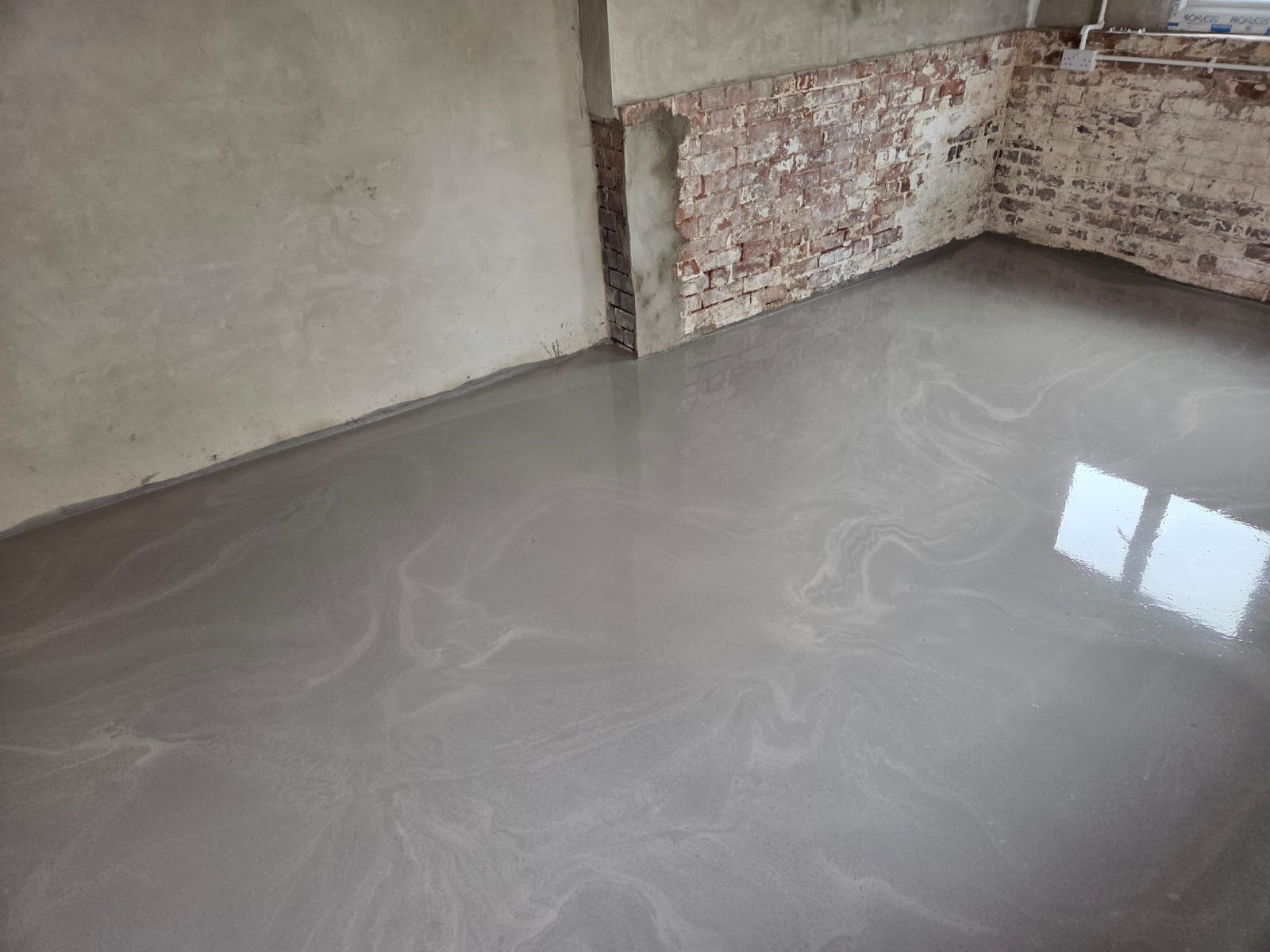
Screed thickness overrun issues — the points that decide it
- 1Thickness overrun most often results from an inaccurate substrate level survey before ordering
- 2Extra depth extends drying time, since drying rate is closely linked to screed thickness
- 3Additional dead load from thicker screed needs checking against suspended floor design capacity
- 4Overrun increases material use and cost beyond the original quantity estimate
- 5Insulation settlement or compression during the pour can also contribute to unplanned depth
- 6Overrun is best identified early via depth checks during the pour rather than after the fact
- 7Significant overrun on suspended floors should be reviewed by a structural engineer where load is a concern
- 8A drying programme that runs longer than expected is often the first practical sign of overrun
- 9Reconciling delivered screed volume against the surveyed floor area can reveal overrun before drying begins
Screed thickness overrun issues — your questions
Screed running thicker than specified?
We can assess the extent of any overrun, its impact on drying time and whether structural review is warranted. Call 07791 510849.
Or call our landline on 01392 237700
Keep going — closely linked topics
In short
Where the finished screed ends up significantly thicker than specified, drying time extends, structural loading increases and material costs rise.
Screed running thicker than specified?
We can assess the extent of any overrun, its impact on drying time and whether structural review is warranted. Call 07791 510849.