
Fault diagnosis
Preventing Repeat Failures After a Screed Remedial Fix
A remedial screed repair only holds if the original cause of failure has genuinely been addressed, not just the visible symptom.
Want a screed repair that actually lasts?
We diagnose the root cause before recommending a fix, and can advise on protecting the repair through the rest of your build. Call 07791 510849.
Or call our landline on 01392 237700
It's a frustrating and costly experience to have a screed floor repaired, only for the same cracking, debonding or moisture symptom to reappear months later. This usually happens when the remedial work addressed the visible symptom without correcting the underlying cause, whether that's an unresolved moisture source, a substrate movement issue, or a repeat of the same specification error that caused the original failure.
Preventing recurrence starts with insisting on a proper diagnosis before any repair begins, rather than moving straight to a fix based on assumption. It also means checking that the conditions which allowed the original failure, whether environmental, specification-related, or workmanship-related, won't simply be repeated during the remedial works.
Handover and aftercare also play a role: a technically sound repair can still fail again if the same premature loading, poor heating commissioning, or lack of protection during the following trades is allowed to happen a second time.
Preventing repeat screed failures — the points that decide it
- A repair should always follow a confirmed diagnosis of the original failure's root cause
- Repeating the same specification or preparation error during remedial work guarantees recurrence
- Under-floor heating commissioning should follow a proper gradual programme after any remedial work
- Moisture testing should be repeated post-repair before floor coverings are re-laid
- Protecting the repaired area from other trades during the remainder of the build reduces new damage
- A written record of the repair specification helps future investigation if problems recur
- Structural movement causes must be resolved separately from any screed-level repair
- A short aftercare briefing for site trades reduces the risk of the repair being disturbed too early
- Reviewing the original specification for the underlying error, not just the symptom, closes off recurrence at its source
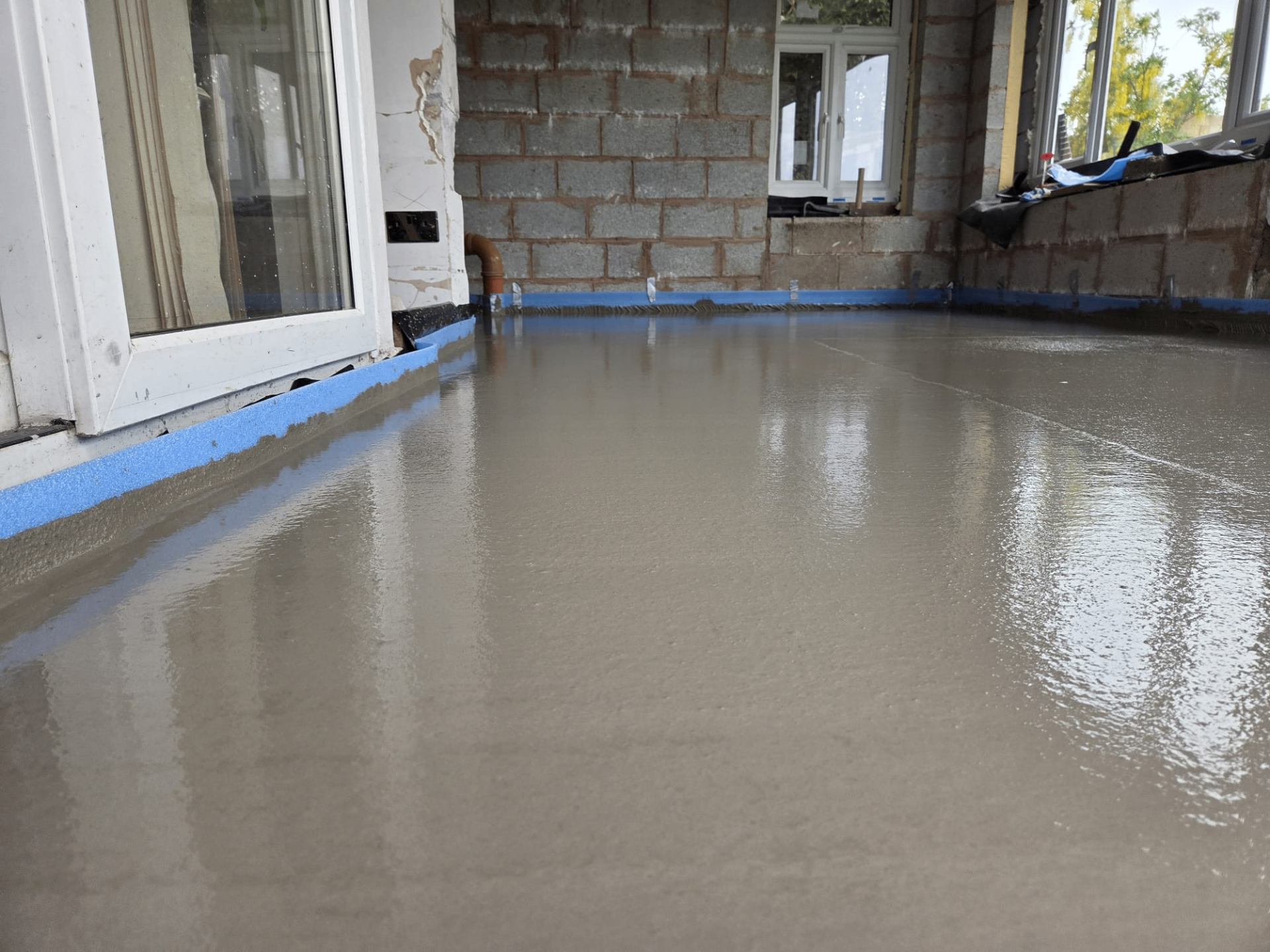
Confirming the cause has actually been removed
Before signing off remedial screed work, it's worth explicitly checking that whatever caused the original failure no longer applies: has the moisture source been eliminated, has the substrate movement been addressed structurally, has the correct primer and preparation been used this time. A repair that simply reinstates the same build-up without correcting the cause is likely to fail in the same way again, on a similar timescale to the original problem.
Where the original failure involved moisture, re-testing the repaired area to the same standard used in the original diagnosis, rather than assuming it's now fine, provides objective confirmation before floor coverings go back down.
Reviewing the original specification for systemic errors
Where the original failure traces back to a specification gap, an omitted primer clause, an unclear allocation of responsibility for laitance removal, or a movement joint layout that wasn't detailed, it's worth reviewing that specification explicitly rather than assuming the remedial team will simply know to do it differently this time. Carrying the same ambiguous wording forward into the repair specification is one of the more avoidable ways a repeat failure occurs.
This is also a useful point to check whether the same specification gap exists elsewhere in the building, since a repeat failure sometimes shows up in a different room before the original repair location fails again, if the underlying document was never corrected.
Protecting the repair going forward
Once a technically sound repair is in place, it can still be undone by the same site practices that caused the original issue, premature loading from other trades, rushed under-floor heating commissioning, or inadequate protection during subsequent works. Making sure everyone on site understands the repaired area needs the same care as a new installation helps avoid a second failure.
Keeping a clear written record of what was done during the remedial work, including test results and materials used, gives a useful reference point if any further issue arises, making future investigation faster and more conclusive.
Briefing the wider site team
A short, simple briefing for other trades working near the repaired area, explaining that it needs the same protection and curing time as a fresh screed pour, is often all that's needed to prevent an avoidable second failure caused by scaffolding, heavy trolleys, or storage of materials on the repair before it has cured. This is a low-cost step that is frequently skipped simply because the repair is smaller and less visible than the original installation.
Where under-floor heating is involved, confirming who is responsible for following the gradual commissioning programme after the repair, and building a specific date into the programme rather than leaving it to whoever remembers, closes off one of the more common causes of repeat thermal-cycling-related failure.
Follow-up checks after the repair is complete
Scheduling a follow-up check some weeks or months after the repair, particularly through the first heating season if under-floor heating is present, gives an opportunity to catch any early sign of recurrence before it develops into a full repeat failure. This is a modest additional cost against the alternative of discovering a second failure only once a floor covering has already been re-laid over it.
Where the original failure led to a dispute, keeping the follow-up check independent of the party who carried out the repair adds an extra layer of assurance that the fix has genuinely held, rather than relying solely on the repairing contractor's own assessment.
Want a screed repair that actually lasts?
We diagnose the root cause before recommending a fix, and can advise on protecting the repair through the rest of your build. Call 07791 510849.
Or call our landline on 01392 237700
In short
A remedial screed repair only holds if the original cause of failure has genuinely been addressed, not just the visible symptom.
Preventing repeat screed failures — your questions
Other pages that answer this properly
Want a screed repair that actually lasts?
We diagnose the root cause before recommending a fix, and can advise on protecting the repair through the rest of your build. Call 07791 510849.