
Systems
Liquid Screed Beneath Polished Concrete Finishes
A polished finish exposes the screed itself as the visible floor surface, so mix consistency, flatness and surface hardness all become finish-critical rather than cosmetic details.
Where a floor's design intent is a polished, exposed finish rather than a covered floor, the screed stops being a hidden substrate and becomes the visible wearing surface. That changes what matters: consistency of the mix, aggregate and surface hardness, and dead-flat regularity all move from 'nice to have' to genuinely finish-critical.
Not every liquid screed product is intended to be polished as a final finish — some are designed purely as a substrate for a covering, without the surface hardness or aggregate characteristics suited to grinding and polishing. Specifying a screed intended for this use, or a purpose-designed polished concrete/terrazzo-style topping, is a decision to make at the outset rather than after the pour.
Because any inconsistency, air void, or level variation becomes visible once ground and polished, the standard of placement, curing and finishing on this type of floor typically needs to be higher than for a floor that will be covered.
Screed Under Polished Finishes — the points that decide it
- Not all liquid screed products are suitable for grinding and polishing as a final finish
- Surface flatness (SR class) requirements are typically at the tighter end for polished floors
- Mix consistency directly affects the visual result once ground, unlike a covered floor
- Air voids or inconsistent trowelling can become visible defects once the surface is polished
- Curing conditions affect surface hardness and colour consistency across the floor
- Joint and crack control needs particular care since these remain visible in the final finish
- Sealing or densifying treatments are often applied after grinding, per the specific system's guidance
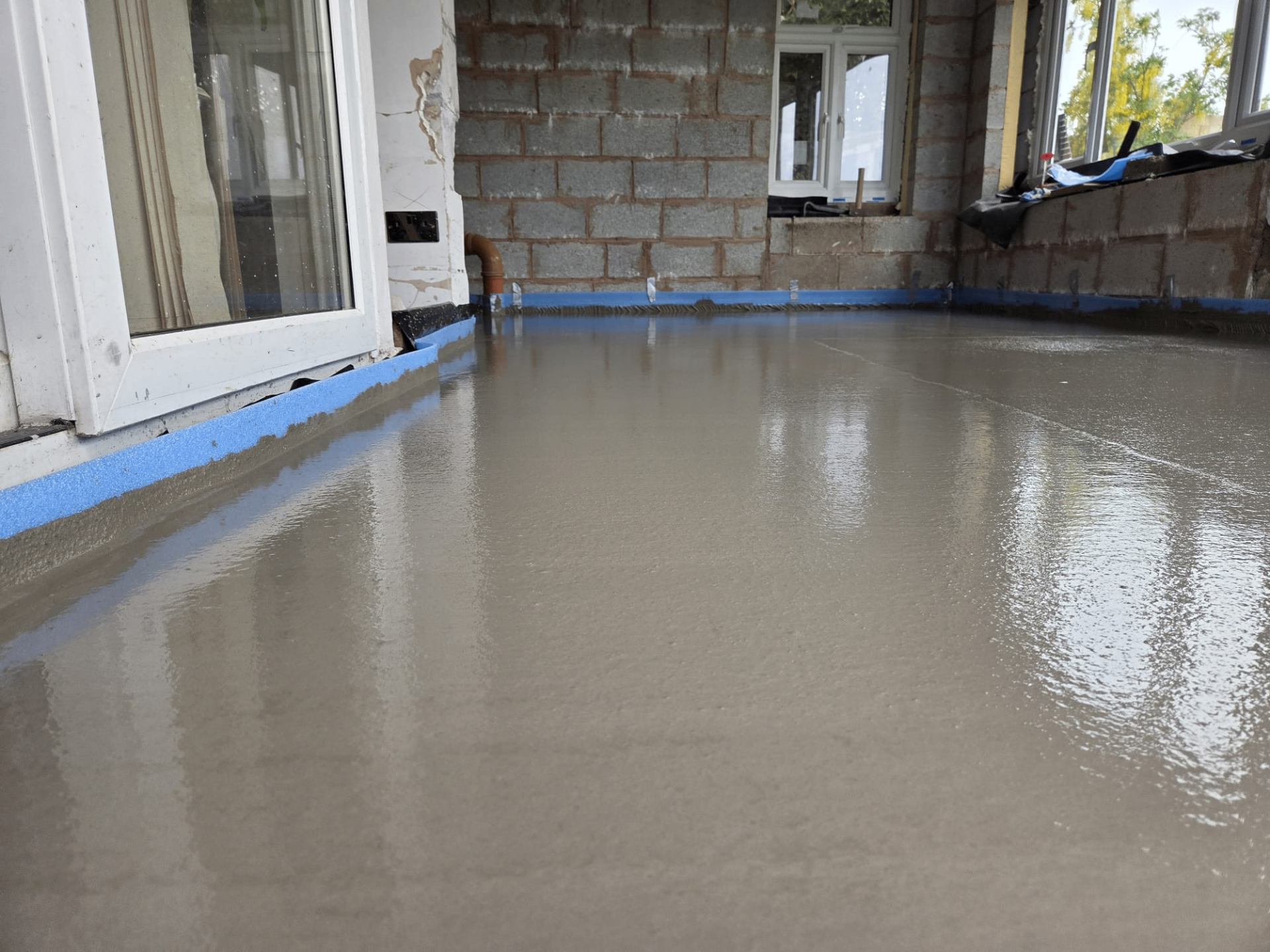
Choosing the right screed for a polished finish
A screed intended to be ground and polished needs to be specified with that end use in mind from the start, since standard levelling screeds aren't necessarily formulated with the surface hardness, aggregate exposure or consistency that a polished finish depends on.
This is a conversation to have with the screed manufacturer or supplier before the pour, confirming that the chosen product and mix are appropriate for the intended grinding and polishing process, rather than discovering a mismatch once grinding has started.
Placement and finishing standards
Because every part of the surface will be visible once polished, placement needs to be consistent across the whole floor — variations in trowelling, curing, or protection between different areas can show up as visible tonal or textural differences after grinding.
Joints, whether structural, day joints or shrinkage cracks, remain visible in a polished finish, so their layout and detailing deserve particular attention at the design stage, since they can't be hidden by a floor covering afterwards the way they might be in a carpeted or tiled room.
Considering an exposed, polished screed finish?
We'll advise which screed products suit polishing and how to plan the pour for a consistent result — call 07791 510849.
Or call our landline on 01392 237700
In short
A polished finish exposes the screed itself as the visible floor surface, so mix consistency, flatness and surface hardness all become finish-critical rather than cosmetic details.
Screed Under Polished Finishes — your questions
Other pages that answer this properly
Considering an exposed, polished screed finish?
We'll advise which screed products suit polishing and how to plan the pour for a consistent result — call 07791 510849.