
Supply Method
Site-Batched vs Truck-Mixed Liquid Screed Supply
Site-batched and truck-mixed liquid screed supply differ in how the mix is produced and delivered, with implications for consistency, logistics and access requirements.
How a liquid screed is actually mixed and delivered to the pour location isn't something most clients think about until logistics on their particular site become a challenge. Broadly, screed can be site-batched, mixed on location using purpose-built mobile mixing equipment, or truck-mixed, delivered ready-mixed from an off-site plant in a similar way to ready-mix concrete.
Each method has genuine advantages depending on access, quantity required, and programme flexibility, and the choice isn't purely about cost. Site-batched mixing offers flexibility on timing and volume, useful on phased or smaller pours, while truck-mixed supply can suit larger, single-pour projects with good vehicle access and a need for high-volume, continuous delivery.
We choose the supply method that suits each site's specific access, scale and programme, rather than defaulting to one approach regardless of project type, since the wrong choice can create unnecessary logistical difficulty on the day of the pour.
How the two methods work on site
Site-batched liquid screed uses a mobile mixing unit brought to the property, combining the raw materials on location and pumping the mixed screed directly to the pour area. This approach allows quantities to be adjusted more easily as the pour progresses and can be well suited to properties with restricted access where a large truck cannot easily reach or manoeuvre.
Truck-mixed supply, by contrast, involves the screed being mixed at an off-site facility and delivered by vehicle in a ready-to-pour state, with the fitted pump used to move it into place once on site. This method typically depends more heavily on good, unrestricted vehicle access and adequate space for the delivery vehicle to stand while the pour takes place.
Choosing the right method for your site
The decision usually comes down to practical site factors: available access width and turning circles, the total volume of screed needed, whether the pour needs to happen in one continuous session or can be phased, and the programme's flexibility around delivery scheduling. Properties down narrow lanes or with limited turning space, common in parts of rural Devon, can favour site-batching, while larger new-build plots with clear access may suit either method equally well.
Whichever supply route is used, the mix should still be produced to meet the strength class and consistency specified for the project, with appropriate quality checks carried out during the pour to confirm the delivered material matches what was specified.
Planning pump position and hose runs
Regardless of whether the screed is site-batched or truck-mixed, the pumping equipment and hose run from the mixing or delivery point to the pour area need planning in advance, particularly on sites with multiple floors, tight internal access, or long distances between the delivery point and the room being poured. Poor planning here can slow the pour significantly or, in the worst case, mean the equipment simply cannot reach the intended area.
We walk the access route on site before confirming the supply method, checking doorway widths, floor levels, and any obstacles that might affect hose runs, so the chosen approach is workable on the day rather than discovered to be impractical once the delivery vehicle or mixing unit has already arrived.
Quality control across both supply methods
Consistency of the finished screed depends on accurate proportioning of materials and correct water content, whether that mixing happens on site or at an off-site plant. Site-batched mixing relies on the calibration and operation of the mobile equipment being correctly maintained, while truck-mixed supply relies on the off-site plant's own quality control processes and the condition of the material by the time it arrives and is placed.
We monitor consistency during the pour regardless of supply method, checking flow and consistency against expectations, and keeping records of the batch or delivery information relevant to the strength class specified for the project.
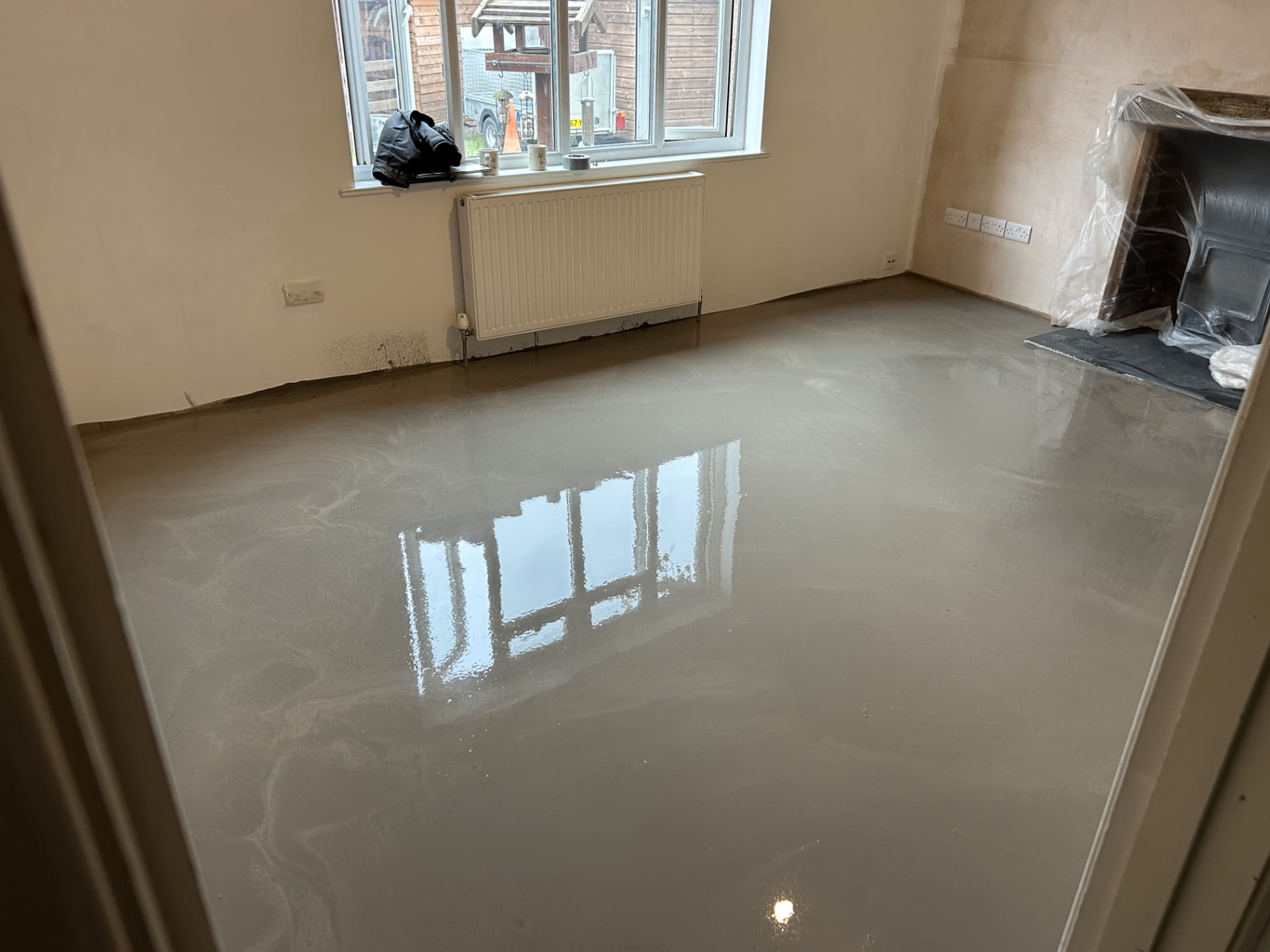
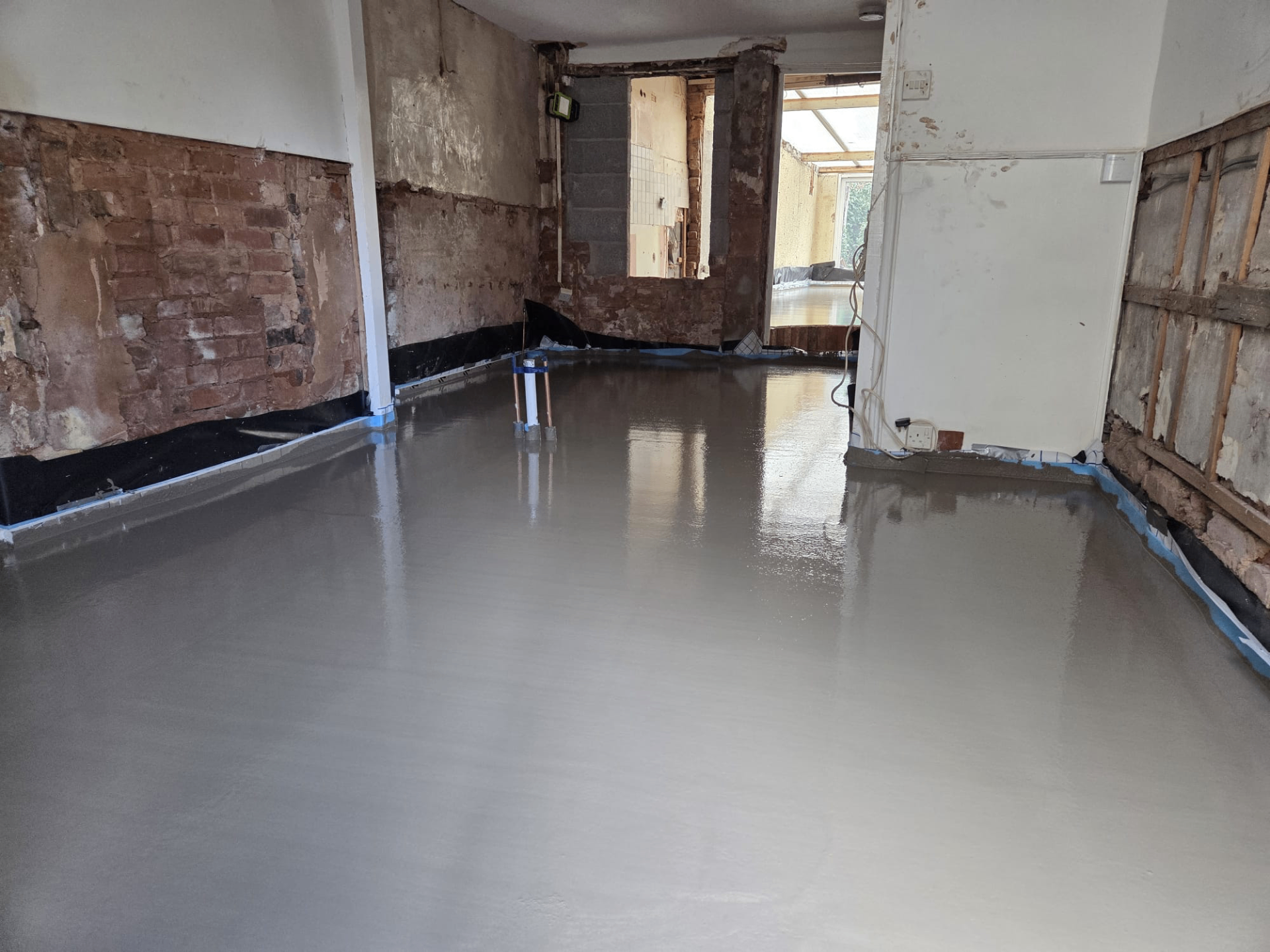
Site-Batched vs Truck-Mixed Supply — the points that decide it
- Site-batched screed is mixed on location using mobile batching plant, offering flexibility on volume and timing
- Truck-mixed screed is delivered ready-mixed and pumped or poured directly from the vehicle
- Vehicle access and turning space on site influence which supply method is practical
- Consistency of mix quality depends on proper calibration and control, whichever method is used
- Truck-mixed supply can suit larger, continuous pours where a steady, high-volume delivery is needed
- Site-batching can allow better control over small or awkward-quantity pours where a full truck load isn't justified
- Both methods should still produce screed meeting the specified strength class under BS EN 13813
- Pumping distance and hose run length on site need planning regardless of which supply method is used
Site-Batched vs Truck-Mixed Supply — your questions
Not sure which supply method suits your site?
We'll assess your access and requirements to recommend the right approach. Call 07791 510849 for a site chat about logistics.
Or call our landline on 01392 237700
In short
Site-batched and truck-mixed liquid screed supply differ in how the mix is produced and delivered, with implications for consistency, logistics and access requirements.
Not sure which supply method suits your site?
We'll assess your access and requirements to recommend the right approach. Call 07791 510849 for a site chat about logistics.