Layered Build-Up
Two-Layer Liquid Screed Systems
Two-layer screed systems combine a lower structural or levelling layer with a finer top layer, used where depth, programme or finish requirements can't be met with a single pour.
Most liquid screed installations are a single continuous pour, but certain projects benefit from, or require, a two-layer approach instead. This typically involves a lower layer providing bulk fill, levelling or structural depth, followed by a second, often finer or differently specified layer above it to achieve the required surface finish or performance across an uneven or complex existing substrate.
Two-layer systems are more common where very deep fills are needed beyond what a single pour of a given product can reliably achieve, where different performance requirements exist between the base and wearing surface, or where programme constraints mean a lower layer needs to cure before a heating layer or finishing layer is added. The junction between the two layers needs careful detailing to ensure adequate bond or appropriate separation, depending on the system design and the movement characteristics expected between the layers.
We specify two-layer approaches only where they offer a genuine benefit over a single pour, since added complexity should be justified by the project's specific requirements rather than used as a default solution to every uneven substrate.
Two-Layer Screed Systems — the points that decide it
- 1A lower layer typically provides bulk depth, levelling or structural capacity
- 2An upper layer can provide a different finish, strength class, or accommodate heating pipework separately
- 3Bond or separation between layers needs specific detailing depending on the system design
- 4Two-layer approaches can suit very deep fills beyond a single pour's practical limit for a given product
- 5Drying times for two-layer systems need planning around both layers, not just the uppermost one
- 6Cost is typically higher than a single-layer pour due to the additional material and labour involved
- 7Manufacturer guidance on compatible layer combinations should be followed closely
- 8Surface preparation of the lower layer is essential before the upper layer is applied in a bonded system
Why a project might need two layers instead of one
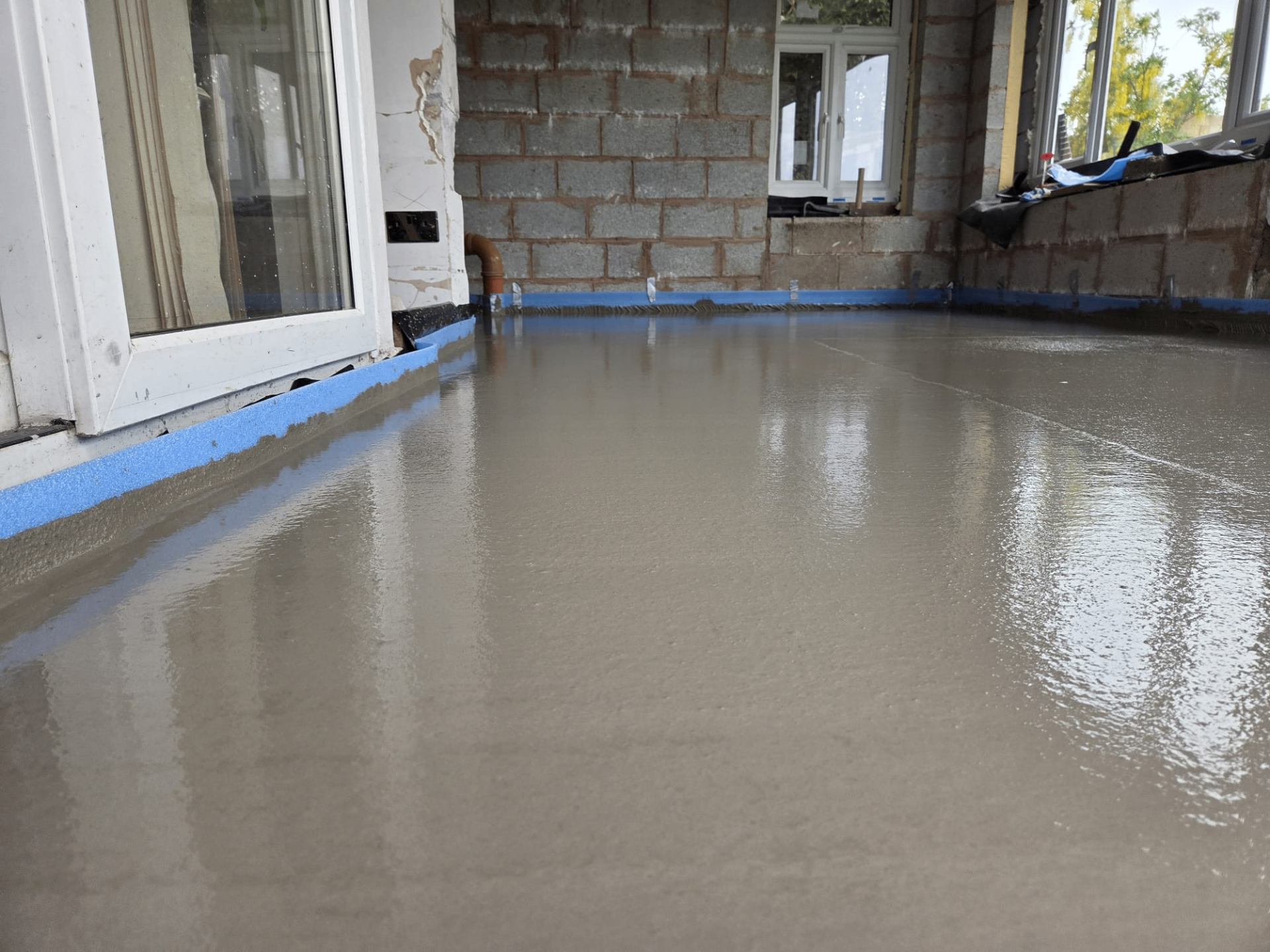
Very deep floor build-ups, uneven existing substrates requiring significant levelling before a heating layer can be laid, or a design requirement for different performance characteristics at different depths can all point towards a two-layer approach. In these cases, attempting a single very deep pour of one product may not be practical or may fall outside the manufacturer's recommended depth range for that mix.
A typical example is a lower levelling layer used to correct an uneven or sloping existing substrate, followed by a structural screed layer above it that properly encapsulates underfloor heating pipework at a consistent depth across the whole floor, ensuring the heating performance is even even where the original substrate was not.
Detailing the junction between layers
Whether the two layers are intended to bond together or act more independently affects how the junction is prepared and detailed. A bonded approach relies on good preparation of the lower layer's surface and appropriate timing between pours, while a system designed with intentional separation, sometimes using a membrane, allows each layer to behave more independently, which can be useful where different movement characteristics are expected.
Because two layers introduce two separate curing and drying processes, the overall programme for a two-layer system needs realistic planning, factoring in the time required for the lower layer to reach suitable condition before the upper layer is applied, and avoiding the temptation to rush the second pour before the first has genuinely reached the necessary state.
Preparing the lower layer before the second pour
Where a bonded two-layer system is chosen, the surface of the lower layer needs to be properly prepared before the upper layer is placed, typically including removal of any laitance and confirmation that the lower layer has reached sufficient strength and, where relevant, moisture condition to accept a further pour without trapping excess moisture between the layers.
Skipping this preparation stage, or pouring the upper layer too soon after the lower one, is one of the more common causes of problems in two-layer systems, since a poor bond at the junction can lead to delamination or hollow-sounding areas becoming apparent once the floor is in use.
Programme and cost implications of a two-layer approach
A two-layer system inevitably takes longer overall than a single pour, since the lower layer needs to cure and, in some designs, dry to a defined point before the upper layer can be applied, and this additional time needs to be built into the construction programme from the outset rather than discovered as a delay once the first layer is already down.
Cost is also typically higher than a single-layer approach, reflecting both the additional material used and the extra labour and time involved in detailing and placing two separate layers correctly, so a two-layer specification should be justified by a genuine technical requirement rather than chosen without first confirming a single pour couldn't achieve the same result.
Facing a deep fill or uneven substrate?
We can advise whether a two-layer approach is right for your floor build-up. Call 07791 510849 to talk through the options.
Or call our landline on 01392 237700
In short
Two-layer screed systems combine a lower structural or levelling layer with a finer top layer, used where depth, programme or finish requirements can't be met with a single pour.
Two-Layer Screed Systems — your questions
Facing a deep fill or uneven substrate?
We can advise whether a two-layer approach is right for your floor build-up. Call 07791 510849 to talk through the options.