
Refurbishment Detail
Overlaying Liquid Screed Over an Existing Screed
Overlaying a new liquid screed onto an existing screed floor is achievable in refurbishment projects, but depends entirely on the condition, bond potential and moisture state of the original substrate.
Considering an overlay on an existing floor?
We'll assess your existing screed honestly before recommending the right approach. Call 07791 510849 to arrange a look at your floor.
Or call our landline on 01392 237700
Refurbishment projects sometimes call for a new liquid screed to be laid directly over an existing screed floor, whether to improve level, incorporate underfloor heating retrospectively, or refresh a floor build-up without full removal. This is a viable approach in the right circumstances, but the existing screed's condition dictates almost everything about how the overlay should be detailed, and skipping a proper assessment risks building a new floor on an unreliable base.
The critical questions are whether the existing screed is sound, adequately bonded to its own substrate, free from significant cracking or contamination, and dry enough not to trap moisture beneath the new layer. Any doubt on these points usually means either extensive preparation or, in some cases, removal of the existing screed is the safer route rather than overlaying onto an unknown base that could later delaminate or trap damaging moisture.
We assess existing screeds carefully before recommending an overlay approach, since a poor decision here can undermine an otherwise good new screed installation, and it's far cheaper to identify problems with the existing floor before the new layer goes down than after.
Assessing the existing screed before overlaying
Before any overlay work begins, the existing screed should be inspected for cracking, hollow-sounding areas indicating delamination, surface contamination such as old adhesive residue, and general condition. Moisture testing of the existing screed is also important, since a floor that appears dry on the surface can still hold higher moisture levels at depth, particularly if it has never been tested or if the building has had periods of dampness.
Where the existing screed shows significant defects, it's often more reliable in the long run to address those issues properly, whether through localised repair or removal, rather than overlaying and hoping the new layer masks an underlying problem that will likely resurface once the floor is back in use.
Choosing bonded or floating overlay detailing
A bonded overlay relies on good adhesion between the new screed and the prepared existing surface, typically using a primer or slurry coat as recommended by the screed manufacturer, and suits situations where the existing screed is sound and thin overlay depths are involved. A floating or semi-bonded approach, using a separating membrane, can be more appropriate where underfloor heating pipework is being introduced, or where movement between the layers needs to be accommodated.
Whichever approach is chosen, finished floor levels need checking carefully against door thresholds, staircases and adjoining rooms, since even a modest overlay depth can create trip hazards or clearance issues if not planned in advance of the pour.
Preparing the surface for good bond performance
Surface preparation of the existing screed is one of the most important factors determining whether a bonded overlay succeeds. Laitance, old adhesive residue, paint, or any other contamination on the surface needs to be removed thoroughly, typically by mechanical preparation such as shot-blasting or grinding, before a primer is applied according to the chosen system's specification.
Skipping or rushing this preparation stage is one of the most common causes of bonded overlay failure, since even a well-formulated primer cannot compensate for a substrate that is dusty, contaminated or otherwise unsuited to receiving a bonded layer.
Locating and protecting existing services before the pour
Where the existing screed contains embedded underfloor heating pipework or other services, these need to be located, checked for condition, and protected before any preparation work or new pour begins, since damaging existing pipework during surface preparation can create a costly and disruptive repair. Historic drawings, if available, should be checked against an on-site survey rather than relied upon alone, since as-built conditions sometimes differ from what was originally designed.
Where services are being retained and simply overlaid, confirming they are still functioning correctly before covering them with a new layer avoids the situation of a fault being trapped beneath a finished floor and only discovered once it becomes difficult and expensive to access.
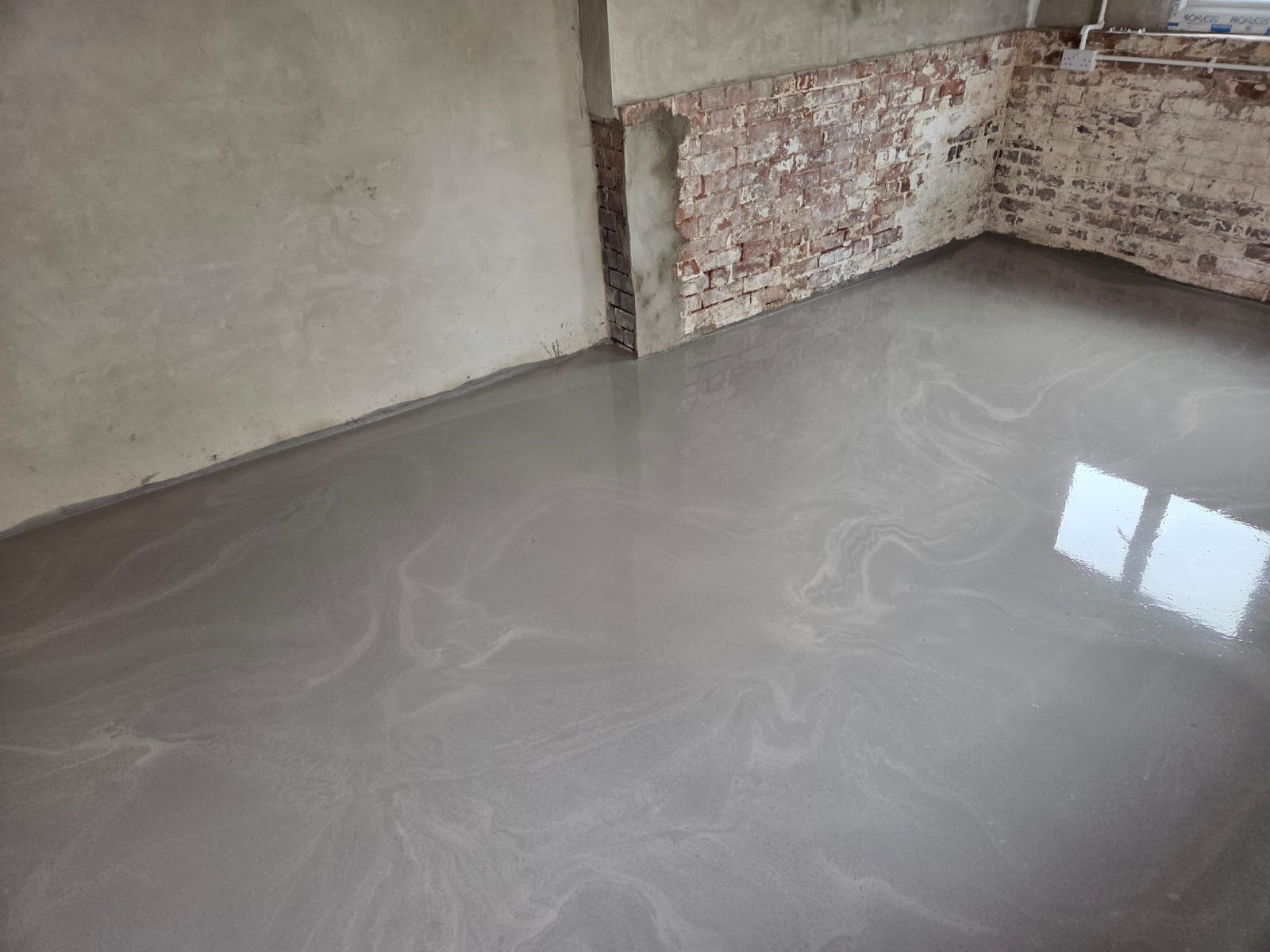
Screed Over Existing Screed (Overlay) — the points that decide it
- The existing screed must be structurally sound and free of significant cracking, delamination or loose material before overlaying
- Moisture content of the existing screed needs to be understood, as trapped moisture beneath a new layer can cause long-term problems
- A bonding or separating layer is typically used depending on whether a bonded or floating overlay approach is chosen
- Existing floor levels, thresholds and door clearances need checking against the added depth of the overlay
- Any embedded services or heating pipework in the original screed should be located and protected
- Surface preparation, typically including cleaning and removal of laitance or contamination, is essential for good bond performance where a bonded overlay is used
- Overlay thickness is dictated by the reason for the new layer and any pipework it needs to encapsulate
- Localised repair of the existing screed may be needed before overlaying even where the floor is broadly sound
Screed Over Existing Screed (Overlay) — your questions
Considering an overlay on an existing floor?
We'll assess your existing screed honestly before recommending the right approach. Call 07791 510849 to arrange a look at your floor.
Or call our landline on 01392 237700
In short
Overlaying a new liquid screed onto an existing screed floor is achievable in refurbishment projects, but depends entirely on the condition, bond potential and moisture state of the original substrate.
Considering an overlay on an existing floor?
We'll assess your existing screed honestly before recommending the right approach. Call 07791 510849 to arrange a look at your floor.