
Closing out the job
Snagging and Sign-off for a Liquid Screed Floor
A structured snagging inspection after the screed has cured helps confirm the floor meets specification before covers or finishes are applied.
Once a liquid screed floor has cured sufficiently to walk on, it is worth carrying out a structured inspection before signing the job off or handing the floor over to the next trade. Because the surface is largely hidden once floor coverings go down, this is one of the last practical opportunities to identify and address any issues.
Snagging at this stage is not about being overly critical of a finish that will always show some texture, but about confirming the fundamentals — level, surface condition, edge detailing and documentation — are as expected before the floor is built over.
This page sets out a practical approach to snagging a liquid screed floor and the kind of records worth requesting as part of sign-off.
What to look for on the surface
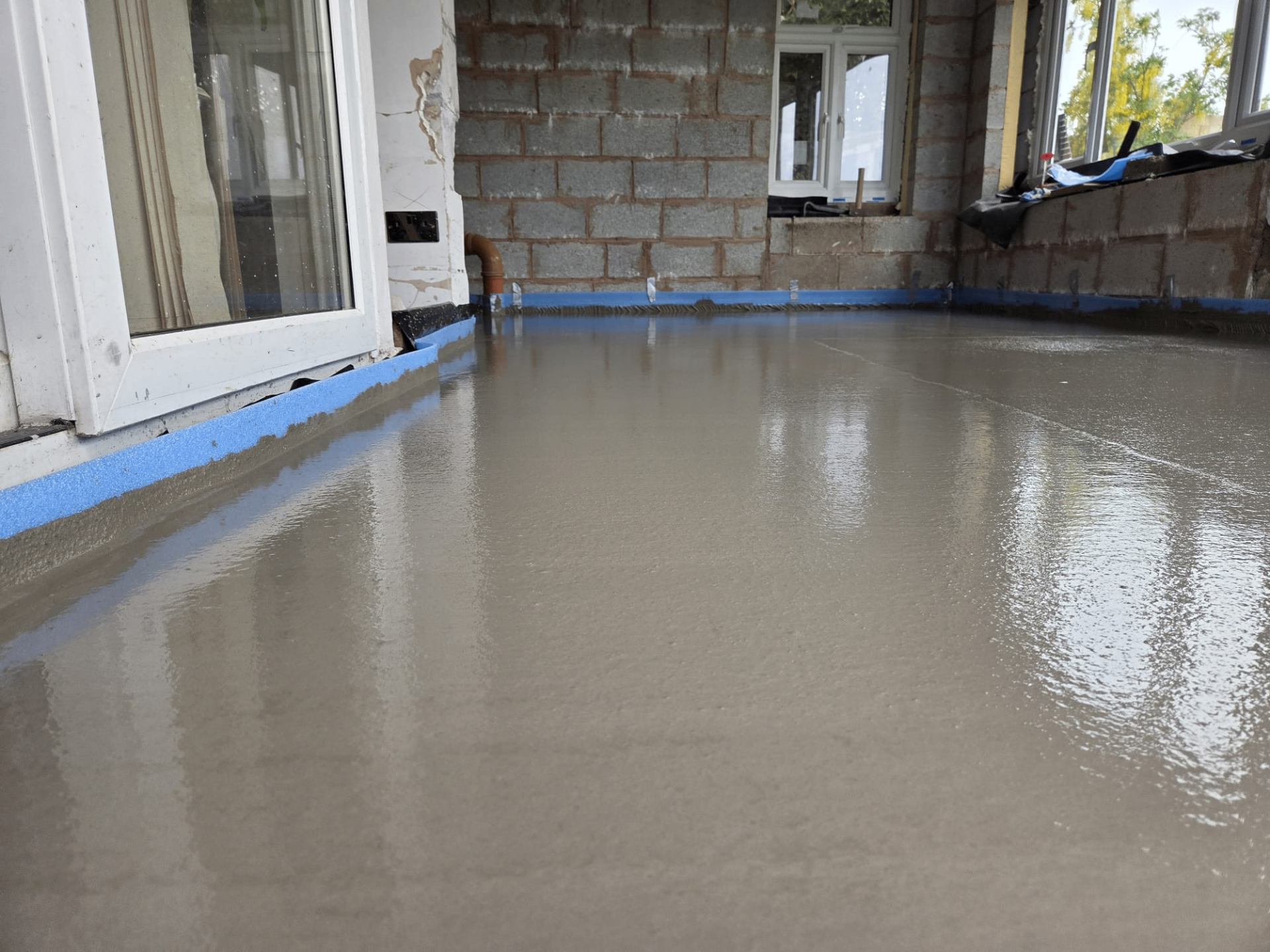
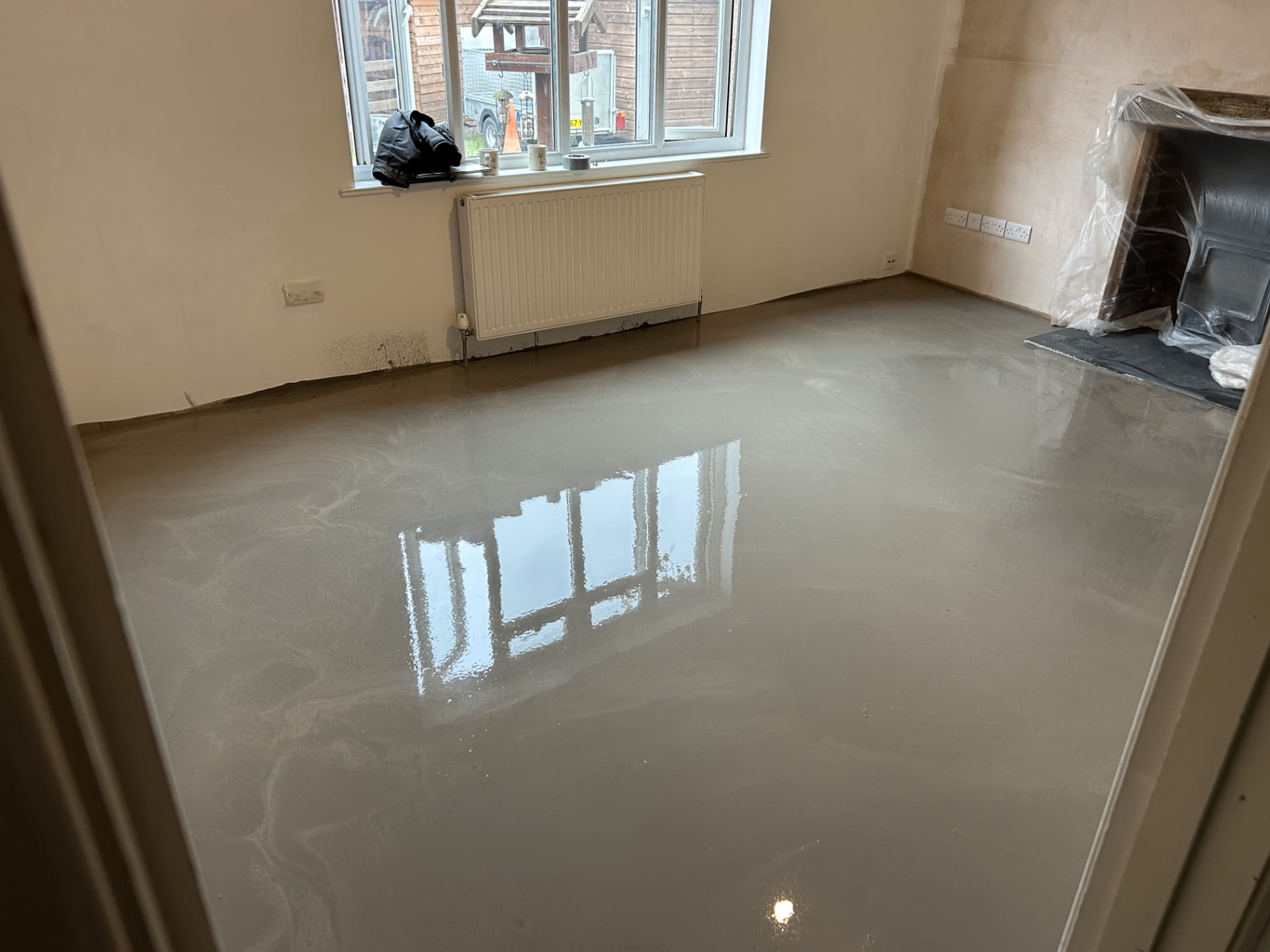
A cured liquid screed floor should have a reasonably consistent, closed surface. Some fine surface crazing is normal, but wider cracking, particularly running from corners of doorways or columns, is worth flagging for discussion with the installer, as the cause and any remedial action can vary.
Check that edge trim and movement joints are intact and have not been damaged by later trades moving materials across the floor, and confirm any protection boards have not been left in a way that traps moisture against the surface.
Documentation worth requesting
Ask for any records kept during the pour, such as photographs of underfloor heating loops before covering, batch or delivery information, and any moisture readings taken since. These records are useful if questions arise later about the floor's history.
Where a formal specification or level tolerance was agreed at the outset, ask for evidence that the completed floor was checked against it, rather than assuming this has happened without confirmation.
Checking level and flatness before sign-off
Where a specific level or flatness tolerance was part of the original specification, this is best checked with an appropriate straightedge or level survey rather than relying on a visual impression alone, particularly ahead of sensitive floor coverings.
Any areas found outside the agreed tolerance should be discussed with the installer at this stage, since remedial options are generally easier to arrange before flooring work has started.
Agreeing and closing out any snags found
Where issues are identified, a clear written list with photographs helps both parties agree exactly what needs addressing and avoids ambiguity later about what was raised and when.
Agreeing a realistic timeframe for any remedial work, and confirming who is responsible for it, allows the floor to be properly signed off once the list has been closed out rather than left open indefinitely.
Snagging & Sign-off — the points that decide it
- Walk the whole floor methodically rather than spot-checking a few areas
- Check for visible cracking, particularly near doorways and changes in floor build-up
- Confirm movement joints have been correctly formed and are not bridged by debris
- Check upstand insulation has not been dislodged or damaged during the pour
- Ask for photographic records of underfloor heating loops if applicable
- Request any moisture readings taken and the dates they relate to
- Confirm level tolerances against the agreed specification where measured
- Check that the floor edge detail meets walls and thresholds cleanly and consistently
- Agree a clear list of any snags found and a timeframe for them to be addressed
Need a floor inspected or signed off?
Get in touch and we can talk you through what to expect from a finished floor before it is covered.
Or call our landline on 01392 237700
Other pages that answer this properly
Snagging & Sign-off — your questions
In short
A structured snagging inspection after the screed has cured helps confirm the floor meets specification before covers or finishes are applied.
Need a floor inspected or signed off?
Get in touch and we can talk you through what to expect from a finished floor before it is covered.