
Trade sequencing
Coordinating with Other Trades After Pouring
Coordinating other trades after a liquid screed pour helps protect the floor while it cures and avoids conflicts over site access in a busy build.
Need help coordinating trades around a screed pour?
Get in touch and we can advise on sequencing trades safely around your new floor.
Or call our landline on 01392 237700
Once the pump has left site and the screed is poured, attention often turns quickly to getting other trades back in to keep the build moving. Managing this transition well makes a real difference to the condition of the finished floor, and to how smoothly the rest of the build proceeds around it.
Different trades bring different risks to a curing screed floor — some involve heavy point loads, others involve spills or excess moisture, and others simply involve a lot of foot traffic. Thinking through the order in which trades return, and what protection or restrictions apply to each, helps avoid avoidable damage or delays.
This page sets out a general approach to coordinating trades after a screed pour, recognising that the detail will vary from site to site depending on the build and the screed used.
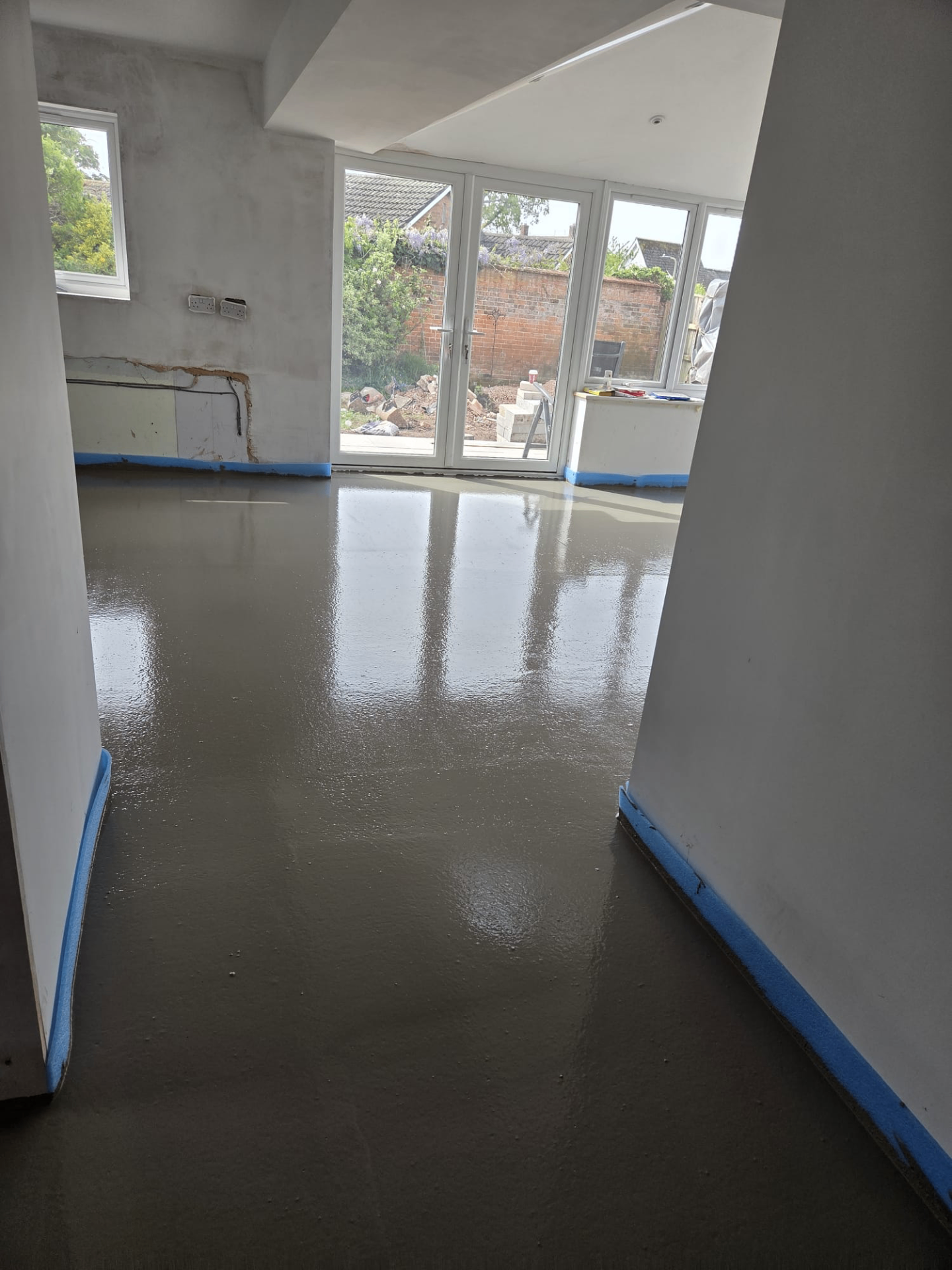
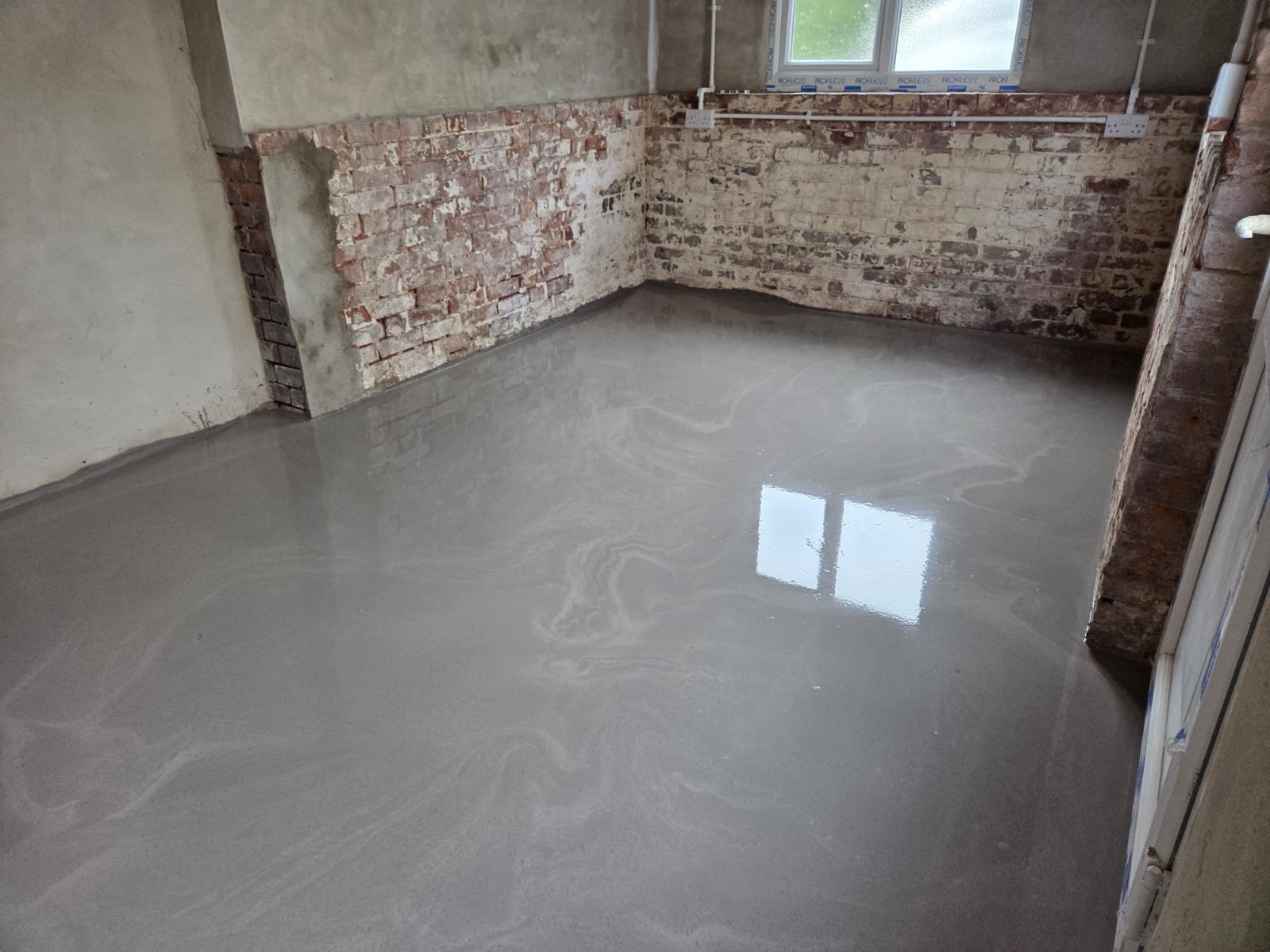
Post-Pour Coordination — the points that decide it
- 1Agree with the site manager which trades can return first and under what conditions
- 2Brief trades clearly on protection requirements before they re-enter the area
- 3Avoid heavy scaffolding, materials storage or plant directly on an uncured floor
- 4Keep painters and plasterers aware of the need to avoid excess water on the floor
- 5Coordinate electricians and other first-fix trades who may need to cross the floor early
- 6Set clear expectations about who is responsible for protection boards and their upkeep
- 7Review the floor periodically during this period to catch any issues early
- 8Agree a single point of contact for trades to raise questions about the floor
- 9Keep a simple log of which trades have accessed the area and when
Sequencing the return of trades
Lighter, more careful trades are often able to return sooner than those involving heavy materials or equipment, provided suitable protection is used. Coordinating this sequence with the main contractor or site manager helps avoid a scenario where multiple trades converge on the area at once without adequate protection in place.
Where possible, agree fixed walkways using protection boards so that all trades use the same protected route rather than each finding their own path across the new floor.
Communicating requirements clearly
A short, clear briefing to site trades about what is and is not acceptable on the new floor — no dragging heavy items, no leaving standing water, no unprotected plant — tends to be more effective than relying on general awareness or assuming everyone understands the sensitivities of a curing screed.
Putting this briefing in writing, even as a short site notice, gives trades something to refer back to and reduces the chance of a misunderstanding being blamed for any damage found later.
Assigning a single point of contact
On a busy site with several trades returning at different times, having one person, often the site manager, act as the point of contact for questions about the floor avoids conflicting instructions being given by different people.
This contact can also coordinate with the screed installer directly if a question arises that needs specialist input, rather than trades guessing at what is or isn't acceptable.
Monitoring the floor as trades return
Periodic checks of the floor during this period, even informal ones, help catch minor issues such as a damaged edge or a patch of standing water before they become bigger problems affecting the wider area.
Keeping a simple record of which trades accessed the area and when can be useful if damage is later discovered and the cause needs to be established.
Post-Pour Coordination — your questions
Need help coordinating trades around a screed pour?
Get in touch and we can advise on sequencing trades safely around your new floor.
Or call our landline on 01392 237700
In short
Coordinating other trades after a liquid screed pour helps protect the floor while it cures and avoids conflicts over site access in a busy build.
Need help coordinating trades around a screed pour?
Get in touch and we can advise on sequencing trades safely around your new floor.