
Fault diagnosis
Structural Movement Versus Screed-Specific Defects
Cracking, dips or unevenness in a floor can originate from building movement rather than the screed itself, and confusing the two leads to the wrong repair.
Unsure if your floor issue is structural?
We can help distinguish screed-specific defects from signs of building movement and advise on next steps. Call 07791 510849.
Or call our landline on 01392 237700
Not every crack or uneven patch in a screeded floor is a screed defect. Buildings settle, suspended floors deflect under load, and existing slabs can move due to ground conditions unrelated to the screed poured on top of them. Where this happens, repairing or replacing the screed without addressing the underlying movement simply means the same defect will reappear.
Distinguishing between the two requires looking at the pattern and location of the defect. Cracks that align with known structural features, such as over a beam-and-block floor's joints, along a known settlement line, or at a junction between old and new construction, point toward structural movement rather than a screed material issue.
Screed-specific defects, by contrast, tend to relate to the screed's own curing and drying behaviour, such as random shrinkage cracking, curling at edges, or debonding from the substrate, and don't necessarily correspond to structural lines in the building, which is the key visual clue an experienced investigator looks for first.
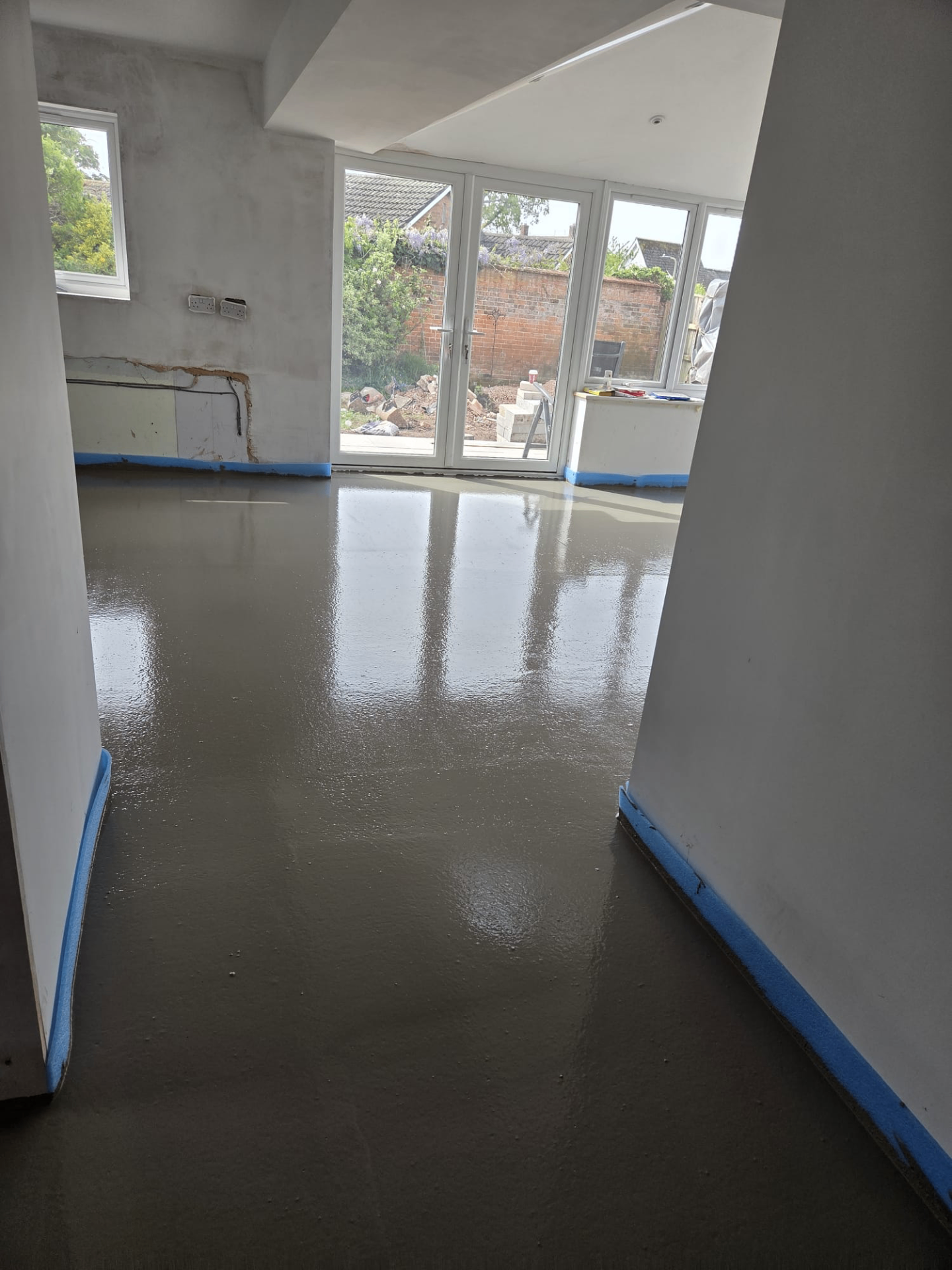
Structural movement versus screed defects — the points that decide it
- Cracks aligning with structural joints, beam lines or settlement features suggest building movement, not screed failure
- Random, map-pattern shrinkage cracking is more typical of a screed-specific curing issue
- Ongoing or worsening cracks over time suggest active movement, which needs structural investigation
- A movement joint should be present at the screed level wherever the substrate has one
- Deflection in suspended timber or beam-and-block floors can transmit movement into the screed
- A structural engineer's input is appropriate where building movement is suspected
- Repairing the screed without addressing structural movement will likely lead to recurrence
- External factors such as tree root activity or ground heave can be the ultimate cause of settlement cracking
- Crack monitors fixed across a crack give objective evidence of whether movement is ongoing
Reading the pattern of the defect
A single, straight crack running the full width of a room, particularly one that lines up with a known joist, beam or slab joint below, is a strong indicator of structural movement being transmitted through the screed rather than a screed material failure. Cracks that continue to open over weeks or months, rather than stabilising, point the same way.
By contrast, an irregular network of fine cracks distributed across a floor, or curling at unrestrained edges, is more consistent with screed shrinkage or drying behaviour rather than an external structural cause.
Symptoms beyond cracking that point to movement
Structural movement doesn't always show first as a crack in the screed; a doorframe that has started to bind, a visible gap opening between a skirting board and the floor, or a slope detectable with a spirit level across a room can all appear before or alongside floor cracking and are useful corroborating evidence. Where these symptoms are present elsewhere in the building at the same time as the floor cracking, it strengthens the case for a structural rather than screed-specific cause.
Externally, evidence such as cracking in adjoining walls, a nearby tree with an active root system, or known ground conditions such as shrinkable clay can help explain why movement might be occurring, and are worth noting even though they sit outside the scope of the screed itself.
What to do when movement is suspected
Where the pattern suggests structural movement, the appropriate next step is a structural assessment of the building element beneath the screed, rather than screed repair alone. Monitoring the crack width over time, using simple crack monitors or photographic records, can help establish whether movement is ongoing or has settled.
Once any structural cause has been addressed or confirmed as stable, screed repair can then proceed on the basis that it won't simply be re-opened by continuing movement beneath it.
Instrumentation used to monitor movement
Simple crack monitors, fixed across the crack with a reference scale, are a low-cost way of recording whether a crack is widening, and over what timeframe, without needing specialist equipment. For more significant or structurally important cases, a structural engineer may specify precise level monitoring at several points across the floor, repeated over a period of months, to build a clearer picture of the rate and pattern of movement.
Dated photographs taken at consistent intervals, alongside written notes of the crack's exact width at fixed points, provide a straightforward supplementary record that costs nothing beyond a bit of discipline, and can be valuable evidence if the matter becomes contested.
Who to involve and how the repair should follow
A structural engineer is the right professional to investigate and confirm whether building movement is occurring and what remedial building work, if any, is needed before a screed repair is considered. Only once that assessment is complete, or the movement has been shown through monitoring to have stabilised, should a screed contractor be brought in to address the floor itself.
Involving both professions in the right order, rather than asking a screeder to repeatedly patch a crack that keeps reopening, saves cost overall and avoids a repair being blamed for a problem it was never capable of resolving.
Structural movement versus screed defects — your questions
Unsure if your floor issue is structural?
We can help distinguish screed-specific defects from signs of building movement and advise on next steps. Call 07791 510849.
Or call our landline on 01392 237700
In short
Cracking, dips or unevenness in a floor can originate from building movement rather than the screed itself, and confusing the two leads to the wrong repair.
Unsure if your floor issue is structural?
We can help distinguish screed-specific defects from signs of building movement and advise on next steps. Call 07791 510849.