
Foot traffic timing
Walking on New Screed: What's Safe and When
The pump's gone, the floor looks solid, and everyone wants back in the room. Here's what's actually safe.
Get a foot-traffic plan for your site
Name, phone, email — we'll reply the same working day with a fixed price.
Or call our landline on 01392 237700
A freshly poured liquid screed looks deceptively finished within hours, flat, level and hard to the eye. But the surface hardening you see is only the first stage of a much longer process, and treating it as a finished floor too soon is one of the most common causes of avoidable damage on site.
This page focuses specifically on foot traffic: when it's genuinely safe to walk on a new screed, what kind of activity causes damage, how to protect the floor properly, and when it's reasonable to let other trades back into the room.
It's a narrower question than "how long does screed take to dry", and the timings here are considerably shorter than full drying time, so it's worth keeping the two separate in your head and in your programme.
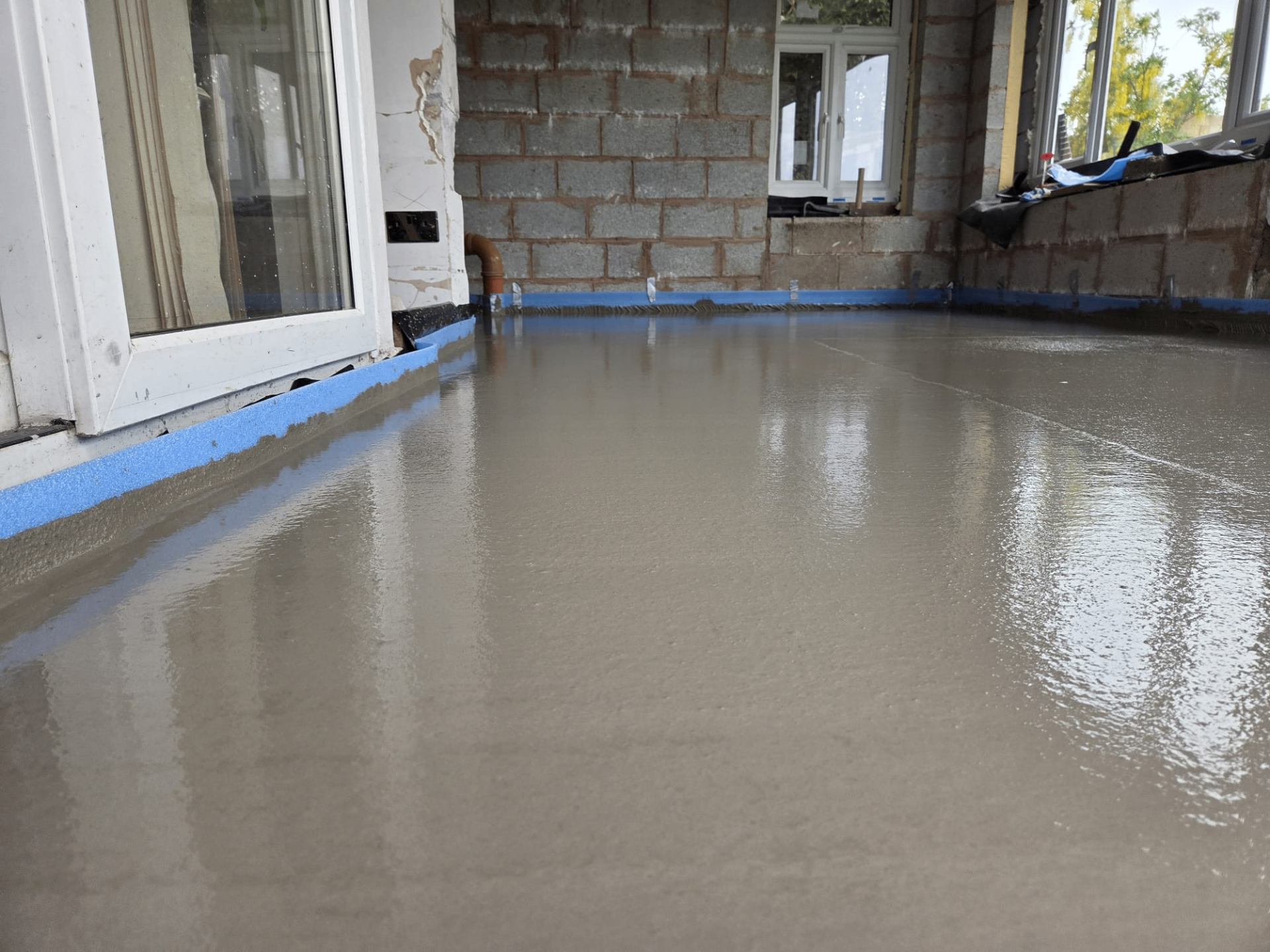
Foot traffic timings by screed type
| Screed type | Typical time to careful foot traffic |
|---|---|
| Cemfloor / cement-based liquid screed | 24 to 48 hours |
| Anhydrite (Gyvlon, Gypsol) | Around 48 hours |
| Either type, cold or damp site conditions | Can extend beyond 48 hours; always check with the installer before assuming |
What actually damages a green screed
- Point loads — a single stiletto heel, a ladder foot or a trestle leg concentrates weight into a tiny area and can indent or crack a surface that would happily take even spread of body weight
- Dragging materials or tools across the surface, which scores or scuffs the still-soft finish
- Wheelbarrows, site trolleys or unprotected plant wheels running directly over the screed
- Water or standing liquid left on the surface in the first days, which can mark or soften the finish
- Impact damage from dropped tools, offcuts or materials stacked directly on the floor
How to protect a new screed properly
- 1
Keep the room closed off
A simple barrier or taped-off doorway for the first 24 to 48 hours prevents accidental early foot traffic before the surface has hardened.
- 2
Use proper protection boards
Once foot traffic is permitted, rigid protection boards or breathable membrane spread the load and guard against scuffs, not just thin cardboard, which tears and lets debris through.
- 3
Bridge, don't rest, heavy items
Any trestles, scaffold towers or material stacks should sit on spreader boards, never directly on the screed surface.
- 4
Brief every trade before they enter
A five-minute conversation about what's underfoot avoids a five-figure argument about who cracked the floor.
Safe vs unsafe activity in the first week
Generally fine after the walk-on time
- Careful foot traffic to inspect the pour
- Setting out or measuring for future work
- Photography and quality checks
- Light, evenly distributed protection boards
Should wait, or needs extra care
- Scaffold towers or trestles without spreader boards
- Wheeled trolleys or barrows run directly on the surface
- Any trade work generating dropped tools or debris
- Stacking heavy materials in one spot
Get a foot-traffic plan for your site
Tell us your pour date and which trades need back in, and we'll give you a clear, written protection plan for the first week.
Or call our landline on 01392 237700
If you wouldn't roll a loaded trolley across a new patio the same afternoon it was laid, don't do it to a green screed either.
— Exeter Liquid Screeders
Walking on New Screed — questions we get asked
Keep reading across the site
Get a foot-traffic plan for your site
Tell us your pour date and which trades need back in, and we'll give you a clear, written protection plan for the first week.