
Aftercare
Aftercare and Floor Protection After a Screed Pour
A screed floor is at its most vulnerable in the weeks between pouring and flooring — this is how to keep it in the condition it left our crew in.
Get an aftercare plan for your site
Name, phone, email — we'll reply the same working day with a fixed price.
Or call our landline on 01392 237700
Once we've poured and finished a screed floor, the drying period is often when other trades are still working overhead or around it — first fix electrics, plastering, or a kitchen fit-out. That's exactly the window where careless foot traffic, dropped tools or spilled materials can damage a floor that took a lot of care to get level and flat in the first place.
Protecting the floor properly during this period isn't complicated, but it does need a bit of deliberate management, ideally agreed with your builder or site manager before other trades come back in.
Here's what we'd recommend, and what we do ourselves before we leave site.
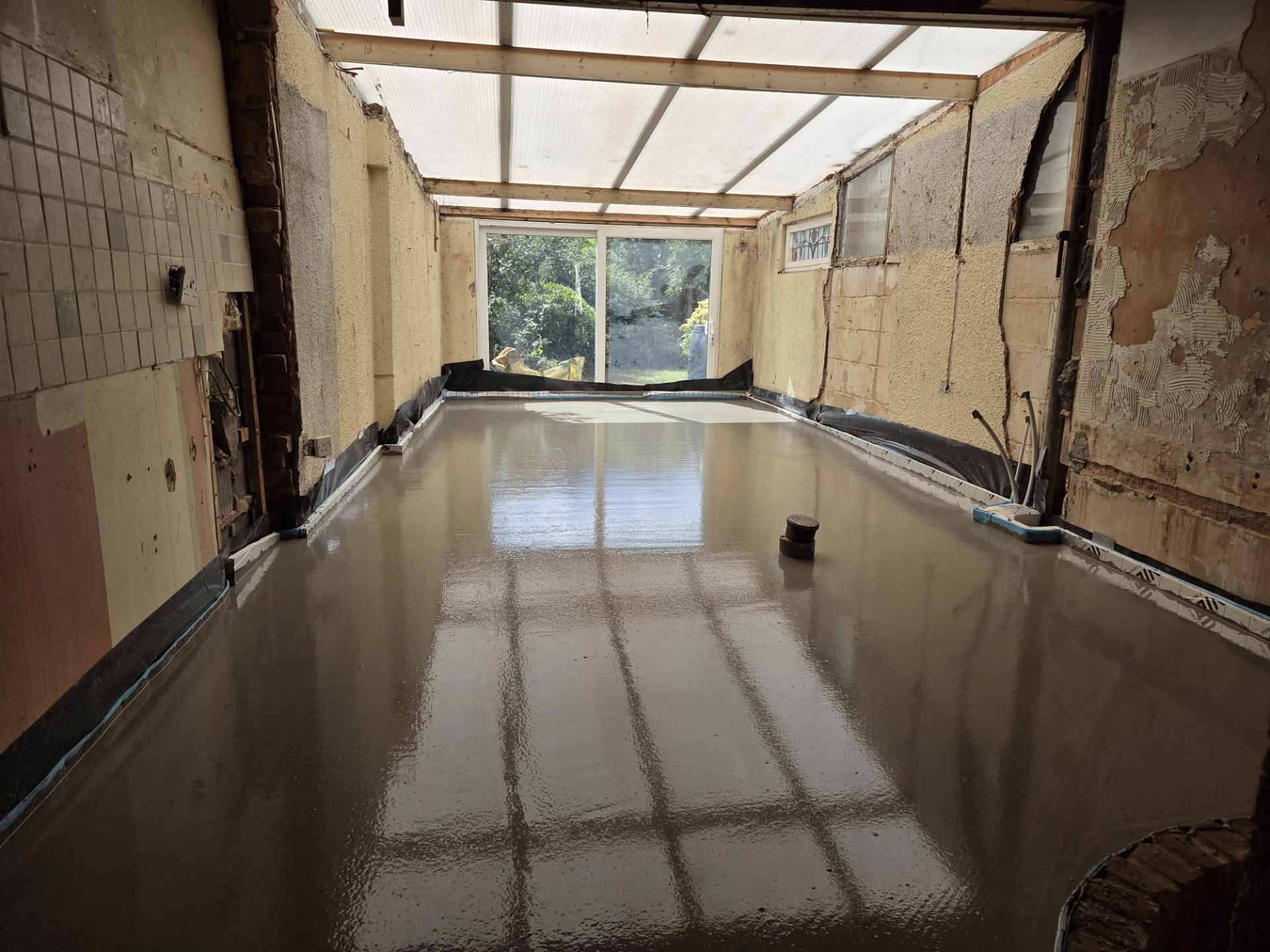
What we do before leaving site
- Barrier off the poured area with clear no-traffic signage for the initial curing period
- Confirm the exact date it's safe for careful foot traffic
- Flag any particularly vulnerable areas — door thresholds, corners — for extra care
What to manage once other trades return
- Use proper floor protection boards or sheeting, not just cardboard, for any trade working overhead
- Avoid dragging tools, ladders or materials directly across the screed surface
- Keep other trades' liquids (paint, plaster, adhesive) off the floor — spills can stain or bond to the surface
- Avoid point-loading the floor with heavy materials stacked in one small area before it's fully cured
Get an aftercare plan for your site
We'll agree a clear protection plan with you and your site team before we leave, covering exactly how long and how to protect the floor.
Or call our landline on 01392 237700
Common causes of damage during the protection period
| Cause | Why it matters |
|---|---|
| Foot traffic before curing time is up | Can leave permanent indentations or disturb the surface |
| Dragged ladders or scaffold feet | Scratches or gouges the finished surface |
| Unprotected trade spills | Can stain or bond to the screed, affecting adhesion later |
| Heavy point loads (stacked materials) | Risk of localised cracking before full strength is reached |
Aftercare & Protection — questions we get asked
More on costs and planning
Keep reading across the site
Get an aftercare plan for your site
We'll agree a clear protection plan with you and your site team before we leave, covering exactly how long and how to protect the floor.