
Systems
Liquid Screed Systems for Wet Areas
Wet area screed specification needs to account for falls to drainage, correct sequencing with tanking, and a binder choice suited to sustained moisture exposure.
Wet rooms and other wet areas place different demands on a screed than a standard dry-use floor. Beyond simply providing a flat, stable base, the screed often needs to be formed to falls directing water to a drain, and it needs to be considered alongside the waterproofing (tanking) strategy for the room rather than as an isolated build-up.
Binder choice is a genuine decision point here — gypsum-based (calcium sulfate) screeds are not generally suitable for sustained wet exposure without appropriate protection, whereas cement-based screeds are more tolerant of this environment. The correct approach depends on the overall waterproofing design and where the screed sits in relation to the tanking layer.
Sequencing also matters: whether the screed is formed to falls before tanking is applied on top, or whether tanking is applied to the substrate before screed with a durable membrane detail, changes the outcome, and getting this wrong can undermine a wet room's whole waterproofing strategy.
Wet Area Screed Systems — the points that decide it
- Falls to drainage are typically formed within the screed rather than corrected afterward
- Gypsum-based screeds require appropriate protection in areas of sustained wet exposure
- Cement-based screeds are generally more tolerant of ongoing moisture but still need correct detailing
- Screed and tanking sequencing should be agreed with the waterproofing designer or installer
- Drain outlet levels need coordinating with the screed fall design before the pour
- Movement and junction detailing around the drain and walls needs particular care in wet areas
- Manufacturer guidance for wet area use should be checked for the specific screed product chosen
Falls, drainage and screed design
Forming falls to a drain is more involved with a self-levelling screed than it might first appear, since the naturally flowing nature of a liquid screed works against a designed fall — this typically requires specific placement technique, screeding to level pins set to the fall design, or formwork to guide the pour, rather than assuming the material will find the fall on its own.
Coordinating drain outlet height, wall junction details and the overall fall gradient before the pour avoids awkward corrections afterward, which are far more difficult once the screed has cured.
Binder choice and waterproofing sequence
Because gypsum-based screeds are generally not suited to sustained wet exposure without protection, a cement-based screed is often the more straightforward choice beneath a wet room's tanking layer, though the final decision should be made with reference to the specific products and the overall waterproofing design.
The relationship between screed and tanking — whether tanking sits above the screed, integrated with upstands and the drain, or elsewhere in the build-up — needs agreeing with whoever is designing or installing the waterproofing, since screed and tanking decisions made in isolation from each other are a common source of wet room failures.
Planning a wet room or wet area floor?
We'll work with your waterproofing plan to get falls and screed sequencing right — call 07791 510849.
Or call our landline on 01392 237700
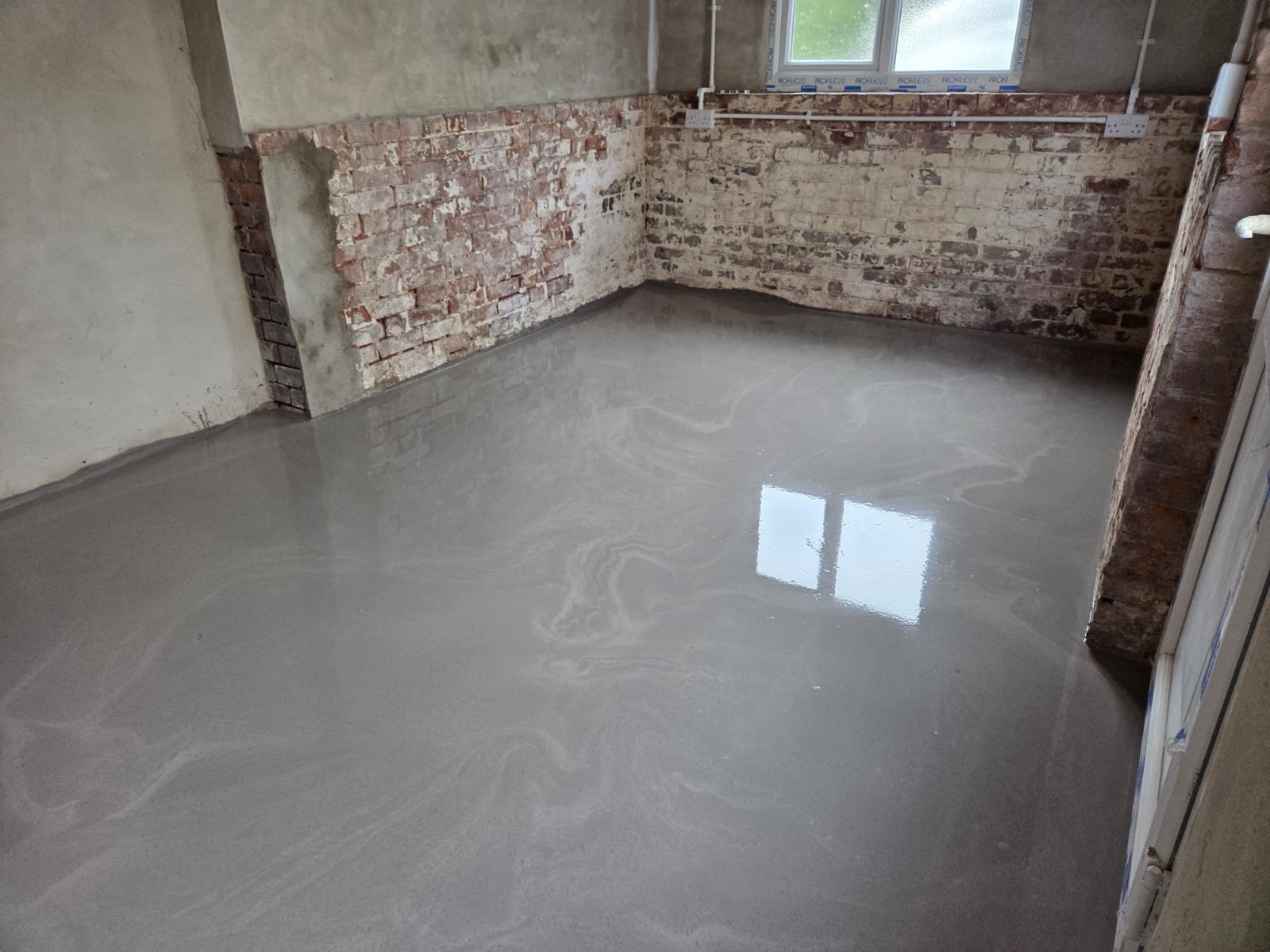
Wet Area Screed Systems — your questions
In short
Wet area screed specification needs to account for falls to drainage, correct sequencing with tanking, and a binder choice suited to sustained moisture exposure.
Planning a wet room or wet area floor?
We'll work with your waterproofing plan to get falls and screed sequencing right — call 07791 510849.