
Screed Systems
Understanding Screed Strength Classes Under BS EN 13813
A guide to reading and understanding the C (compressive) and F (flexural) strength classifications specified under BS EN 13813.
Every proprietary and site-batched screed sold to a recognised specification carries a strength classification under BS EN 13813, typically shown as something like CT-C25-F5 or CA-C30-F6. These codes tell you the binder type and two separate strength values, and understanding them helps you check that a proposed screed actually suits your floor's intended use.
The C value refers to compressive strength — resistance to crushing loads applied from above — while the F value refers to flexural strength, the screed's resistance to bending. Both matter, and a screed with a high C rating but a low F rating can still be unsuitable for a floor expecting significant point loading or deflection risk over a compressible layer.
These classifications are set by the manufacturer through standardised testing and published on the product datasheet; they aren't something a screed installer can vary on site, so specifying the right class starts at the design stage, alongside decisions about build-up, thickness and reinforcement.
Screed Strength Classes — the points that decide it
- BS EN 13813 classifies screeds by binder type (CT, CA and others) plus C and F strength values
- C denotes compressive strength, typically tested at 28 days
- F denotes flexural strength, relevant to bending resistance over spans or compressible layers
- Higher classes are generally specified for commercial or heavily loaded floors
- Strength class doesn't tell you about drying time, moisture tolerance or shrinkage on its own
- Classification is set through manufacturer testing, not adjustable on site
- The correct class depends on floor loading, finish and build-up, not screed type alone
- Test cubes or prisms are used to verify strength under standardised laboratory conditions
- Both domestic and commercial specifications should confirm class against actual anticipated loading
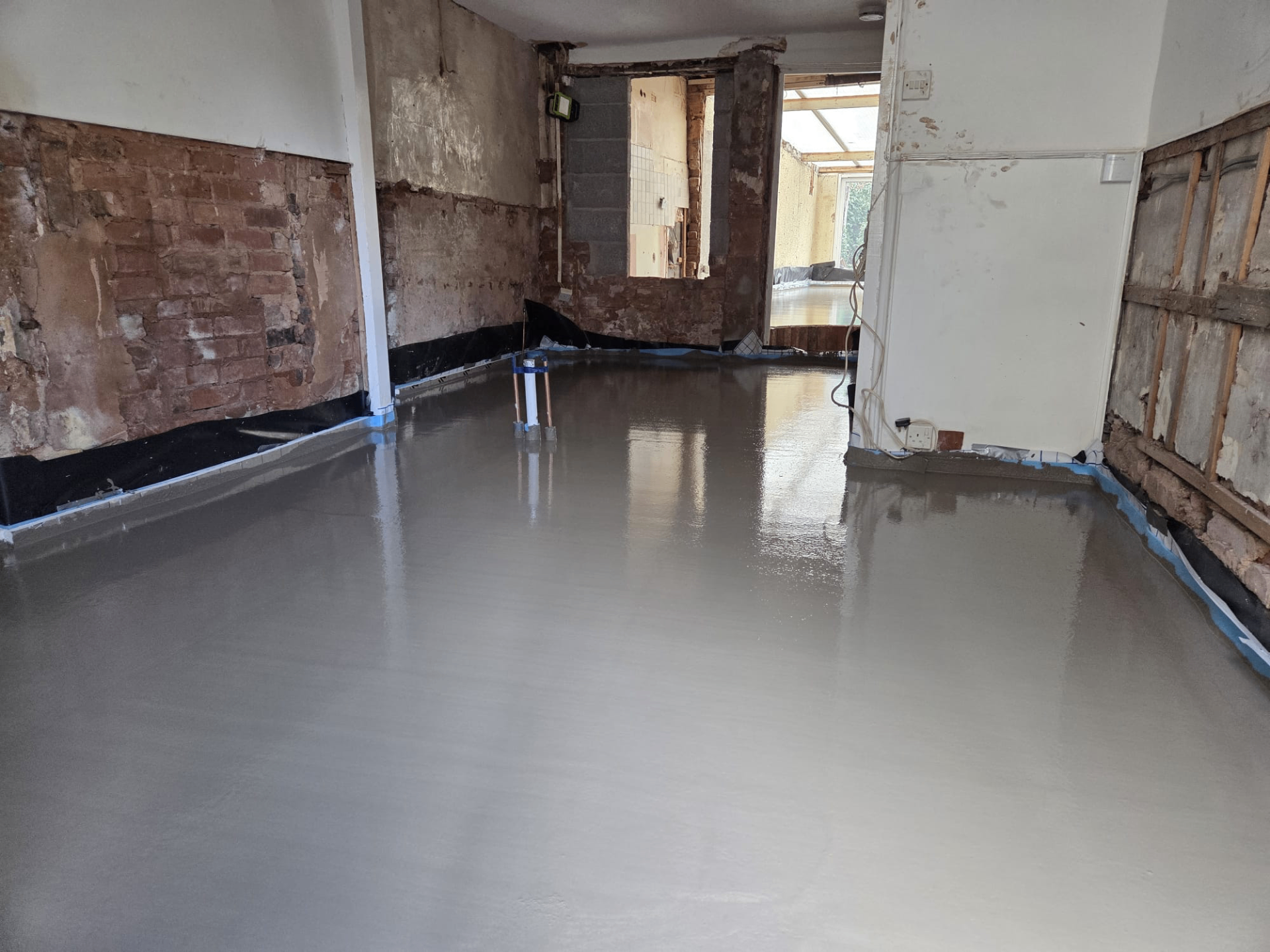
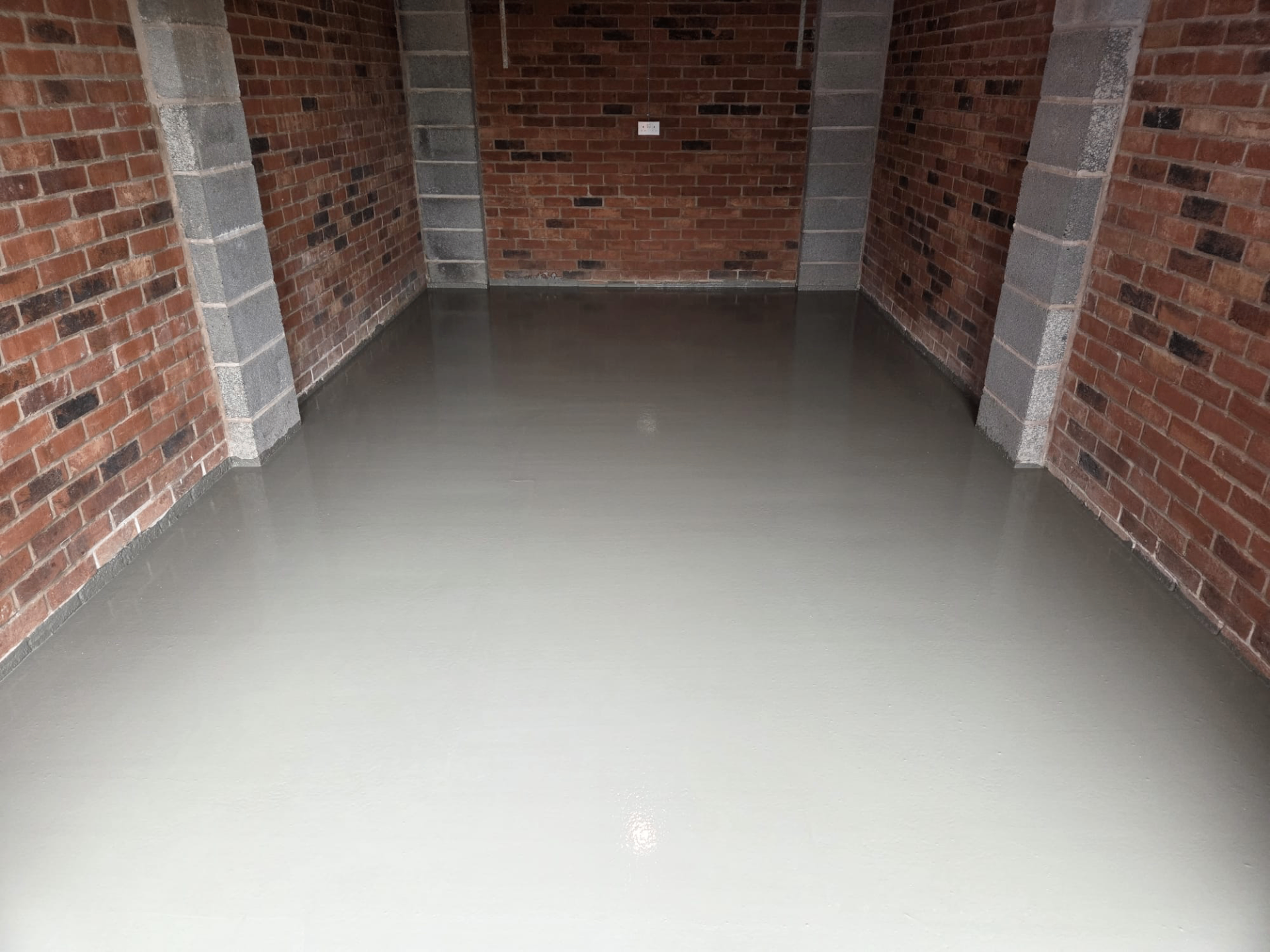
Reference points for screed strength classes
| Typical domestic class | Commonly CT-C20/F4 to CT-C30/F6 range, depends on design |
|---|---|
| Typical commercial class | Often higher, depends on loading — confirm with structural designer |
| Standard | BS EN 13813 |
Reading the classification code
A typical code such as CT-C25-F5 breaks down as: CT for a cementitious binder, C25 meaning a compressive strength class of 25 (roughly proportional to N/mm² performance under the standard test), and F5 for the flexural class. Calcium sulphate screeds use CA in place of CT and follow the same C/F structure.
Manufacturers publish these figures based on standardised cube and prism testing at 28 days, so the class you see on a datasheet reflects laboratory-controlled conditions — actual site performance still depends on correct mixing, curing and thickness being achieved.
Matching class to your project
Domestic floors under normal foot traffic typically don't need the highest available strength classes, while commercial floors with vehicle movement, racking or heavy point loads usually call for a higher specification agreed with a structural designer or the screed manufacturer's technical team.
It's worth remembering that strength class is only one part of the specification — thickness, reinforcement, and the build-up (bonded, unbonded or floating) all interact with strength class to determine whether a floor will perform as intended.
How testing is carried out
Compressive strength is measured by curing sample cubes under controlled conditions and crushing them in a testing rig at 28 days, while flexural strength uses prism samples loaded until they fail in bending — both tests follow standardised procedures so results are comparable across manufacturers and products.
These figures represent what the screed formulation is capable of achieving under laboratory conditions; achieving the same class on site depends on accurate batching, correct water content and appropriate curing, which is why site quality control matters as much as the specified class itself.
Why strength class alone isn't the whole specification
A screed can meet its stated strength class and still underperform on site if thickness is wrong, movement joints are missing, or drying wasn't managed correctly — strength class addresses load-bearing capacity, not shrinkage, curling or moisture-related issues.
For this reason, a full specification should always combine strength class with the correct build-up type, thickness, reinforcement and drying strategy, rather than treating the C/F code as a stand-alone guarantee of performance.
Questions to answer before selecting a class
Confirm whether the floor carries normal domestic foot traffic or commercial point loads such as racking, plant or vehicles. Then check whether the screed is bonded, unbonded or floating, the available thickness, the insulation beneath it and the planned floor finish. Those details determine whether the published class is suitable in the completed build-up.
The product datasheet provides the tested classification, but it does not replace the project design. Where loads are significant or unusual, the structural designer or manufacturer's technical team should confirm the class and build-up before material is ordered rather than leaving the installer to infer it on pour day.
In short
A guide to reading and understanding the C (compressive) and F (flexural) strength classifications specified under BS EN 13813.
Need help specifying the right strength class?
Exeter Liquid Screeders can talk through loading requirements and recommend a suitable screed classification.
Or call our landline on 01392 237700
Screed Strength Classes — your questions
Need help specifying the right strength class?
Exeter Liquid Screeders can talk through loading requirements and recommend a suitable screed classification.