Substrates & Preparation
Screeding Around Underfloor Voids and Service Ducts
Ducts, voids and access chambers within a floor need their covers, upstands and edges fixed and sealed before screeding, or the pour will find its way in.
Floor got ducts, voids or access chambers to work around?
We'll map out every penetration in the floor and detail it properly before the screed goes down.
Or call our landline on 01392 237700
Floors are rarely just a flat slab. Service ducts carrying cabling or pipework, underfloor voids for ventilation, and access chambers for drainage or plant all interrupt the substrate, and each one needs its own detailing before a liquid screed is poured near it. A self-levelling screed is fluid enough to find any gap, so loose duct covers or unsealed void edges are a common source of problems if they're not addressed first.
The general principle is the same across these features: establish a firm, fixed edge or upstand around the void that sits at the correct level relative to the finished screed, and seal any gaps that could let the liquid mix escape into the cavity below.
Coordinating this with other trades matters as much as the physical detailing itself, since electricians, plumbers and ventilation contractors often need continued access to these same features after the floor is finished, so covers and access points need to remain workable once the screed has cured, not just watertight on pour day.
Underfloor Voids & Service Ducts — the points that decide it
- Duct and chamber covers need to be secured and at the correct level before screeding, since a loose or low cover will let liquid screed drain into the void
- Upstands around access chambers should be built up to the planned screed depth so the cover sits flush with the finished floor
- Gaps between duct edges and the surrounding substrate should be sealed, typically with a suitable filler or tape, before the pour
- Ventilated underfloor voids need their vents and airflow paths protected from being blocked by dropped screed or debris
- Access covers over ducts should ideally be identified and agreed before the pour, since finding one on the day can hold up the whole job
- Where a duct runs close to the surface, screed depth over it may be thinner than the rest of the floor, which needs checking against minimum depth requirements
- Covers should remain removable after the screed has cured, so future access to cabling or drainage isn't compromised by the floor build-up
- A marked-up plan of every duct, void and chamber location is worth keeping on file after the pour, since covers can become hard to locate once the floor is finished
Sealing the edges before the pour
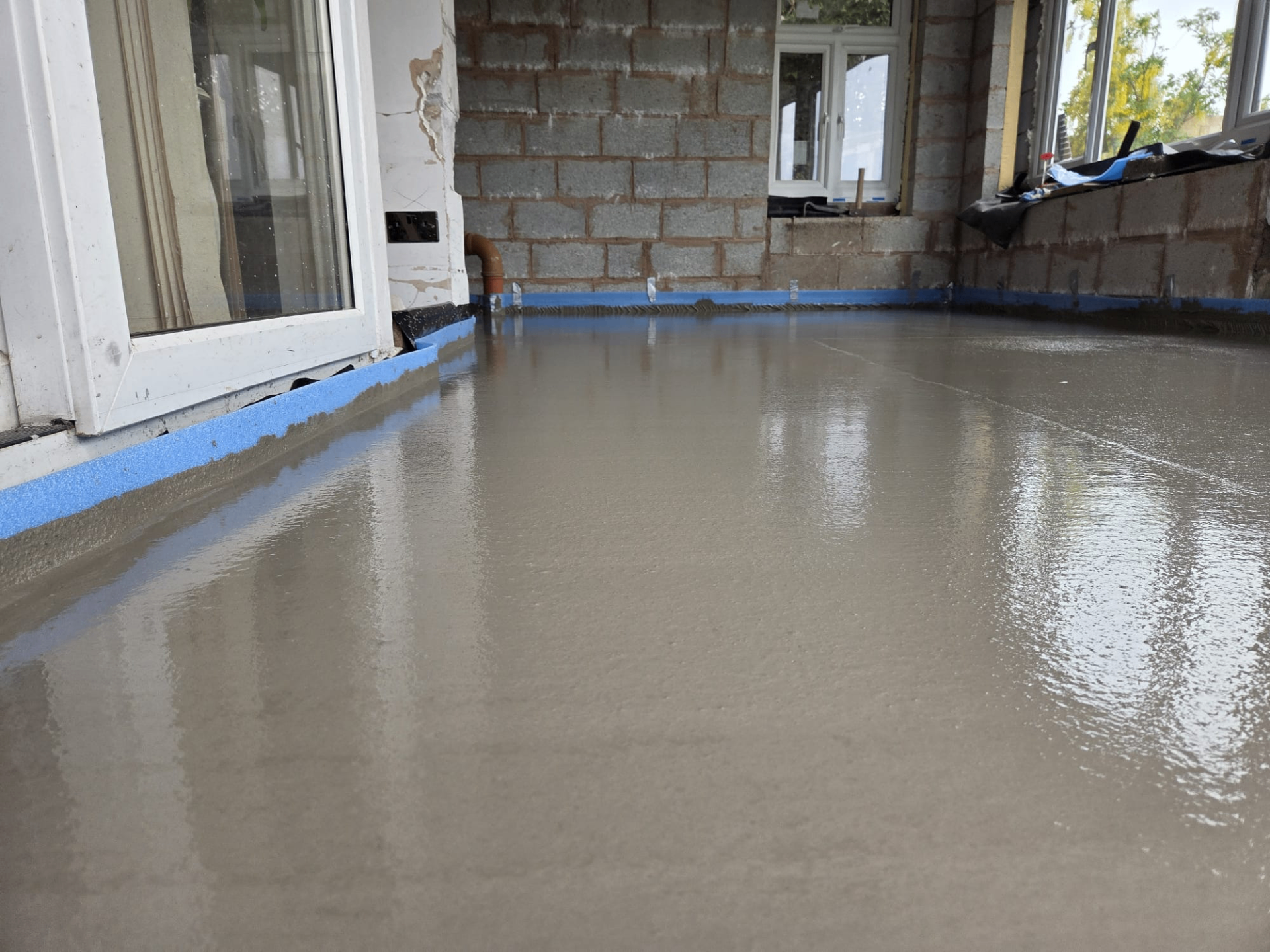
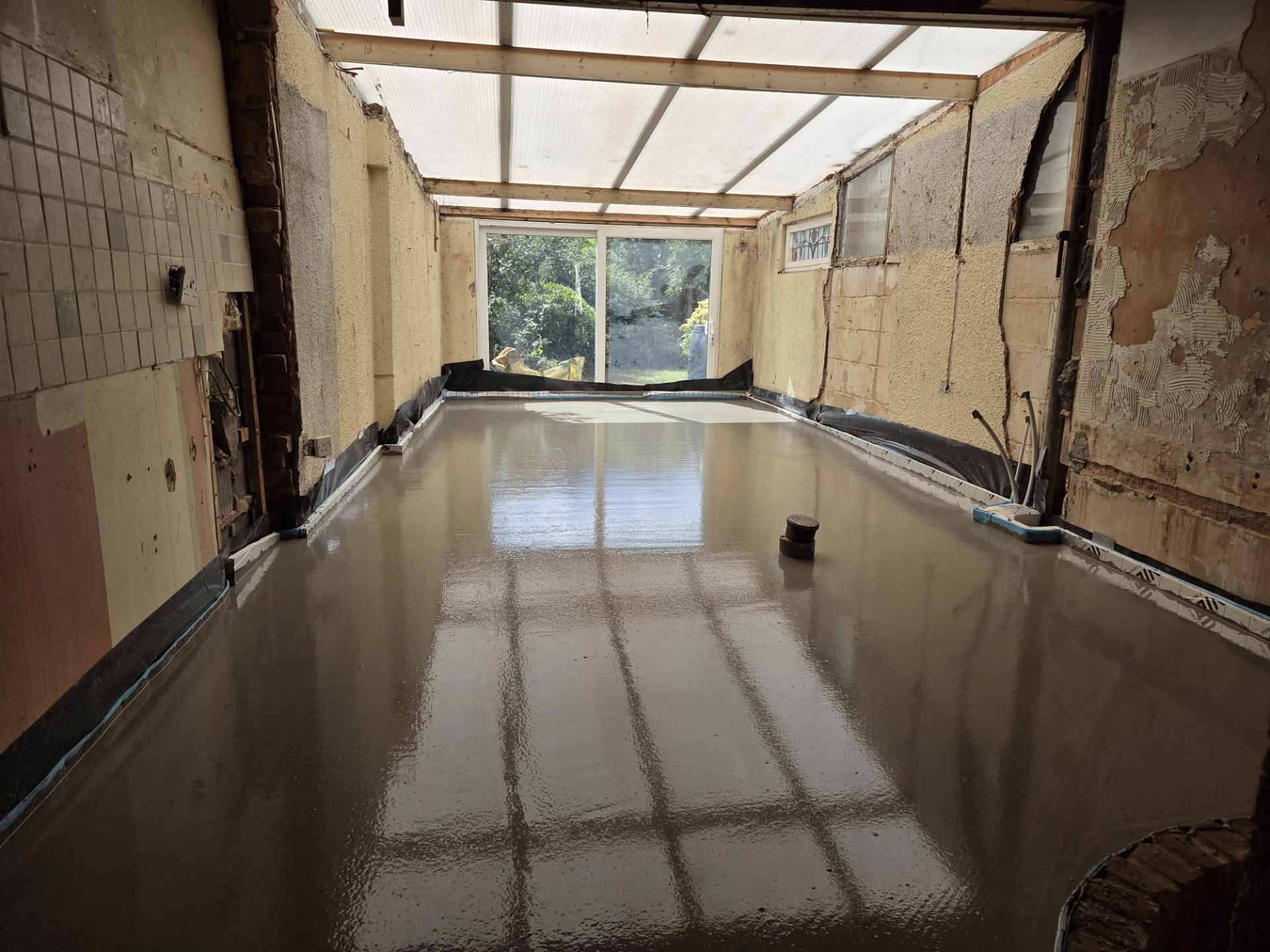
Any void, duct or chamber opening within the pour area is effectively a hole the liquid screed will try to fill given the chance. Edges need to be sealed — with tape, filler or a temporary dam — so the mix stays where it's meant to be rather than draining away and leaving a low spot or void beneath the surface once it cures.
This sealing step is worth checking immediately before the pour starts rather than relying on work done days earlier, since tape and temporary seals can be disturbed by other trades moving around the site in the meantime.
Getting covers to the right level
Where a chamber or duct has its own access cover, that cover needs to finish flush with the surrounding screed once everything's complete. That usually means building up an upstand or frame to the planned screed depth in advance, since trying to adjust a cover's height after the pour is far more disruptive than getting it right beforehand.
Frames and upstands should be checked for level as well as height, since a cover that's flush but tilted can still create a trip hazard or an uneven seat for the lid itself.
Coordinating with other trades before the pour
Ducts and voids exist because another trade needs access to what's beneath the floor, so it's worth confirming with electricians, plumbers or ventilation installers that all their cable runs, pipework and terminations are complete and tested before the screed goes down. Once a duct is sealed and covered, opening it again is disruptive.
A short walk-round with each relevant trade immediately before the pour, checking every known duct and chamber is genuinely finished and sealed, catches most last-minute issues before they become a problem under a new floor.
Recording locations for future reference
Once a liquid screed has cured over a floor with buried ducts and covers, the exact position of each one is much less obvious than it was during construction. Keeping a simple marked-up plan, or photographing the floor before the pour, gives whoever needs to access those services later — for maintenance, alterations or a future refit — a reliable reference rather than having to guess or probe the finished floor.
This is a small step to take on the day of the pour but can save considerable disruption further down the line if a duct or chamber needs to be located again.
In short
Ducts, voids and access chambers within a floor need their covers, upstands and edges fixed and sealed before screeding, or the pour will find its way in.
Floor got ducts, voids or access chambers to work around?
We'll map out every penetration in the floor and detail it properly before the screed goes down.
Or call our landline on 01392 237700
Underfloor Voids & Service Ducts — your questions
Floor got ducts, voids or access chambers to work around?
We'll map out every penetration in the floor and detail it properly before the screed goes down.