
Substrates & Preparation
Preparing a Painted or Sealed Concrete Slab for Screed
Paint, sealant and curing compounds on a concrete slab break the bond a liquid screed depends on, so they generally need mechanical removal or a floating design used instead.
Garages, workshops, plant rooms and older commercial units are frequently found with a painted or sealed concrete floor, whether that's a durable floor paint, a curing membrane sprayed on at construction stage, or a sealant applied to reduce dusting. Whatever the original purpose, that coating sits between the slab and any bonded screed, and it doesn't bond reliably to either.
Before a bonded liquid screed can go down, the coating typically needs stripping back mechanically to expose the concrete beneath. Where that's not practical or the coating is patchy and thin, a floating screed design avoids the issue by not relying on adhesion to the surface at all.
The specific coating type matters when planning removal — a thin, single-coat floor paint behaves differently under a grinder to a thick epoxy resin system or a sprayed-on curing membrane, and identifying what's actually on the slab helps set realistic expectations for how much work stripping it back will involve.
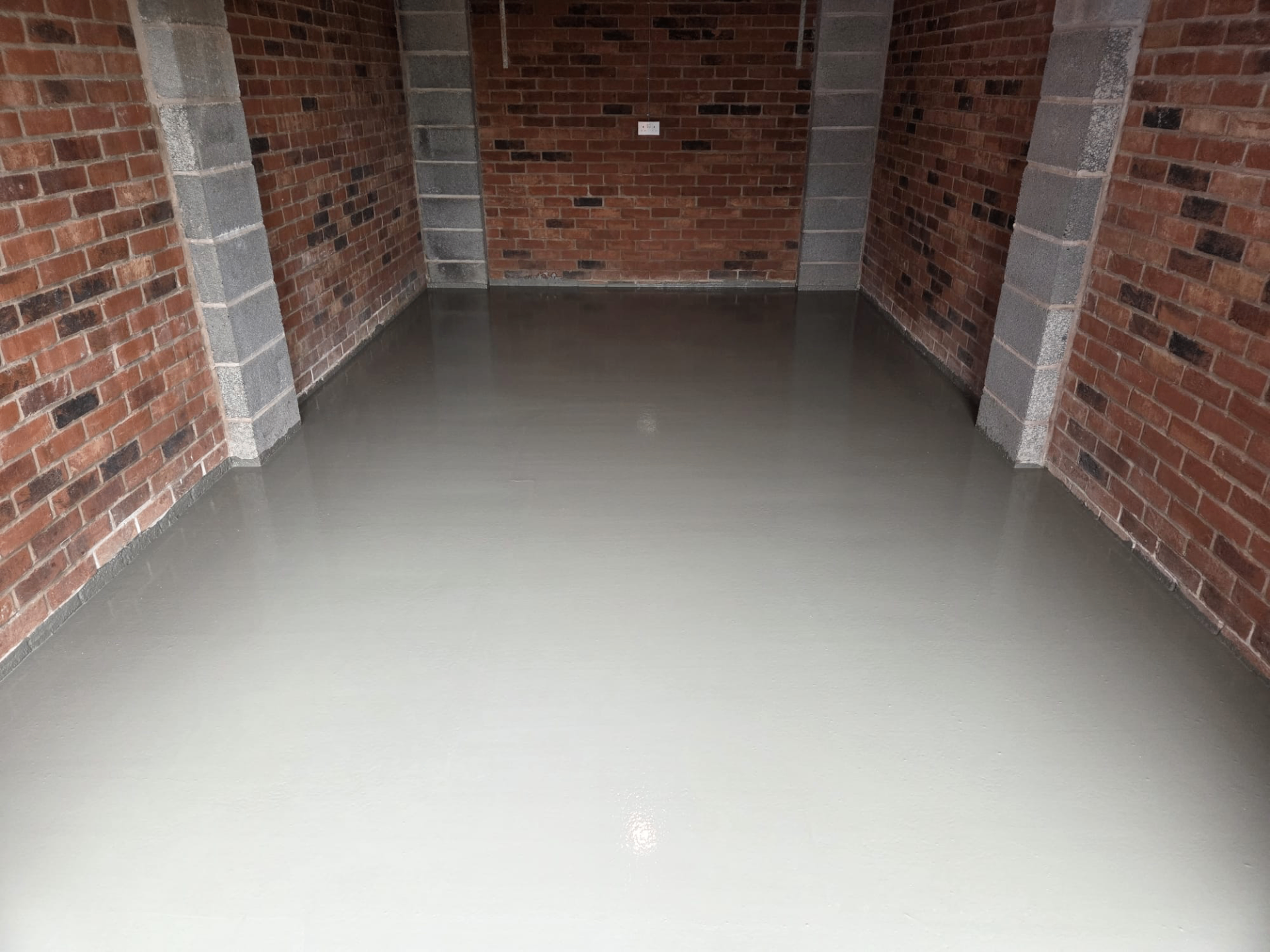
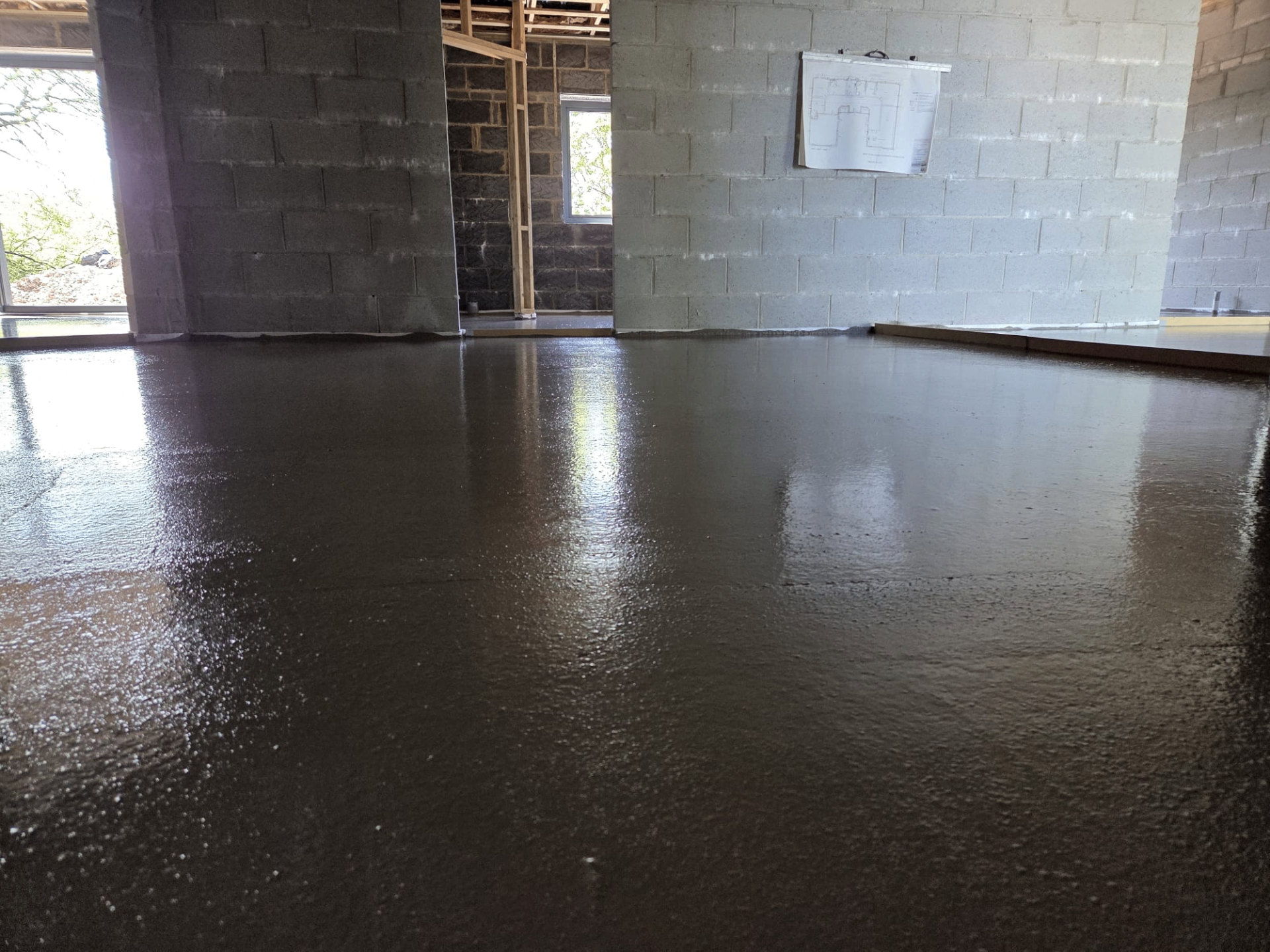
Why coatings interfere with bonding
A bonded screed relies on penetrating into the open pore structure of concrete and mechanically keying to it once cured. A painted or sealed surface blocks that pore structure, leaving the screed sitting on a film that may itself be only loosely attached to the slab. Even where the paint looks sound, its own bond to the concrete can fail under the load and shrinkage stresses of a curing screed.
This is a common cause of delamination on renovation projects where a coating was assumed to be thin enough to ignore. In practice, even a light single coat of floor paint is enough to prevent the mechanical key a bonded screed depends on.
Removal versus floating
Shot blasting is generally the preferred method for removing coatings at scale, since it profiles the concrete surface as well as stripping the paint, giving a mechanical key for the primer and screed that follow. Diamond grinding is an alternative on smaller areas or where blasting equipment isn't practical.
Where the coating can't be fully removed — for example around fixed machinery bases or where access is restricted — a floating screed over insulation avoids the bonding question, treating the coated slab purely as a stable platform to build on rather than a substrate to key into.
Identifying older or unusual coatings
Some older industrial units carry coatings applied decades ago, including tar-based or bituminous sealants that behave differently under a grinder to modern acrylic or epoxy floor paints. Identifying what's actually present before starting removal work helps set the right equipment and approach, and avoids unexpected delays once grinding is underway.
Where the coating history is uncertain, a small trial area is often ground back first to check how the material responds and how much of the slab profile is exposed, before committing to the whole floor.
Dealing with contamination alongside the coating
Painted floors in garages, plant rooms and workshops often carry oil staining, grease or other contamination on top of or bleeding through the coating itself. This needs its own assessment and treatment, since oil-contaminated concrete can prevent a new bond even after the surface coating has been ground away.
Where contamination is suspected, it's worth testing a sample area after grinding to confirm the exposed concrete is genuinely sound and receptive before committing to a bonded screed design.
Painted & Sealed Slab Preparation — the points that decide it
Dealing with a painted or sealed slab?
We'll check what's on the surface and recommend whether it needs stripping or can be worked around with a floating screed.
Or call our landline on 01392 237700
Painted & Sealed Slab Preparation — your questions
In short
Paint, sealant and curing compounds on a concrete slab break the bond a liquid screed depends on, so they generally need mechanical removal or a floating design used instead.
Dealing with a painted or sealed slab?
We'll check what's on the surface and recommend whether it needs stripping or can be worked around with a floating screed.