
Specification
Specifying edge insulation and perimeter detailing
Why edge insulation deserves its own specification line, covering both its thermal role and its role as a movement isolation layer.
Edge insulation around the perimeter of a screeded floor often gets a passing mention in a specification, if it is mentioned at all, yet it does two distinct jobs at once: reducing thermal bridging at the floor-wall junction, and providing the compressible isolation strip that allows the screed to move independently of the walls. Treating it as an afterthought risks both being done poorly.
This page sets out what a proper edge insulation specification should cover, separate from the general floor insulation already discussed elsewhere, since the perimeter detail has its own material and thickness considerations.
It is particularly relevant where underfloor heating is fitted, since heat loss at the perimeter is a genuine performance factor, not just a technicality.
Specifying edge insulation — the points that decide it
Two jobs, one strip
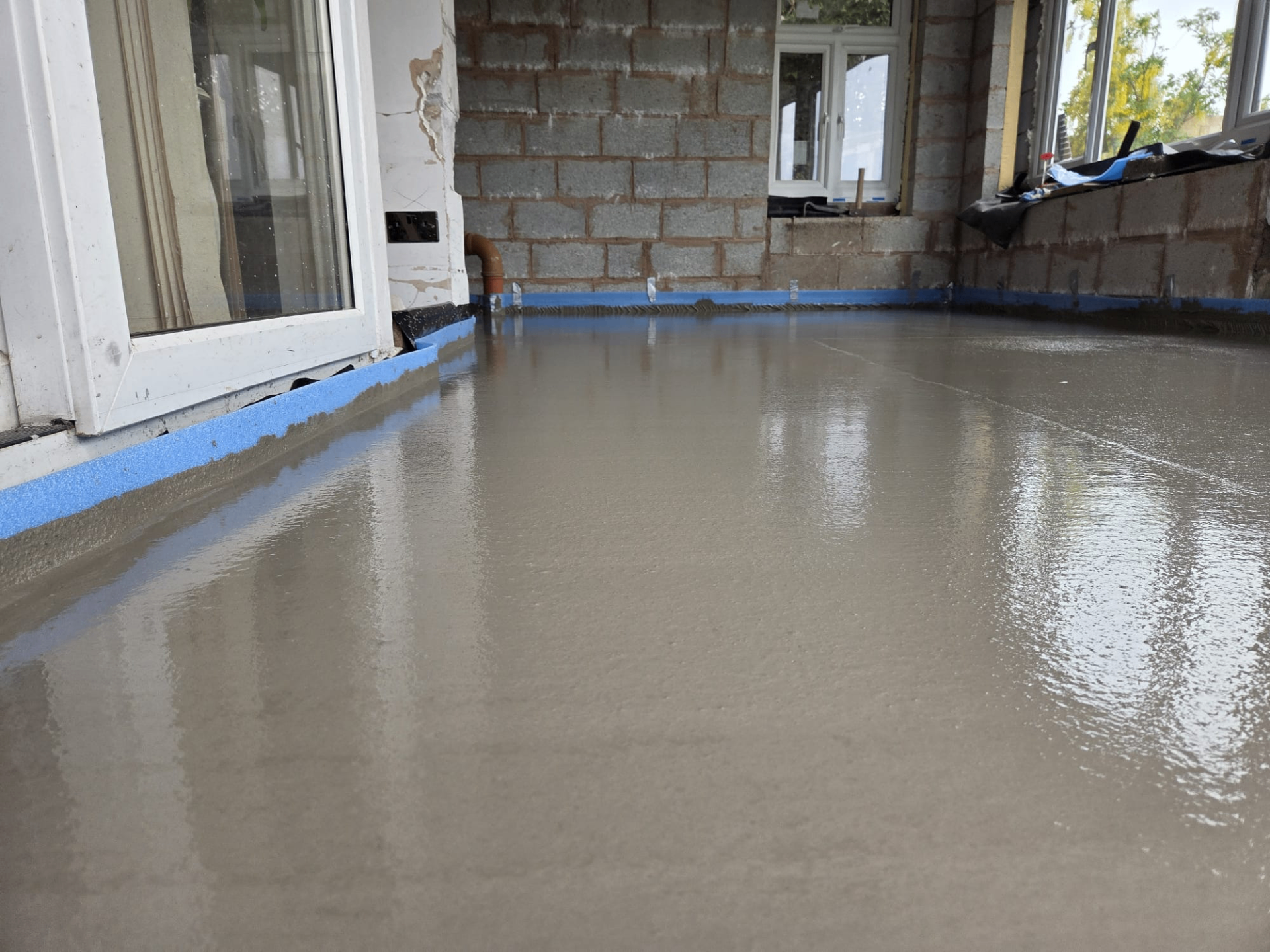
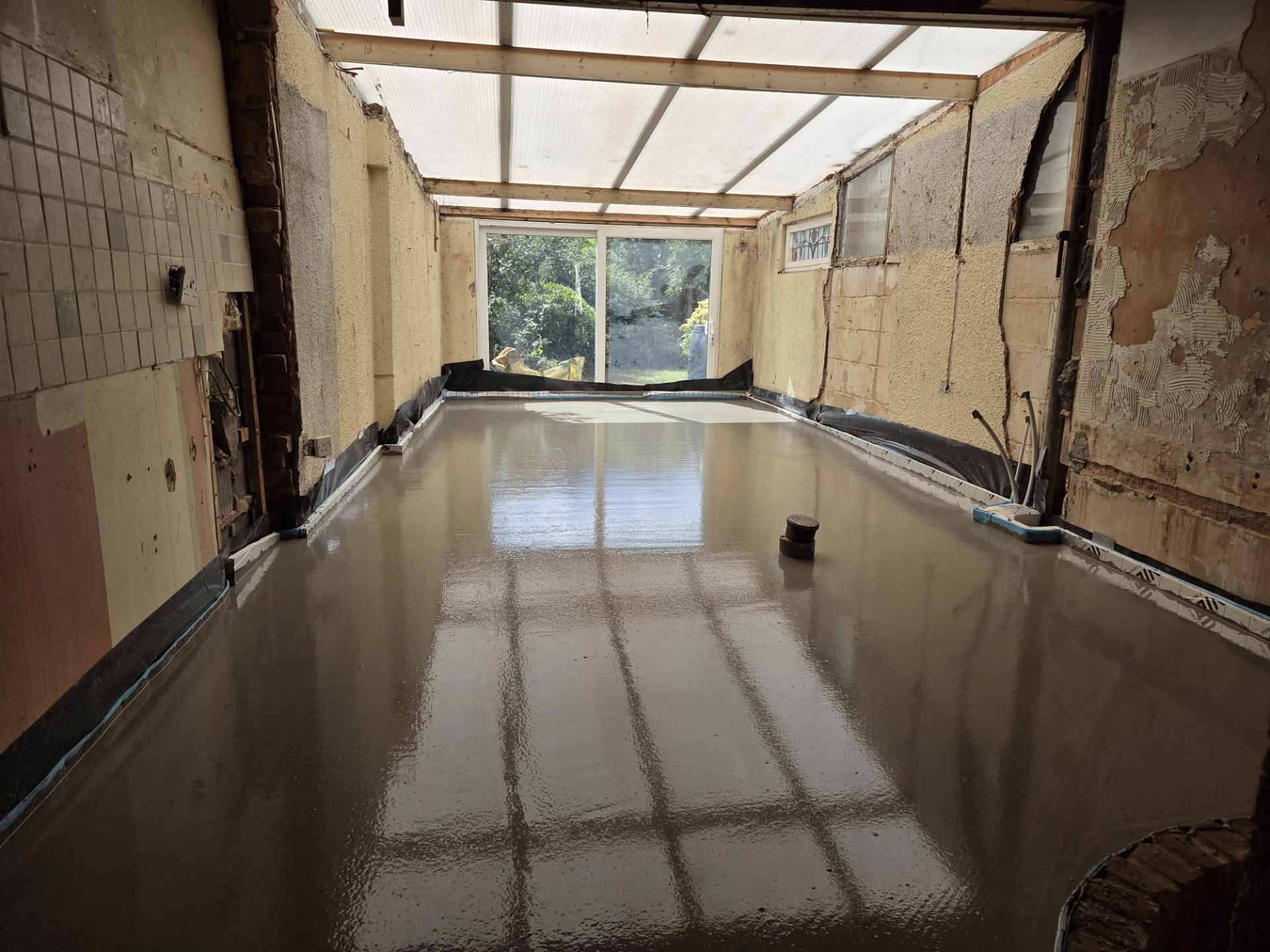
The perimeter edge strip is often specified purely as a movement joint, with its thermal contribution overlooked, or specified purely for thermal reasons without recognising it also needs to function as an isolation joint. A properly specified edge detail addresses both jobs explicitly — stating a material and thickness that gives worthwhile thermal resistance while also being compressible enough to allow the screed genuine freedom of movement.
This dual role means the edge strip cannot simply be swapped for whatever offcut material happens to be available on site; it should be a deliberately chosen product referenced in the specification.
Getting the detail right in practice
Edge insulation needs to run continuously around the full perimeter of the pour, including around columns, pipe penetrations and door openings, since gaps undermine both its thermal and isolation functions. It should be fitted securely before the pour so it cannot be displaced by the liquid screed, and trimmed back neatly afterwards so it sits tidily beneath the skirting or finish.
At door thresholds, where the strip is often trimmed away to nothing, a specific detail — rather than simply omitting the strip — helps limit both heat loss and the risk of a hard, unyielding junction at that point.
Edge strip material and screed type
A softer edge strip suits a cementitious pour's slightly greater shrinkage, while an anhydrite floor with lower shrinkage can sometimes use a firmer, thinner strip without losing isolation performance.
Whichever product is chosen, it should be named against the actual screed formulation being poured, rather than picked from a generic builders' merchant list.
Membrane continuity at the perimeter
The damp-proof membrane and the edge insulation strip meet at the same junction, and a gap or overlap error there undermines both the tanking and the isolation detail.
This junction is easy to get wrong on a busy site, so it is worth a specific mention rather than assuming the two trades will coordinate it themselves.
In short
Why edge insulation deserves its own specification line, covering both its thermal role and its role as a movement isolation layer.
Getting your perimeter detail right?
Ask us about edge insulation specification alongside your main floor build-up.
Or call our landline on 01392 237700
Specifying edge insulation — your questions
Getting your perimeter detail right?
Ask us about edge insulation specification alongside your main floor build-up.