
Verification
Specifying Acoustic Performance for Liquid Screed Floors
Acoustic performance in a liquid screed floor build-up is achieved through the wider system design, particularly resilient layers, and should be specified as a complete assembly.
Specifying an acoustic floating screed floor?
We can talk through floating screed build-ups for acoustic separating floors across Exeter and the South West.
Or call our landline on 01392 237700
In separating floors between dwellings, acoustic performance is a regulatory requirement, not an optional extra, and liquid screed forms one part of a wider build-up designed to meet it. Building Regulations Approved Document E sets out performance standards for sound insulation, and the screed's role within that build-up should be specified with the acoustic system in mind.
It is the combination of resilient layer, screed depth and mass, and the base structure that determines acoustic performance, not the screed alone. This means acoustic specification cannot be resolved by simply choosing a screed product; the whole floor assembly needs to be considered together.
Where pre-completion testing is required to demonstrate compliance, the specification should reflect the tested build-up exactly, since even small deviations in resilient layer type or screed depth can affect the acoustic result achieved on site.
The floor as an acoustic system
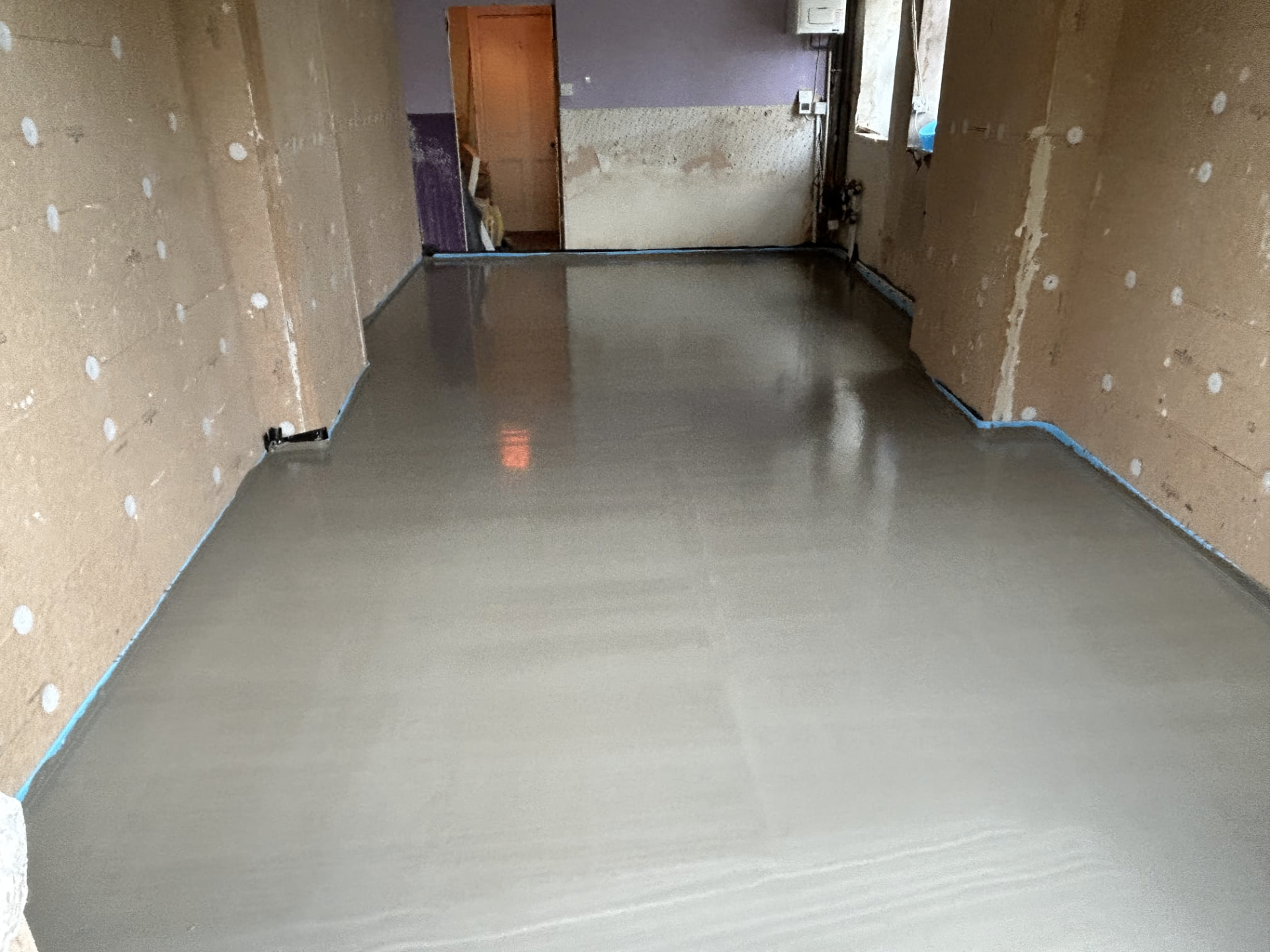
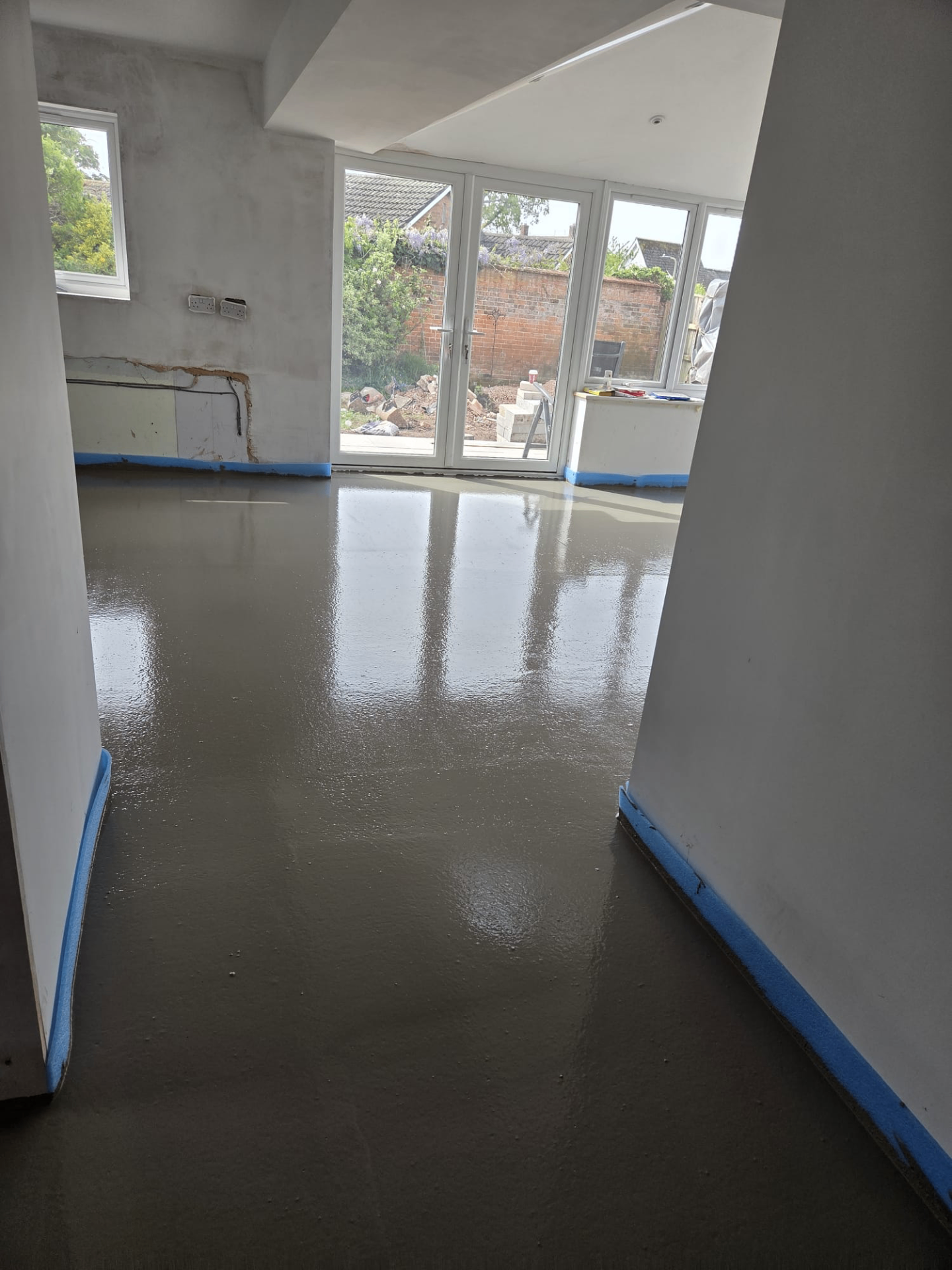
A floating liquid screed installed over a resilient layer is a common approach to achieving impact and airborne sound insulation in separating floors. The resilient layer decouples the screed from the structural base, reducing the transmission of impact sound, while the mass of the screed itself contributes to airborne sound reduction.
Because these elements work together, specifying acoustic performance means specifying the complete assembly — resilient layer type and thickness, screed depth, and base construction — rather than treating the screed as an isolated product choice.
Demonstrating compliance
Some projects rely on Robust Details or other pre-tested assemblies to demonstrate compliance without individual pre-completion testing, provided the installed build-up matches the tested specification exactly. Others require site-specific pre-completion testing once the floor is complete.
In either case, any change to the specified resilient layer, screed depth or edge detailing during construction should be checked against the acoustic design before proceeding, since these changes can affect whether the required performance is actually achieved.
Vapour management and its effect on acoustic performance
Moisture reaching a resilient layer from an unspecified damp-proof membrane can soften or degrade it over time, gradually reducing the impact sound insulation the floating floor was designed to achieve.
Where insulation beneath the resilient layer has limited compressive strength, resolving vapour control and load-bearing capacity together on the drawing avoids a later conflict between the acoustic build-up and the base construction.
Warranty cover and the tested acoustic assembly
Any warranty offered against acoustic performance normally applies only to the assembly as tested, so a resilient layer, screed depth or edge detail substituted on site can fall outside that cover.
Photographs of the resilient layer installation, taken before the screed is poured over it, give evidence that the tested build-up was actually followed on site.
Programming the pour around the acoustic test date
Where pre-completion sound testing is booked for a fixed date, the screed needs enough drying time beforehand that residual moisture in the resilient layer or joints does not affect the reading.
Building this drying allowance into the construction programme, rather than testing at the earliest convenient date, avoids a failed test that has nothing to do with the acoustic design itself.
Acoustic Performance — the points that decide it
- Approved Document E sets out sound insulation performance requirements for separating floors
- Acoustic performance depends on the full floor build-up, not the screed alone
- Resilient layers beneath a floating screed are central to impact sound reduction
- Screed depth and mass contribute to overall performance and should not be reduced without checking the acoustic design
- Robust Details or bespoke tested assemblies may be referenced to support compliance
- Pre-completion testing may be required to demonstrate the installed floor meets the standard
- Any substitution of specified components should be checked against the acoustic system as a whole
Specifying an acoustic floating screed floor?
We can talk through floating screed build-ups for acoustic separating floors across Exeter and the South West.
Or call our landline on 01392 237700
Acoustic Performance — your questions
In short
Acoustic performance in a liquid screed floor build-up is achieved through the wider system design, particularly resilient layers, and should be specified as a complete assembly.
Specifying an acoustic floating screed floor?
We can talk through floating screed build-ups for acoustic separating floors across Exeter and the South West.