Fault diagnosis
Vinyl Flooring Blistering Over a Screed Substrate
Bubbles and blisters under vinyl flooring laid on screed are a classic sign of residual moisture escaping through the covering after installation.
Vinyl bubbling over your screed?
We can test the screed's moisture condition and advise on the safest way to resolve blistering without repeat failure. Call 07791 510849.
Or call our landline on 01392 237700
Vinyl sheet and LVT are sensitive floor coverings when it comes to substrate moisture, because they form a near-impermeable membrane over whatever is beneath them. If a liquid screed still holds moisture above the level the adhesive and covering can tolerate, that moisture has nowhere to go except to push against the vinyl from underneath, producing soft blisters that often appear weeks or months after laying.
Blistering can also result from adhesive that wasn't fully cured before the floor was put into use, or from trapped air during installation, so the presence of bubbles alone doesn't confirm a moisture problem without further testing.
Because vinyl is typically one of the last trades on site, it often takes the blame for problems that actually originated earlier in the drying and handover sequence. A clear-headed, evidence-based diagnosis before any covering is lifted saves time and avoids a dispute settling on the wrong trade.
Confirming moisture as the cause
An RH probe test through the vinyl, or a hygrometer reading taken at the time of laying if records exist, is the most reliable way to confirm whether residual moisture is behind the blistering. Surface hand-testing is not conclusive because vinyl can trap moisture that would not otherwise be obvious.
Where blistering is confined to specific zones rather than spread across the whole floor, checking for local causes such as a damp-proof membrane detail, a plumbing leak, or a screed thickness variation in that area is worthwhile before assuming a general drying failure.
How the symptom typically develops
A moisture-driven blister usually starts as a soft, slightly raised patch a few centimetres across, often first noticed underfoot as a change in feel rather than something visible. Over subsequent weeks the affected area can grow, and adjoining seams in sheet vinyl may begin to gap or curl as the adhesive beneath continues to lose grip.
In LVT installations, blistering more commonly shows first as plank edges lifting slightly and catching underfoot, sometimes accompanied by a faint hollow sound similar to that heard with debonded tiles, because the mechanism, moisture displacing an adhesive bond, is closely related.
Instrumentation and site testing
In-situ RH probes inserted into the screed to the depth specified in BS 8203, sealed and left to equilibrate for the recommended period, remain the industry-standard way of confirming whether the substrate is within tolerance for the covering being used. A surface hygrometer or capacitance meter can give a fast indicative reading but should not be relied on alone for a definitive diagnosis.
Where the covering has already been lifted, a simple visual check of the adhesive, whether it looks fully cured, discoloured, or shows signs of re-emulsification, can help corroborate what the moisture readings suggest about the sequence of events.
Remedial options
If moisture is confirmed as the cause, the vinyl generally needs to be lifted, the screed allowed to dry fully or force-dried under controlled conditions, and re-tested before re-laying. Attempting to reseal or patch over blisters without addressing the underlying moisture typically results in recurrence.
Where the screed has already reached an acceptable moisture level and the issue was adhesive-related, re-laying with a correctly cured adhesive system usually resolves it without needing to disturb the screed itself.
Prevention on future projects
The most effective prevention is simply not allowing vinyl or LVT to be laid until an RH test confirms the screed has reached the threshold the manufacturer specifies for that covering, and keeping a dated record of that result. Where the programme is tight, a proprietary surface damp-proof membrane can allow earlier laying, but only when specified deliberately rather than used as an undocumented shortcut.
Coordinating under-floor heating commissioning so it doesn't begin, or accelerate, before the screed has met its moisture target for the covering also removes one of the more common triggers for delayed blistering.
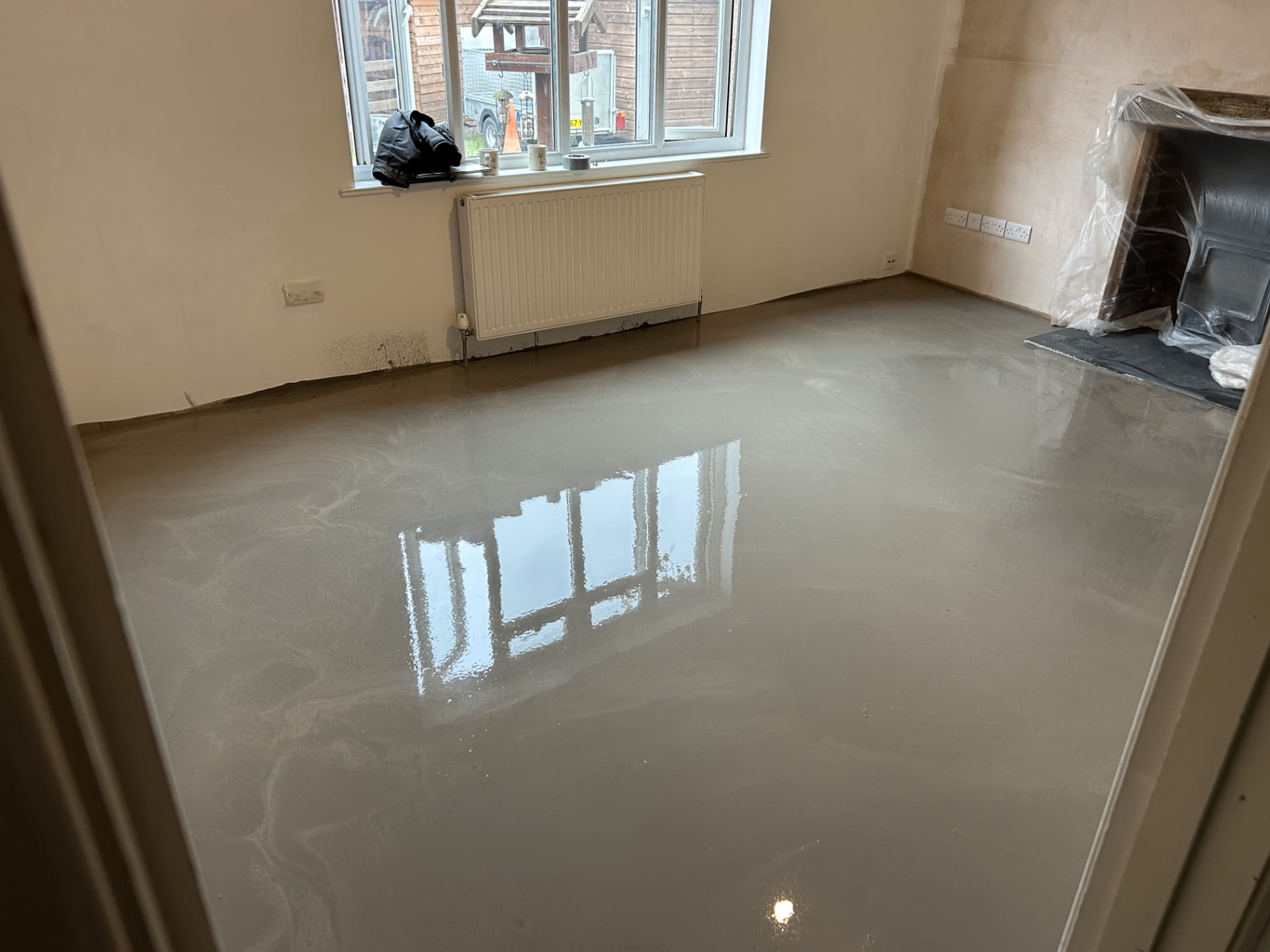
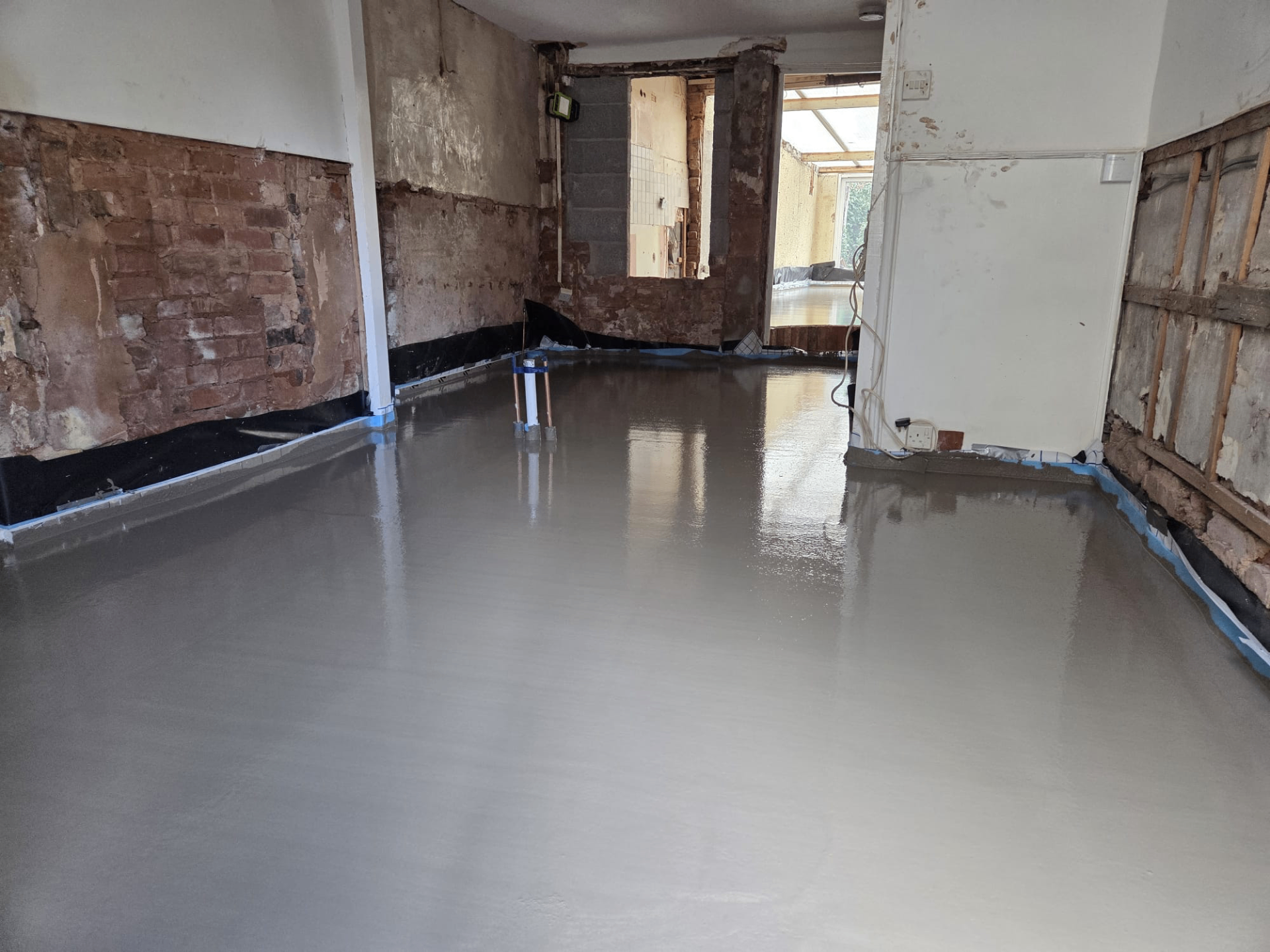
Vinyl blistering over screed — the points that decide it
- 1Blisters often appear weeks after laying as trapped moisture migrates outward
- 2Relative humidity (RH) testing to BS 8203 is the standard way to check screed readiness
- 3Vinyl and LVT typically require lower moisture thresholds than tiled finishes
- 4Blistering can also result from incomplete adhesive cure or trapped air, not only moisture
- 5Localised blisters near walls or thresholds can indicate rising damp bypassing the DPM
- 6Solvent-based adhesives are more moisture-sensitive than some modern dispersion adhesives
- 7Under-floor heating cycling before the screed is dry accelerates moisture-driven blistering
- 8Blister size and distribution across the floor help distinguish moisture from workmanship causes
- 9Sheet vinyl often blisters along seams first, while LVT tends to lift at plank edges
Vinyl blistering over screed — your questions
Vinyl bubbling over your screed?
We can test the screed's moisture condition and advise on the safest way to resolve blistering without repeat failure. Call 07791 510849.
Or call our landline on 01392 237700
In short
Bubbles and blisters under vinyl flooring laid on screed are a classic sign of residual moisture escaping through the covering after installation.
Vinyl bubbling over your screed?
We can test the screed's moisture condition and advise on the safest way to resolve blistering without repeat failure. Call 07791 510849.