
Underfloor Heating
Sequencing Liquid Screed Pours Across Multiple UFH Zones
Larger properties with multiple manifolds often need pours sequenced by zone or floor level to keep access and pipe protection manageable.
Planning a larger, multi-zone screed project?
We help sequence pours sensibly across your zones and floor levels to fit your build programme.
Or call our landline on 01392 237700
On a small single-storey project with one manifold, a liquid screed pour is often a single continuous operation across the whole floor area. Larger properties with several heating zones, multiple manifolds, or more than one storey usually need that pour broken down into a sequence, both for practical access reasons and to keep pipework properly protected while work continues elsewhere on site.
Sequencing decisions take into account which areas need to be finished first for the wider build programme, where pump access is realistic from, and how zones fed from different manifolds relate to each other physically, since pouring one zone shouldn't compromise access to pipework or insulation in an adjoining one still to be poured.
This is agreed with the main contractor and heating installer before pour day, so that everyone understands which rooms are being poured in which order and what protection is needed for completed areas while later pours take place.
Planning the order
We look at the floor plan alongside access routes for the screed pump, agreeing with the main contractor which areas are poured first, and making sure that later access to unpoured zones isn't blocked by screed that needs time to firm up before it can be walked on.
Protecting finished areas
Once a zone is poured it needs protecting from foot traffic and other trades until it has firmed up sufficiently, which has knock-on implications for site logistics when other work is continuing in adjoining zones on the same day.
Sharing the sequence with the wider site team
A simple written or drawn pour sequence, shared with the main contractor and other trades ahead of time, reduces the chance of confusion about which rooms are accessible on a given day and which are off-limits while curing. This is a small piece of coordination that avoids costly damage to a freshly poured zone from someone unaware it had just been completed.
Where several trades are working across a large site at once, a short daily briefing on which areas have just been poured, alongside the written plan, keeps everyone up to date as the sequence progresses rather than relying solely on a plan drawn up at the start of the job.
Handling zones fed from different manifolds
Where zones fed from separate manifolds are poured on different days, we check that pipework in the zone not yet poured remains fully protected and that its manifold connections aren't disturbed by work continuing in the zone being poured that day, since the two areas often share access routes or adjoining walls.
This is particularly relevant where a manifold cabinet serves circuits crossing between two zones scheduled for different pour dates, in which case the sequence needs to account for that shared boundary explicitly rather than treating each zone as entirely separate.
Adjusting the sequence if the programme shifts
Build programmes change, and a pour sequence agreed weeks in advance sometimes needs revisiting if another trade falls behind or a room isn't ready as expected. We stay in contact with the main contractor in the run-up to pour days so the sequence can be adjusted without losing the coordination benefits of having planned it in the first place.
Where a zone has to be pushed back, we flag any knock-on effect on adjoining areas already poured, such as how long they'll need protecting for before the next stage of work can safely proceed around them.
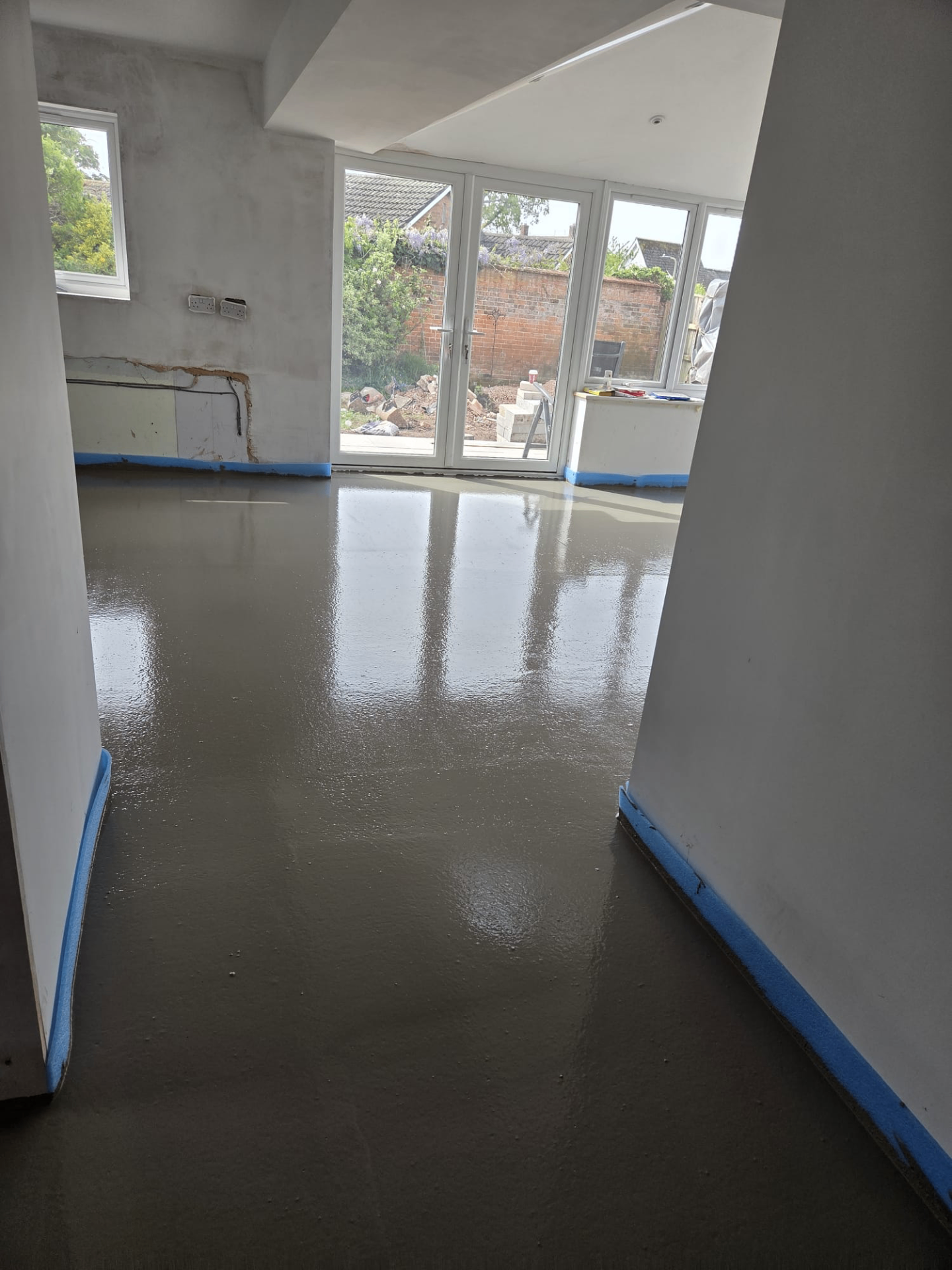
Sequencing Multi-Zone Pours — the points that decide it
Sequencing Multi-Zone Pours — your questions
Planning a larger, multi-zone screed project?
We help sequence pours sensibly across your zones and floor levels to fit your build programme.
Or call our landline on 01392 237700
Underfloor heating & screed
Zoning & Room-by-Room Layouts
Underfloor heating & screed
Screed & Manifold Detailing
Services
All services
Underfloor heating & screed
UFH Screed for Garden Rooms & Annexes
Underfloor heating & screed
Pressure Monitoring During Pour
Substrates & preparation
Stepped & Split-Level Slabs
In short
Larger properties with multiple manifolds often need pours sequenced by zone or floor level to keep access and pipe protection manageable.
Planning a larger, multi-zone screed project?
We help sequence pours sensibly across your zones and floor levels to fit your build programme.