
Underfloor heating
Response Time and Thermal Mass in UFH Screed
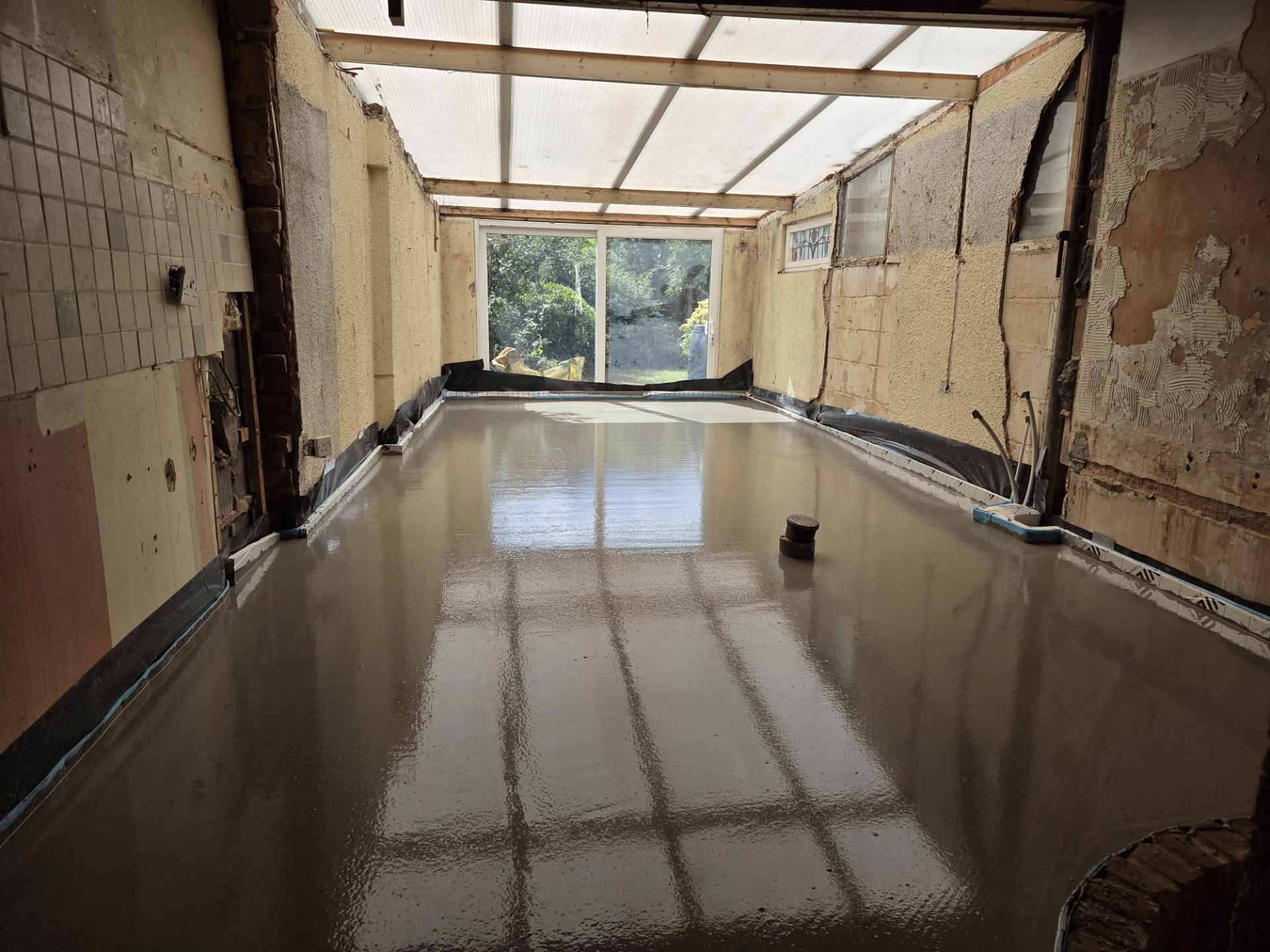
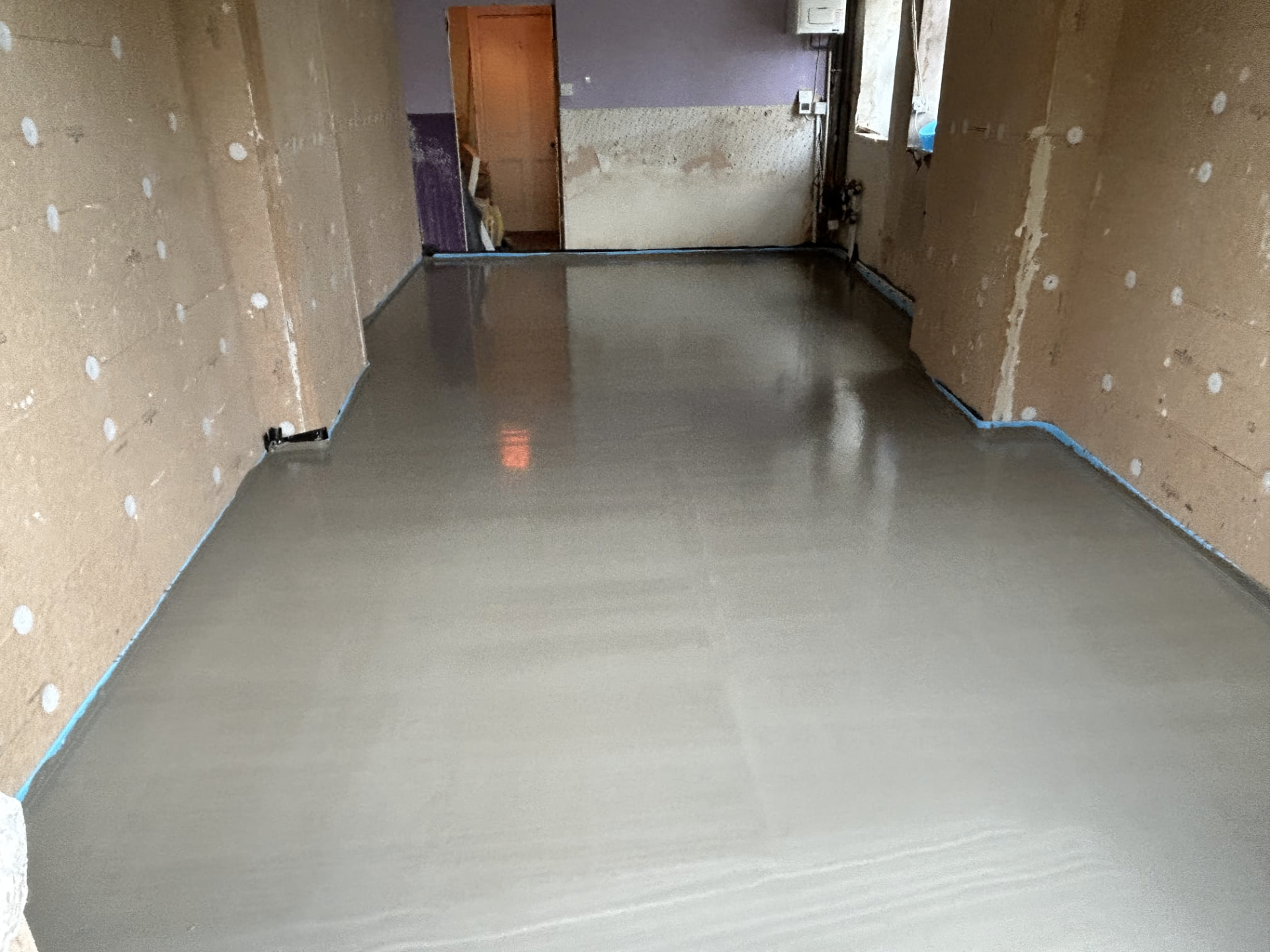
A screed floor stores heat as well as transferring it, and this thermal mass shapes how quickly rooms warm and cool after a setpoint change.
Screed doesn't just conduct heat from the pipe to the room — it also stores it. That stored heat is thermal mass, and it's the reason underfloor heating feels different to warm up and cool down compared with radiators.
For homeowners moving from radiators to UFH, understanding response time expectations up front avoids the common complaint of a system that 'feels slow', when actually it's behaving exactly as designed.
Control strategy plays as large a part as screed depth in how a household experiences response time. A basic on/off room thermostat cycling a high-mass floor can feel sluggish and prone to overshoot, whereas a system using weather compensation, optimised start, or a proportional-integral control algorithm tends to hold a steadier temperature by anticipating demand rather than reacting to it after the room has already drifted off setpoint.
What thermal mass means for daily living
A high-mass screed floor tends to hold a steady temperature well but takes longer to shift from one setpoint to another. This suits homes that are occupied fairly consistently through the day, where the heating runs on a steady low-and-slow basis rather than being switched on and off sharply.
It's less well suited to rooms wanted for occasional quick warm-ups, where a lower-mass build-up or supplementary heating might be considered at design stage.
Managing expectations at handover
Explaining response time to the client before commissioning avoids confusion later — a system that takes a few hours to noticeably change temperature after a setpoint adjustment isn't faulty, it's simply behaving in line with the thermal mass of the floor it's set into.
Control strategy and perceived responsiveness
A simple on/off thermostat calling for heat only once room temperature drops below setpoint tends to exaggerate the practical effect of thermal mass, since the floor has already cooled before the system responds. Weather-compensating or optimised-start controls anticipate demand instead, adjusting flow temperature ahead of time so the floor's response feels steadier even though the underlying thermal mass hasn't changed.
This is one reason two houses with similar screed depth can feel quite different to live with — the screed sets the physical limits, but the control strategy determines how those limits are experienced day to day.
Overshoot as a normal characteristic
Because a warm screed floor continues releasing stored heat for a period after the heat source stops, rooms often continue to gain a degree or so after the thermostat is satisfied. This overshoot is expected behaviour in a high-mass floor and is usually accounted for in how the setpoint and control bandwidth are configured, rather than something to try to eliminate entirely.
Zoning strategy and thermal mass
Splitting a floor into multiple independently controlled zones doesn't change the thermal mass of any individual zone's screed, but it does mean each room's response time can be managed on its own schedule rather than the whole floor being tied to a single, shared setpoint pattern.
This is particularly useful in mixed-use layouts, where a living area with high thermal mass and steady occupancy sits alongside a smaller room, such as a home office, where quicker temperature changes are wanted.
Screed depth trade-offs revisited
Because thermal mass and cover depth are closely linked, a decision to reduce depth for faster response needs to be checked against the same structural and output considerations covered elsewhere on this site, rather than treated as a standalone lever for improving comfort.
In practice, most projects settle on a cover depth close to the designer's calculated figure and manage response time through control strategy instead, since that approach avoids reopening structural and output calculations after the fact.
Response Time & Thermal Mass — the points that decide it
- Thicker screed generally increases thermal mass, meaning slower heat-up but steadier heat retention afterward
- Response time also depends on flow temperature, pipe spacing and floor covering, not screed depth alone
- Heat pump systems are often designed to run more continuously at a lower temperature to work with thermal mass rather than against it
- Thermostats with weather compensation or optimised start can help manage response time in practice
- Rooms with high thermal mass floors may need setpoint changes planned hours in advance rather than instantly adjusted
- Reducing screed depth can improve responsiveness but should be balanced against structural and output requirements
- Proportional or weather-compensating controls generally manage high thermal mass floors more smoothly than simple on/off thermostats
- Overshoot — a room continuing to warm briefly after the thermostat is satisfied — is a normal symptom of thermal mass, not a fault
- Zoned control with individually programmed schedules can partly offset the practical downsides of high thermal mass in specific rooms
Understanding your floor's heating behaviour
We can talk through how screed depth and mass will affect your system's day-to-day response.
Or call our landline on 01392 237700
Response Time & Thermal Mass — your questions
In short
A screed floor stores heat as well as transferring it, and this thermal mass shapes how quickly rooms warm and cool after a setpoint change.
Understanding your floor's heating behaviour
We can talk through how screed depth and mass will affect your system's day-to-day response.