
Underfloor Heating
Movement Joints in Liquid Screed Underfloor Heating
Heated screed floors expand and contract more than unheated ones, so movement joint positions need coordinating with the pipe layout.
Got a large or multi-zone heated floor to plan?
We coordinate movement joint positions with your heating pipe layout before pouring begins.
Or call our landline on 01392 237700
A heated liquid screed slab moves more than an unheated one, simply because it goes through a warm-up and cool-down cycle every time the heating operates, in addition to the normal drying shrinkage every screed experiences. That makes the positioning of movement joints, where they're needed, a detail worth thinking through alongside the pipe layout rather than as a separate consideration.
Liquid screed's flowing nature means it can often be poured in larger areas with fewer joints than a traditional sand and cement screed would need, but very large or irregularly shaped floor areas, or floors that step between rooms with different heating zones, may still call for a joint at a sensible location.
Where a joint is required, it needs to be planned around the pipe runs so that it doesn't cross directly over a heating circuit in a way that could stress the pipe as the two sides of the joint move independently.
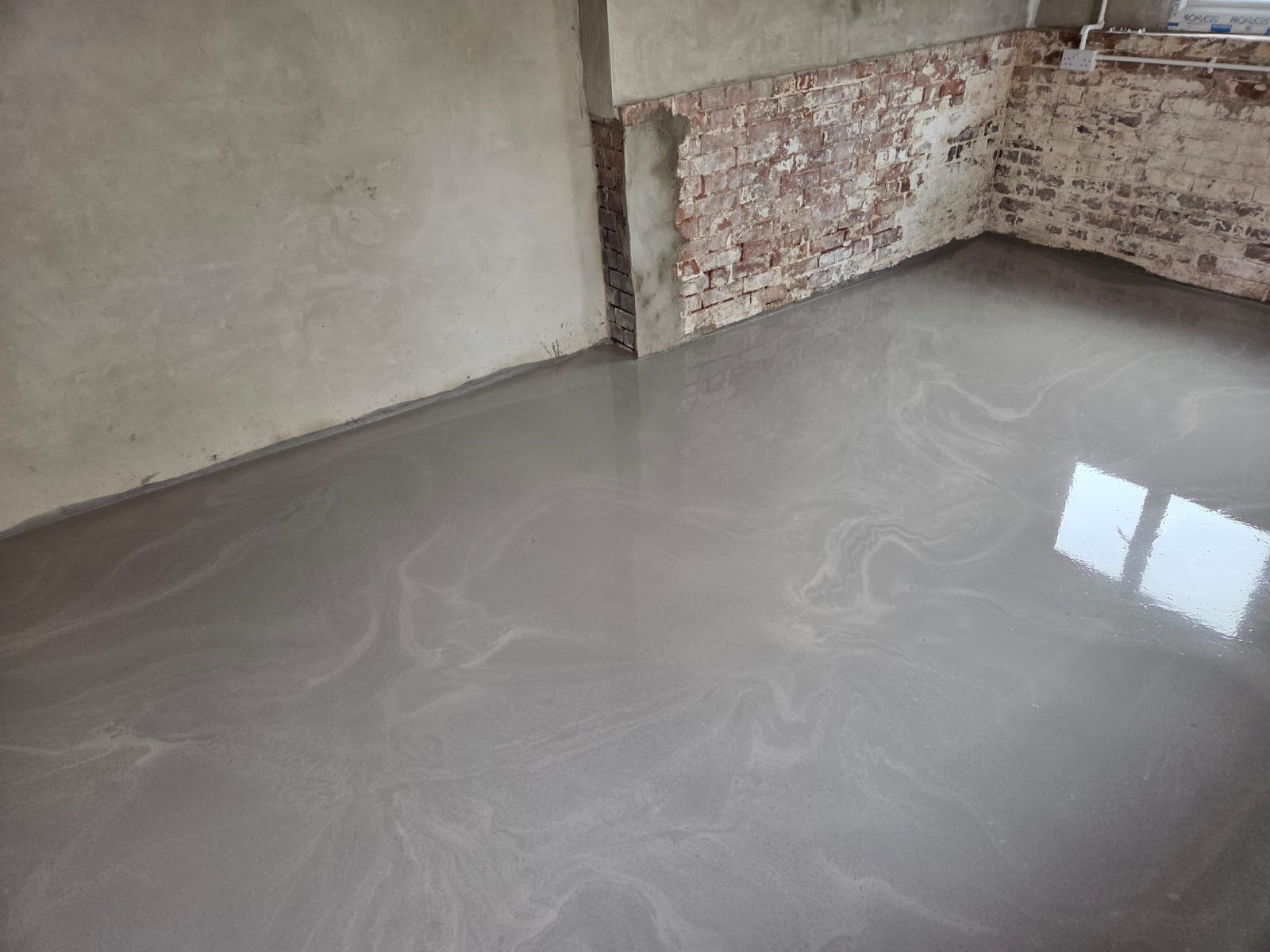
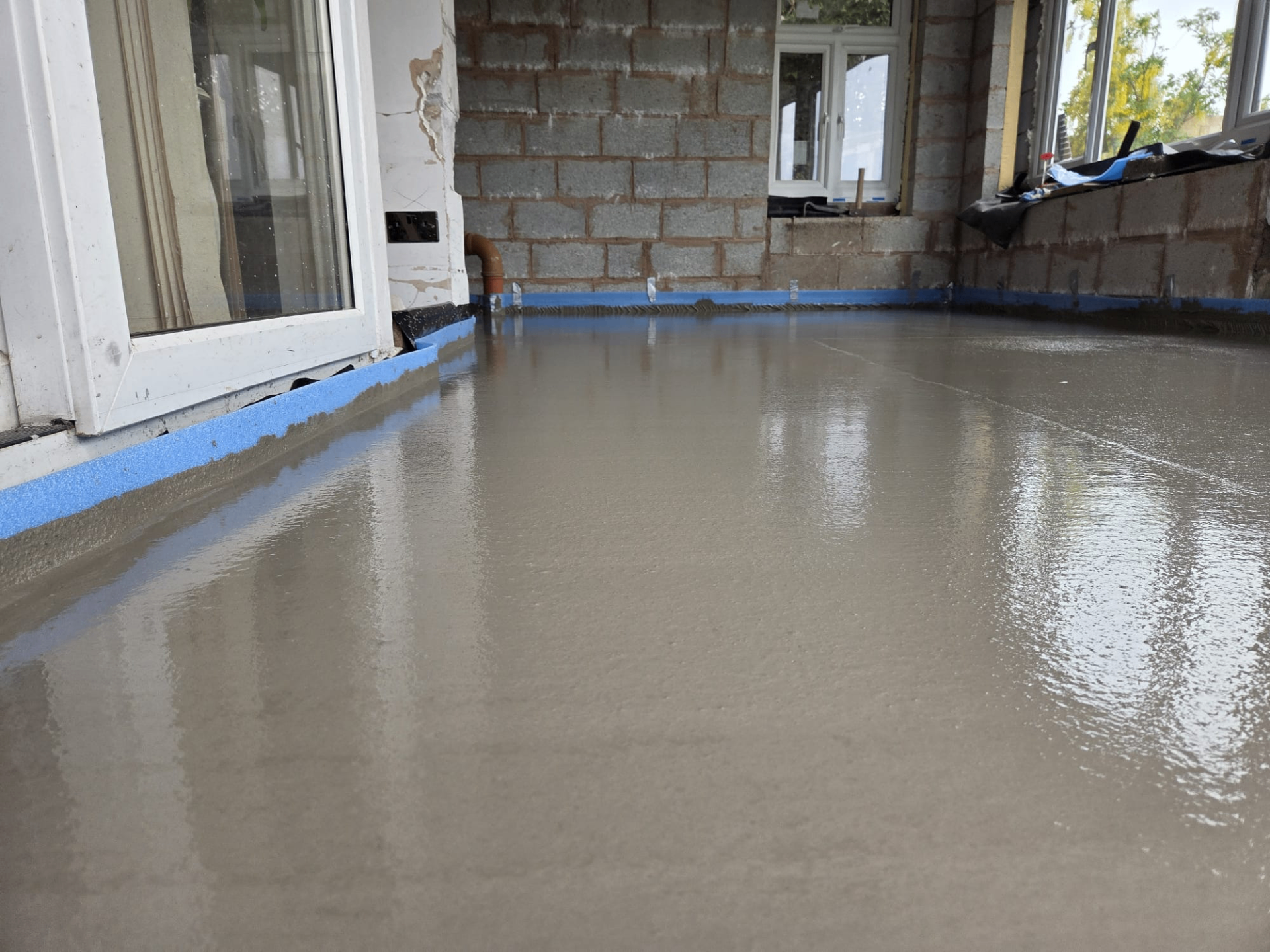
Movement Joints — the points that decide it
- Heated screed floors experience more expansion and contraction than unheated ones
- Liquid screed can often be poured in larger areas than traditional screed before a joint is needed
- Very large, irregular, or multi-zone floor areas may still warrant a movement joint
- Joint locations should be planned around pipe runs rather than positioned arbitrarily
- Pipes should not be routed directly beneath a movement joint without protection
- Joint requirements are assessed on a project-by-project basis
- Restrained-edge detailing is an alternative approach to a full movement joint in some heated floor designs
- Joint filler or sealant used at a movement joint should remain flexible across the temperature range the floor will experience
Coordinating with pipe design
Before pouring, we compare the proposed floor area and any planned movement joints against the heating pipe layout, flagging any conflict so the heating designer or the wider project team can adjust either the joint position or the pipe route.
Doorway and threshold joints
Joints at doorways between zones or between different floor areas are common, and where underfloor heating pipes need to cross such a joint, appropriate sleeving or protection is used to accommodate the movement without stressing the pipe.
Restrained versus free-floating edge details
Some heated screed designs use a restrained-edge approach at the room perimeter rather than relying purely on internal movement joints, changing how the floor is expected to move as it heats and cools. Which approach suits a given project is a design decision made alongside the wider floor and heating layout rather than a screed-only choice.
A restrained edge relies on the perimeter fixing to control movement rather than allowing the slab to expand freely at its boundary, which can suit certain floor coverings or structural arrangements better than a free-floating design, but it needs to be specified deliberately rather than arrived at by accident through inconsistent edge detailing.
Joint spacing on larger heated floors
Even with liquid screed's ability to cover larger bays than a traditional sand and cement mix, very large open-plan heated floors can still benefit from a joint at a sensible interval, particularly where the shape is irregular or includes several different heating zones meeting at odd angles.
We work from the specifier's or heating designer's guidance on maximum bay size for the specific screed product being used, since this varies between different formulations and isn't a single fixed figure across all liquid screeds.
Marking and finishing movement joints
Once a joint location is agreed, it needs to be formed neatly and marked clearly so that later trades, including whoever fits the floor covering, know where it is and don't inadvertently bridge it with a rigid finish that could crack when the joint moves.
Where a floor covering itself needs its own movement joint at the same location, coordinating the two so they line up avoids a mismatch between the screed joint and the covering above it, which can otherwise show as an unplanned crack in the finished floor.
Movement Joints — your questions
Got a large or multi-zone heated floor to plan?
We coordinate movement joint positions with your heating pipe layout before pouring begins.
Or call our landline on 01392 237700
In short
Heated screed floors expand and contract more than unheated ones, so movement joint positions need coordinating with the pipe layout.
Keep going — closely linked topics
Underfloor heating & screed
Screed & Manifold Detailing
Underfloor heating & screed
Zoning & Room-by-Room Layouts
Underfloor heating & screed
Floor Sensor Placement
Underfloor heating & screed
Pipe Encapsulation & Voids
Underfloor heating & screed
Screed with Heat Pump Flow Temps
Underfloor heating & screed
UFH Screed for Garden Rooms & Annexes
Got a large or multi-zone heated floor to plan?
We coordinate movement joint positions with your heating pipe layout before pouring begins.