
System Comparison
Self-Levelling Compound vs Structural Liquid Screed
Self-levelling compound and structural liquid screed solve different problems, and confusing the two on site leads to floors that fail under load or fixtures.
It's common for clients to ask whether a self-levelling compound could simply replace a structural liquid screed, particularly where budgets are tight. The two products look similar in a bucket but perform very different roles once installed, and the depths, strengths and applications involved are not interchangeable. Understanding the distinction before a specification is written saves both cost and disappointment further down the build programme.
A structural screed, whether calcium sulphate or cementitious, is designed to form a load-bearing layer that can house underfloor heating pipes, span at meaningful depths, and receive final floor finishes directly. A self-levelling compound is typically a thin smoothing layer, often only a few millimetres thick, laid over an existing sound substrate to correct minor unevenness before tiling or resilient flooring. Neither product is designed to substitute for the other's function, and manufacturers are explicit about the depth ranges each is tested and warranted for.
Getting this distinction right at design stage in Exeter and the wider South West avoids costly rework, so we always clarify with clients and specifiers which product is genuinely appropriate for their build-up before quoting. A short conversation about heating, substrate and finish at the outset usually resolves the question quickly and avoids an expensive mismatch being discovered mid-build.
Self-Levelling Compound vs Structural Screed — the points that decide it
- Structural screeds are designed to be laid at depths sufficient to encapsulate underfloor heating pipework or provide a load-bearing floor layer
- Self-levelling compounds are generally applied thin, over a sound and stable substrate, purely to correct surface tolerance
- BS 8204 and BS EN 13813 classify screeds by strength class (C or CA) and thickness, which self-levelling compounds are not typically assessed against in the same way
- Self-levelling compounds are not usually a substitute for a bonded or floating structural screed carrying UFH
- Substrate preparation requirements differ significantly between the two products
- Drying and curing behaviour varies with depth, so a thin compound and a deep structural pour cannot be treated the same on programme
- Cost per square metre is not directly comparable because the products address different construction stages
- Laitance and surface contamination on the existing substrate must be removed before either product is applied for good bond performance
- Manufacturers publish maximum and minimum pour depths that should never be exceeded regardless of site pressure
- Sequencing matters: a structural screed should be finished to its required flatness before any levelling compound is considered on top
Where structural screed is the right choice
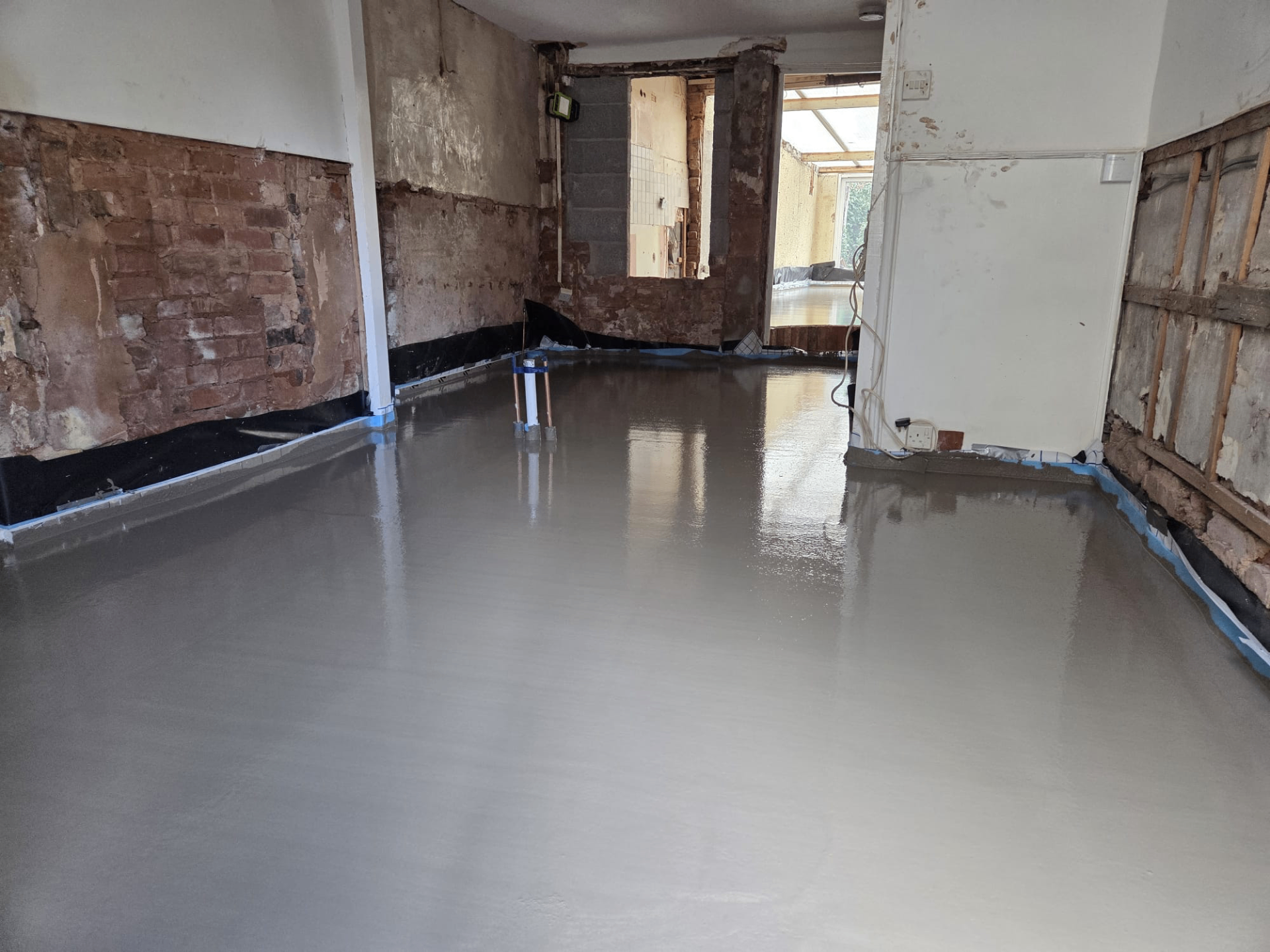
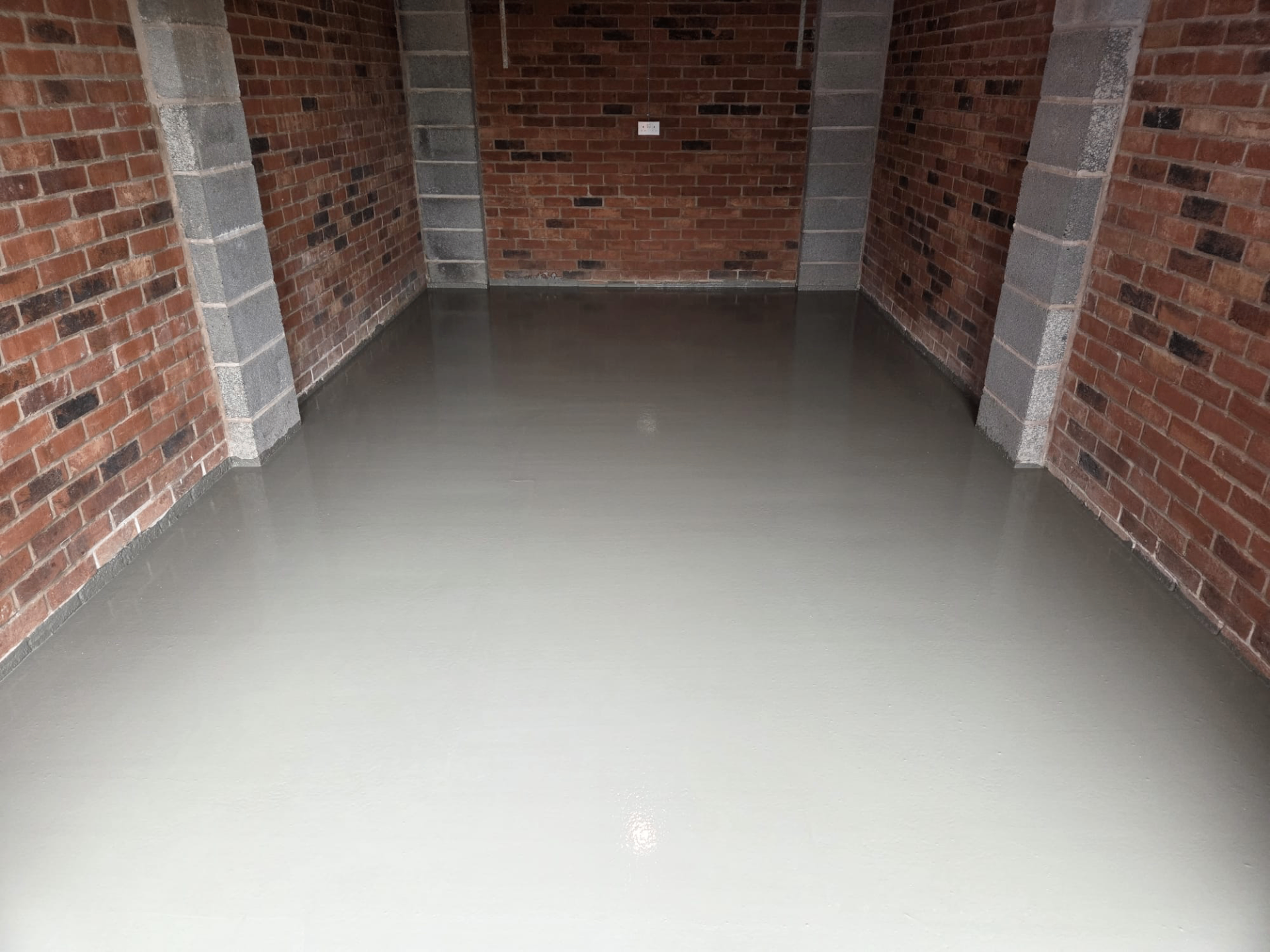
Any new build or renovation incorporating underfloor heating pipework, or requiring a floor build-up that spans loose fill insulation or services, needs a structural screed rather than a thin compound. The screed depth is dictated by the pipe diameter, insulation thickness and any point loads anticipated, following the project's specification and the relevant BS EN 13813 strength class. Getting this depth wrong at design stage can mean pipework is inadequately covered or the floor lacks the strength to carry the intended finish and traffic.
In these situations the liquid screed forms part of the structural floor system, bonded or floating depending on the substrate and insulation arrangement, and is designed from the outset to carry both foot traffic and the finished floor covering once cured and dried to the specification's requirements. The pumping and placing method used for a structural pour also differs from the smaller, often hand-applied batches typical of a self-levelling compound job.
Where self-levelling compound fits instead
Self-levelling compound is generally the right tool where an existing, structurally sound floor needs minor correction before a thin floor finish such as tile, vinyl or engineered timber is laid. It is not designed to add significant depth or to bridge insulation, and manufacturers' datasheets typically specify maximum pour depths measured in millimetres rather than the tens of millimetres common to structural screed. Surface preparation, including priming the substrate and dealing with any laitance, is critical to achieving good bond and avoiding pinholing or de-bonding once the compound cures.
If a floor needs both structural build-up and a perfectly flat surface, the correct sequence is usually a structural liquid screed first, finished to the levelling tolerances specified in BS 8204, with any residual fine tolerance work handled separately if the chosen floor finish demands it. Treating the two products as sequential stages, rather than alternatives, generally produces the most reliable outcome.
Cost and programme implications of choosing incorrectly
Specifying self-levelling compound where a structural screed was actually needed can result in a floor that flexes, cracks or fails to encapsulate services adequately, often only becoming apparent once finishes are installed and loads are applied. Correcting this after the fact usually means breaking out the incorrect layer and starting again, which is far more disruptive and costly than getting the specification right before the first pour.
Conversely, specifying a full structural screed pour where only a thin correction was needed adds unnecessary cost, depth and drying time to a project. Matching the product genuinely to the substrate condition and finish requirement, rather than defaulting to whichever is more familiar, keeps both budget and programme under control.
How we help clients decide
When we're asked to quote, we start by establishing what the existing substrate is, whether underfloor heating is involved, how much depth is genuinely available, and what final floor finish is planned. These answers usually make clear within a short conversation which product, or combination of products, actually suits the project.
Where there's genuine ambiguity, a site visit lets us assess the substrate directly, check existing levels, and confirm whether a self-levelling compound alone would be adequate or whether a structural pour is required first. This avoids clients committing to the wrong product based on assumptions carried over from a different project or a different trade's advice.
In short
Self-levelling compound and structural liquid screed solve different problems, and confusing the two on site leads to floors that fail under load or fixtures.
Not sure which product your floor needs?
Talk through your build-up with our team before you commit to a specification. Call 07791 510849 for straightforward advice on which system suits your project.
Or call our landline on 01392 237700
Self-Levelling Compound vs Structural Screed — your questions
Not sure which product your floor needs?
Talk through your build-up with our team before you commit to a specification. Call 07791 510849 for straightforward advice on which system suits your project.
Liquid Screed vs Self-Levelling Compound
Liquid screed and self-levelling compound (SLC) share a marketing vocabulary — both 'self-level', both go down wet, both flow into a flat surface. That's roughly where the similarity ends.
A liquid screed is a structural floor layer, typically 30–75mm thick, designed to encapsulate UFH pipework or provide a load-bearing wearing surface over insulation or a sub-floor. A self-levelling compound is a thin skim, usually 2–10mm, designed to correct minor unevenness in an existing floor before a covering goes down.
Confusing the two — or trying to use one to do the other's job — is one of the most common and expensive floor defects we get called out to assess.
Signs you need a liquid screed, not SLC
There's UFH pipework or a manifold in the build-up
You're building up from insulation or a joisted sub-floor, not an existing slab
The area needing correction is more than about 10mm out of level
You need a genuinely load-bearing floor layer, not just a smooth surface
Signs SLC is all you need
An existing concrete or screed floor just needs minor flatness correction
You're prepping for LVT, vinyl or carpet tile over a sound sub-floor
No UFH and no structural build-up requirement
The unevenness is a few millimetres, not centimetres