
Substrates & Preparation
Preparing EPS Insulation Boards for Liquid Screed
EPS is a cost-effective, widely used insulation under liquid screed, provided the correct load grade is chosen and joints are properly sealed.
Expanded polystyrene (EPS) is one of the most widely used insulation types under liquid screed, valued for its consistent performance, relatively low cost, and long track record in floor construction. It needs slightly more thickness than PIR to achieve the same U-value, but where floor depth isn't tightly constrained it's often the more economical choice.
As with any insulation under a flowing screed, correct laying and jointing is what determines whether the finished floor performs as designed.
Because EPS has been used under floor screeds for decades, its behaviour is well understood and its handling on site is generally straightforward, provided the correct density grade is specified for the loading involved and the basic principles of tight, staggered, taped joints are followed consistently across the floor.
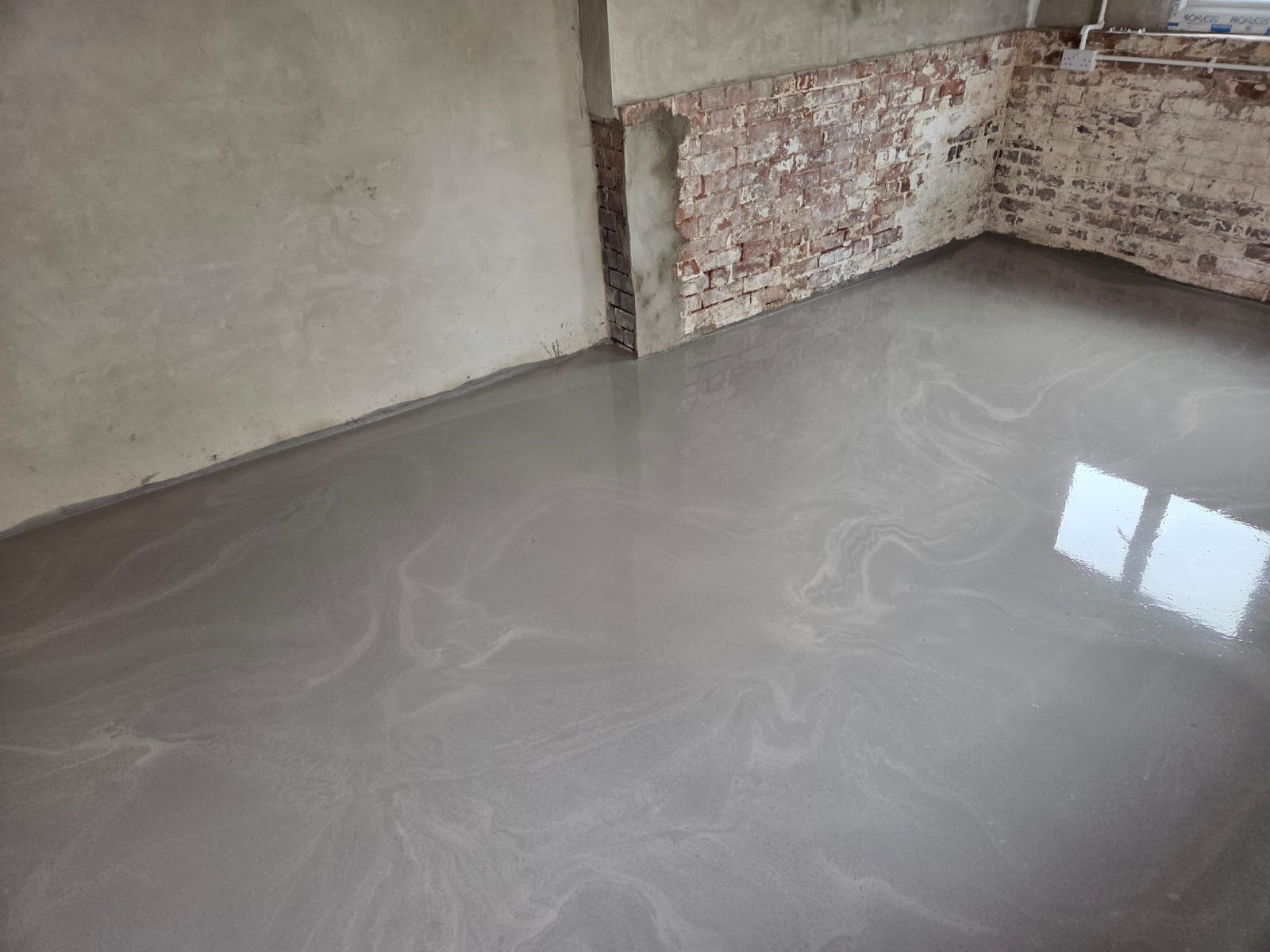
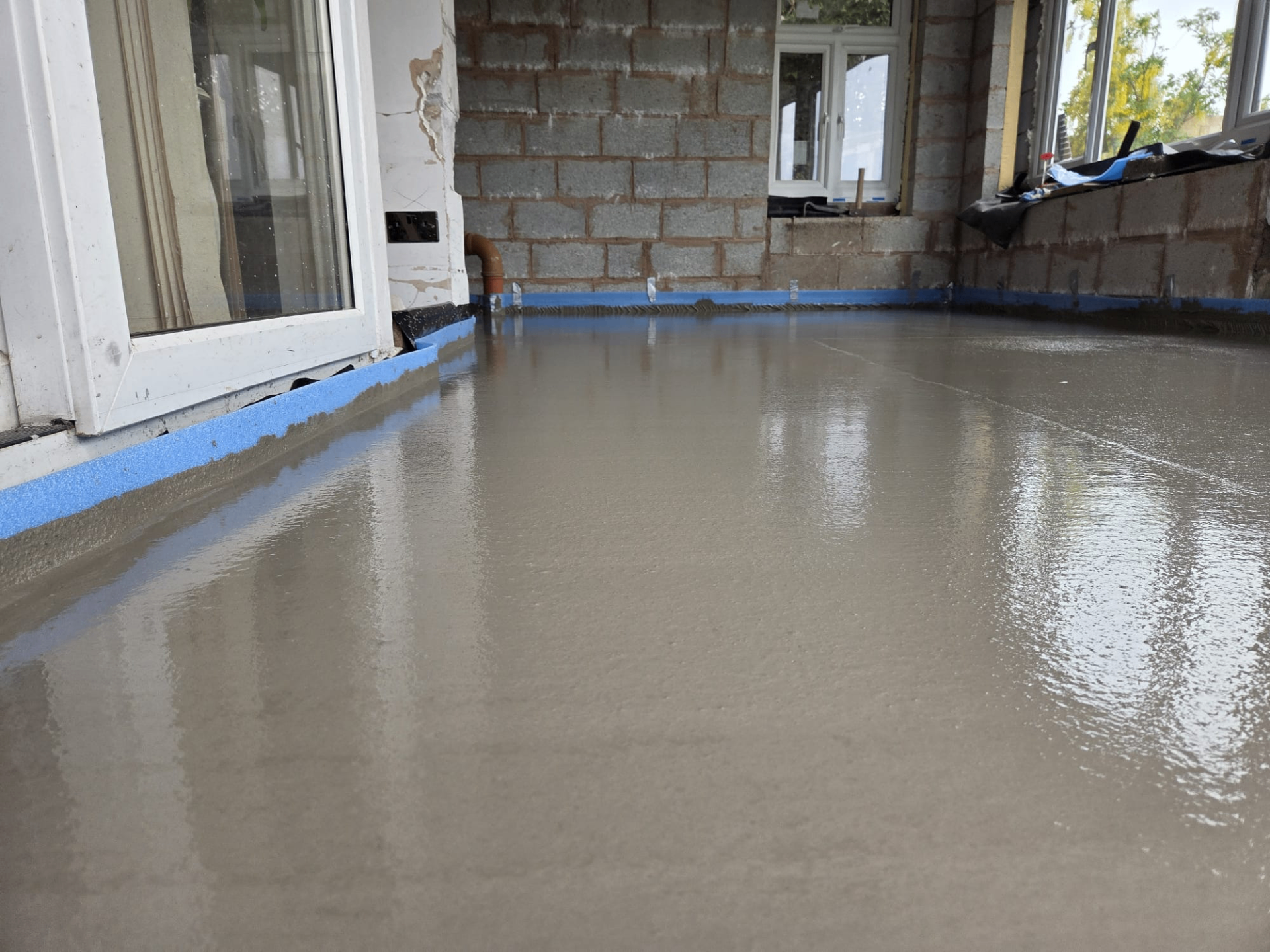
EPS Insulation Boards — the points that decide it
- EPS is graded by density and load class (commonly referenced by compressive strength), and the correct grade should be matched to the floor's anticipated loading
- Joints between boards should be tight-butted and staggered, with any gaps taped to prevent grout loss during the pour
- EPS is generally less dense than PIR, so achieving the same thermal performance needs a greater board thickness
- Boards can be more prone to surface damage from foot traffic during installation than denser PIR, so protecting them until the pour is worthwhile
- EPS is compatible with underfloor heating pipe fixing systems in the same way as other rigid insulation boards, provided the correct fixing method is used
- Recycled or lower-grade EPS variants exist and should be checked against the project specification rather than assumed equivalent to standard board
- EPS boards are available with a variety of edge profiles, some rebated or tongue-and-grooved, which can improve joint alignment compared with simple square-edged boards
- Perimeter boards cut to fit an irregular wall line need the same taping attention as factory joints, since a cut edge offers no more resistance to grout loss than any other gap
- Where EPS is used below ground or in a location with any moisture risk, its water absorption characteristics compared with XPS should be considered against the specific conditions
Choosing the right density grade
Not all EPS boards are equal — density and compressive strength vary by product, and using an under-graded board beneath a liquid screed floor with normal domestic or light commercial loading can lead to gradual compression and unevenness over time. The specification should reference the anticipated floor loading, not just 'EPS' as a generic term, and this is worth confirming with whoever has specified the floor build-up.
Handling and protecting boards before the pour
EPS is lighter and can be softer at the surface than PIR, so it's more easily dented or damaged by dropped tools, wheelbarrows or concentrated foot traffic before the screed goes down. Spreading load with boards or plywood sheets when moving materials across freshly laid insulation reduces the risk of localised depressions that would otherwise show up as a thin spot in the finished screed.
It's also worth keeping other trades' materials and equipment off freshly laid EPS wherever practical, since a stack of boxes or a pallet left standing on the insulation for several days can leave a compressed impression that's difficult to correct once the screed is due to be poured.
Jointing profiles and taping consistency
Some EPS products are manufactured with a tongue-and-groove or rebated edge, which naturally aligns adjacent boards and reduces the chance of a gap forming compared with simple square-edged boards laid butt to butt. Even with a self-aligning profile, taping the joint is still the recommended approach for controlling grout loss, since the profile helps with alignment rather than providing a seal on its own.
Consistency matters more than any single detail — a floor with a handful of well-taped joints and one missed run is still vulnerable at that one gap, which is why a methodical, board-by-board check before the pour is worth the time it takes.
EPS in ground-bearing floor build-ups
On a typical ground-bearing floor, EPS sits above a DPM and often above a layer of sand blinding or a well-prepared hardcore surface, and its role is purely thermal rather than structural in the sense of carrying long-term settlement loads. Where the floor will see heavier than typical domestic loading, checking the specified density grade against the actual anticipated use avoids a mismatch between what was designed and what the floor will actually experience.
EPS Insulation Boards — your questions
Weighing up EPS for your floor build-up?
We can advise on the right grade and thickness for your project and coordinate insulation with the screed pour.
Or call our landline on 01392 237700
In short
EPS is a cost-effective, widely used insulation under liquid screed, provided the correct load grade is chosen and joints are properly sealed.
Weighing up EPS for your floor build-up?
We can advise on the right grade and thickness for your project and coordinate insulation with the screed pour.