
Substrates & Preparation
Preparing Cellular Glass Insulation for a Liquid Screed
Cellular glass insulation is rigid, moisture-resistant and load-bearing, but its brittle nature and joint pattern need particular care before a floating screed is poured.
Considering cellular glass insulation for your floor?
We'll advise on whether it suits your project and detail the build-up correctly if it does.
Or call our landline on 01392 237700
Cellular glass insulation is chosen on some projects for its high compressive strength, complete resistance to moisture uptake and inert, non-combustible composition, which suits it to demanding applications such as damp-prone ground floors or areas with high point loading. It behaves differently from the more common plastic foam insulation boards in a few respects that matter when preparing it for a screed.
Because the boards are rigid and glass-based, they're also more brittle than PIR or EPS, and can crack or chip if handled roughly or laid over an uneven substrate, so a level, debris-free base and careful handling on site both matter more than usual with this material.
Its closed-cell glass structure means it doesn't absorb water at all, which is one of the main reasons it's specified on floors with a known or suspected damp risk, but that same rigidity means the installation sequence has to be more deliberate than with a foam board that can flex slightly to accommodate minor imperfections.
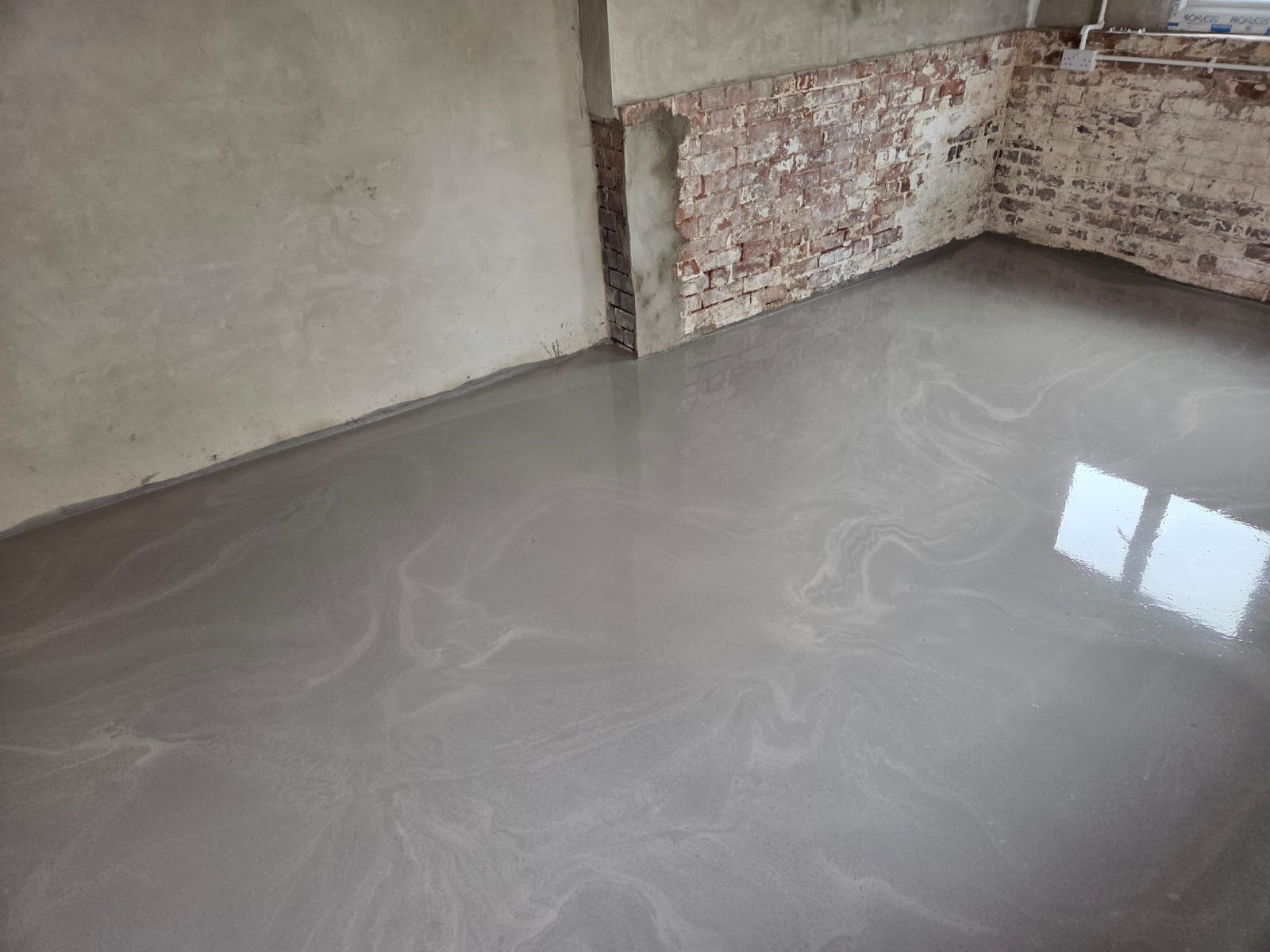
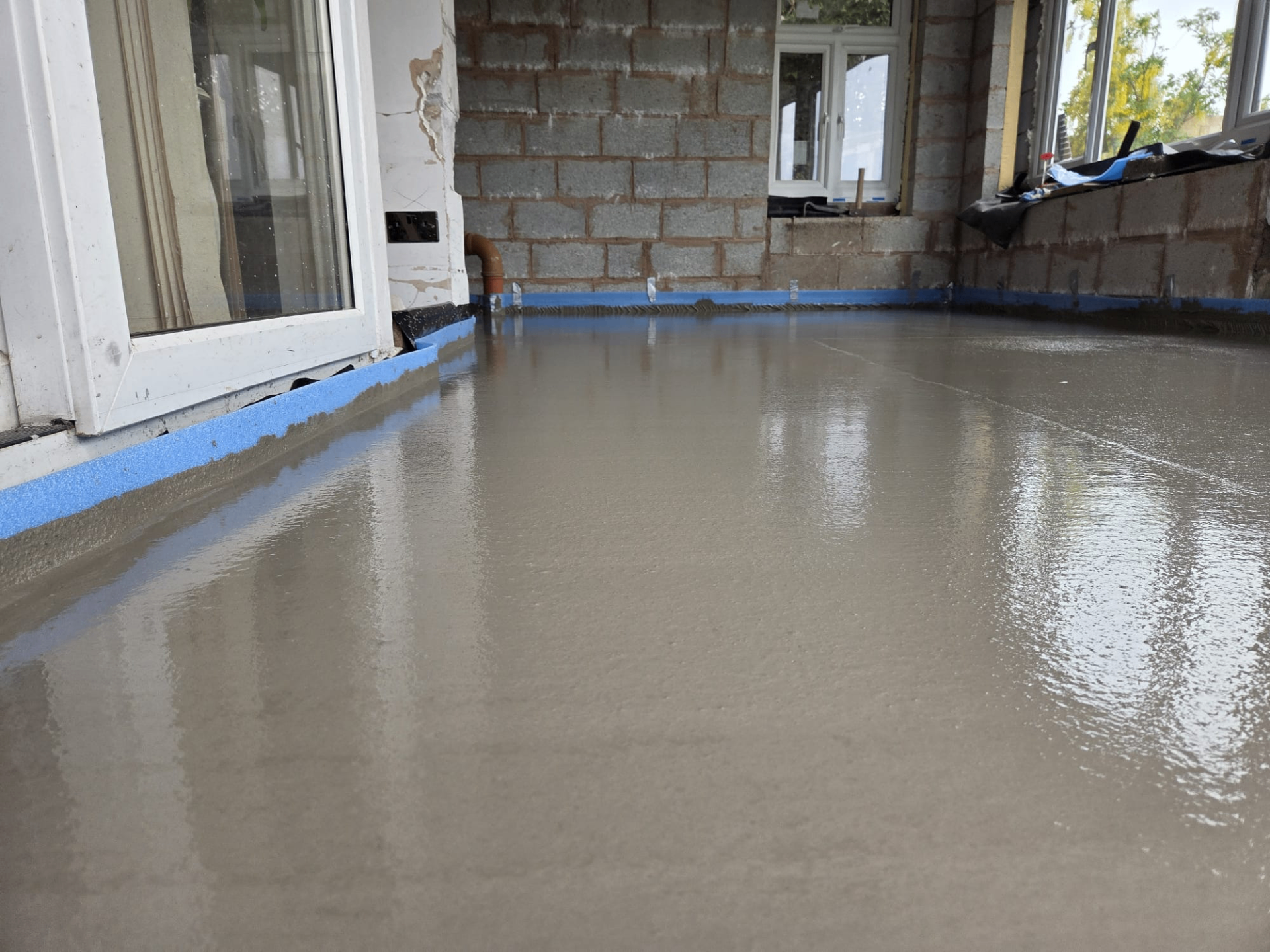
Cellular Glass Insulation Preparation — the points that decide it
- Cellular glass insulation is highly resistant to moisture and compression, making it suited to damp or heavily loaded ground floors
- Boards are more brittle than typical plastic foam insulation and can crack if laid over an uneven or debris-strewn substrate
- A bedding layer of bitumen or a proprietary adhesive is sometimes used to fully bed the boards and even out minor substrate irregularities
- Joints between boards still need taping or sealing before screeding, in the same way as other insulation types
- Cut edges of cellular glass board can be sharp, and off-cuts need clearing from the working area to avoid damaging membranes laid over the top
- Its rigidity generally gives good point-load performance under racking or storage areas once the screed above is properly designed
- Cutting cellular glass boards produces fine glass dust, so appropriate personal protective equipment and dust control are worth using during installation
- Its non-combustible, inert composition is sometimes a specific specification requirement on projects with particular fire performance needs
Handling and bedding the boards
Cellular glass boards don't flex to accommodate substrate irregularities the way some foam insulations do, so the base they're laid on needs to be reasonably true and free of debris that could cause point loading on an individual board and crack it. Where the substrate has minor undulations, a bedding layer — often a bituminous compound recommended by the insulation manufacturer — can be used to bed the boards solidly and take up small variations.
Because the boards are heavier than typical foam insulation, handling on site needs a bit more care to avoid dropping or knocking them against hard edges, both of which are common causes of chipping and cracking during installation.
Jointing and protecting the layer
As with other insulation boards, joints need taping or sealing before the screed goes on, to stop liquid screed migrating into the layer below. Because cut edges of cellular glass can be sharp, care is also needed to clear off-cuts and dust from the area before any membrane or the screed itself is laid, to avoid punctures or damage further up the build-up.
A methodical sweep and clean of the floor once cutting is finished, before any separating membrane goes down, reduces the risk of sharp fragments causing later punctures that wouldn't be visible once the screed is poured.
Working safely with cellular glass
Cutting cellular glass insulation produces a fine glass-based dust that's different in character to the dust generated by foam insulation products, and it's worth using appropriate respiratory protection and eye protection when cutting boards on site. Good local extraction or at least adequate ventilation during cutting reduces exposure for anyone working nearby.
Off-cuts and dust should be swept up and disposed of properly rather than left on site, both for general housekeeping and because loose fragments can otherwise work their way under boards laid later in the same area.
Where its properties are specifically valuable
Beyond its moisture resistance, cellular glass insulation's non-combustible and chemically inert nature makes it a specific choice on projects where fire performance or resistance to chemical exposure is a design requirement, rather than simply a thermal performance figure. Its high compressive strength also supports heavier point loads than many foam alternatives without long-term creep or compression.
These properties come at a higher material cost than standard foam insulation, so it's typically specified where its particular characteristics are genuinely needed for the application, rather than used as a default insulation choice across a whole project.
Cellular Glass Insulation Preparation — your questions
Considering cellular glass insulation for your floor?
We'll advise on whether it suits your project and detail the build-up correctly if it does.
Or call our landline on 01392 237700
In short
Cellular glass insulation is rigid, moisture-resistant and load-bearing, but its brittle nature and joint pattern need particular care before a floating screed is poured.
Keep going — closely linked topics
Considering cellular glass insulation for your floor?
We'll advise on whether it suits your project and detail the build-up correctly if it does.