
Specification
How to specify screed strength class
A practical walk-through of how to word a strength class requirement so it is unambiguous and testable, rather than a vague reference to 'suitable strength'.
Need help wording a strength class clause?
We can help draft strength class wording appropriate to your project's loading and build-up.
Or call our landline on 01392 237700
Strength class is one of the most important figures in a screed specification, yet it is often written vaguely — 'appropriate strength for domestic use' — rather than as a specific, testable classification. BS EN 13813 gives a clear framework for this using CT (cementitious) designations alongside compressive (C) and flexural (F) strength classes, and using it properly removes ambiguity from the specification.
This page sets out how to word a strength class clause so that it is specific, verifiable, and appropriate to the loading and build-up already decided for the project, drawing together points covered individually elsewhere on strength class selection and loading.
It is intended as a practical companion when actually drafting the wording, rather than a general explanation of what the classes mean.
What a specific strength class clause looks like
A workable clause states the screed type, references BS EN 13813, and gives the specific compressive and flexural class required for the project, alongside the depth and build-up type already agreed. This gives the installer, and anyone checking the finished floor, an unambiguous benchmark rather than a subjective judgement of what counts as 'suitable'.
Where a project has varying loads in different rooms, it can be appropriate to specify different strength classes by area, provided this is clearly mapped against a floor plan so there is no confusion about which class applies where.
Linking strength class back to loading and depth
Strength class should not be picked in isolation — it is one part of a package with depth and build-up type that together determine how a floor will perform under load. Reviewing the anticipated loading for a space, as covered in our loading-focused guidance, before finalising the strength class ensures the figure chosen is actually appropriate rather than a default carried over from a previous project.
Class and drying speed are linked
A higher strength class does not dry any faster on its own, but heavier trafficking loads are often specified alongside tighter drying windows, so the two figures need checking together, not separately.
Site heating left off over a weekend can add days to the drying period for a higher-strength pour just as easily as a standard one, so someone on site needs to own that task.
Cube testing and the strength class clause
Taking cube samples on the day of the pour, cured under matched conditions, is the standard way of proving a CT class has actually been achieved rather than assumed from the mix design.
Recording the batch, the pour date and who took the samples gives the client something to point to if strength is ever queried after handover.
Trafficking a floor built to a stated strength class
Reaching the specified compressive class on paper does not mean the floor can immediately take a loaded pallet truck or scaffold tower; light foot traffic and full trafficking are separate milestones worth naming separately.
Where the class was set high specifically for racking or plant loads, the clause should also say when that full load may actually be applied, not just when the surface can be walked on.
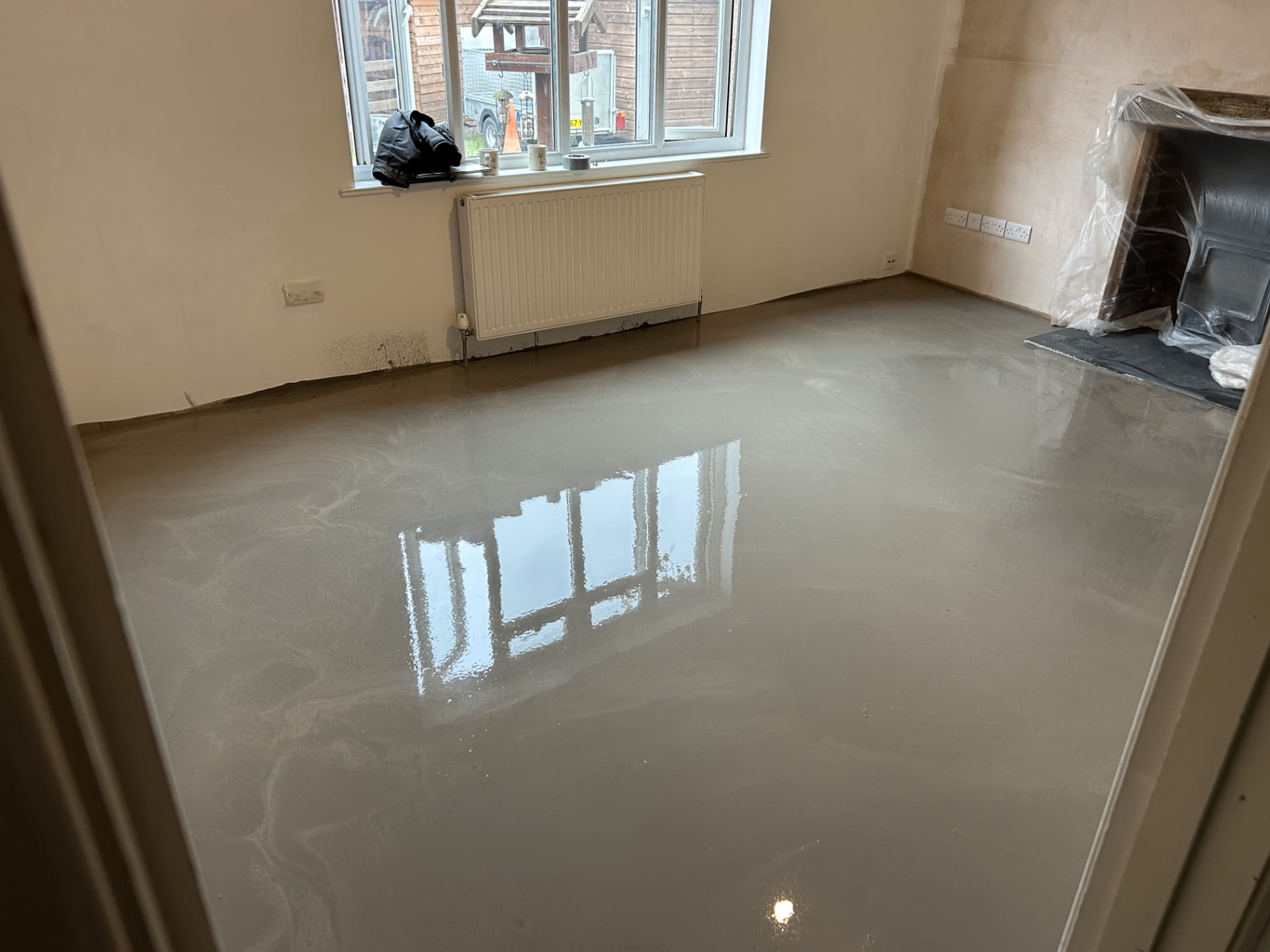
Specifying strength class — the points that decide it
- 1State the material type (for example CT — cementitious screed) alongside the compressive and flexural strength classes.
- 2Strength class should be matched to the anticipated loading and depth already decided for the build-up, not chosen independently.
- 3Reference BS EN 13813 explicitly so the classification system used is unambiguous to all parties.
- 4Avoid vague wording such as 'suitable strength' or 'standard mix' without a stated class.
- 5Where testing may be required, note how compliance will be verified (for example, cube or prism testing referenced to the standard).
- 6Consider stating the strength class alongside depth and surface regularity in one combined clause for clarity.
Specifying strength class — your questions
Need help wording a strength class clause?
We can help draft strength class wording appropriate to your project's loading and build-up.
Or call our landline on 01392 237700
In short
A practical walk-through of how to word a strength class requirement so it is unambiguous and testable, rather than a vague reference to 'suitable strength'.
Need help wording a strength class clause?
We can help draft strength class wording appropriate to your project's loading and build-up.