
Verification
Commissioning Underfloor Heating Before Floor Finishes Are Laid
Commissioning underfloor heating gradually before floor finishes are laid protects the screed and the covering from thermal shock and premature installation.
Underfloor heating embedded in a liquid screed should not simply be switched on to full temperature the moment the installer wants a warm floor. A structured commissioning process brings the system up gradually, assisting the screed's drying process while avoiding thermal shock that can cause cracking or curling.
Commissioning is also the point at which many specifiers combine heat-up with moisture verification, since a controlled temperature rise accelerates residual moisture release in a predictable way. Skipping or rushing this stage is a frequent contributor to disputes when floor finishes later fail.
A clear commissioning record, including start date, temperature increments and final flooring temperature, gives everyone on the project a shared reference point and protects the screed installer, the heating contractor and the flooring trade alike.
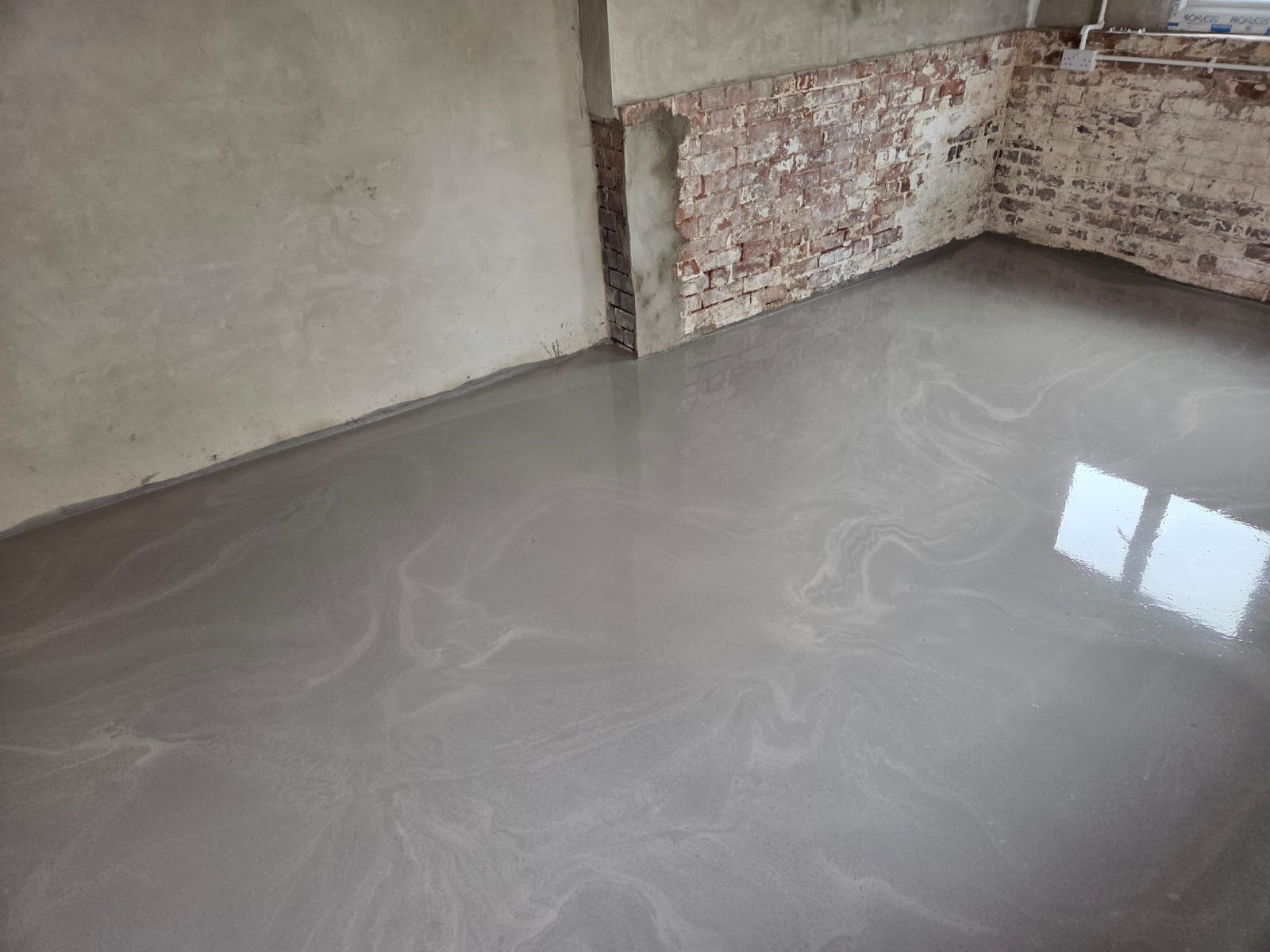
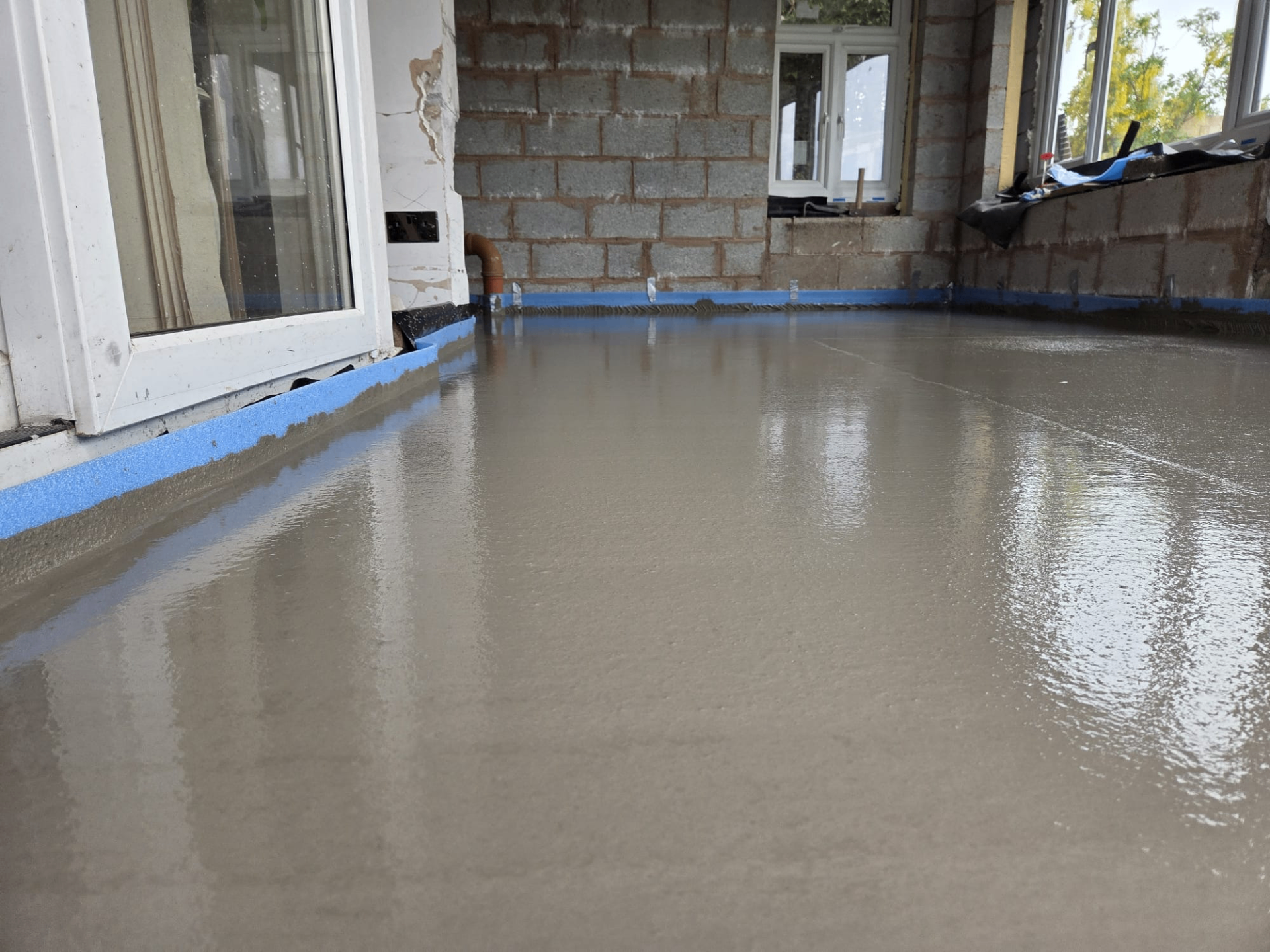
Heating Commissioning — the points that decide it
A staged approach to heat-up
A typical commissioning sequence starts the heating system at a low flow temperature, low enough to avoid shocking the screed, and increases it in defined steps over a period of days. This gradual approach allows the screed to adjust dimensionally and encourages even moisture migration to the surface.
Once the system reaches its intended maximum operating temperature, a hold period is generally maintained before floor coverings are considered, followed by a controlled reduction in temperature ahead of the flooring trade arriving on site.
Coordinating with the flooring trade
Many floor finishes — particularly timber, vinyl and some resins — have manufacturer limits on sub-floor temperature during adhesive curing and for a period afterwards. The heating system should be reduced to, and then held at, a level compatible with these requirements before installation and for the specified period after.
Coordinating this handover between the heating contractor, screed installer and flooring trade avoids the common scenario where a covering is laid onto a floor that is either too hot, too cold, or still actively drying, any of which can compromise the finish.
Warranty cover and the commissioning sequence
An insurance-backed product warranty, where the screed manufacturer offers one, typically depends on the heat-up sequence having followed the manufacturer's own commissioning instructions rather than an improvised schedule.
Referencing that commissioning document by name and revision in the specification avoids later ambiguity about which heat-up steps the warranty actually required.
Handing the commissioned floor over to the next trade
A commissioning record only earns its keep if it travels with the floor — noting start date, each temperature step and the date coverings were cleared to begin gives the flooring trade a single reference rather than a verbal account.
Where the main contractor rather than the heating installer holds responsibility for running the system during the hold period, naming that in the programme stops a gap opening up between trades.
Heating Commissioning — your questions
Planning a heated liquid screed floor?
We can talk through screed and commissioning sequencing for underfloor heating projects in Exeter and the South West.
Or call our landline on 01392 237700
In short
Commissioning underfloor heating gradually before floor finishes are laid protects the screed and the covering from thermal shock and premature installation.
Keep going — closely linked topics
Planning a heated liquid screed floor?
We can talk through screed and commissioning sequencing for underfloor heating projects in Exeter and the South West.