
Unbonded screed specification
Choosing depth for an unbonded liquid screed build-up
Unbonded screeds sit on a slip membrane rather than bonding to the base, so depth must be sufficient for the screed to perform as an independent structural layer.
Specifying an unbonded floor?
Talk to us about depth, membrane detailing and strength class before the design is finalised.
Or call our landline on 01392 237700
An unbonded build-up places a separating membrane between the screed and the substrate, meaning the screed has to perform structurally in its own right rather than relying on the base beneath it.
This changes the depth logic compared with a bonded system: the figure needs to reflect the screed's own strength class and the loads it will carry, not just the finished level required.
Because the slip membrane removes composite action with the base, an unbonded layer needs to be assessed as a free-standing plate; lapping the membrane correctly at joints and upstands matters as much to eventual performance as the depth figure itself.
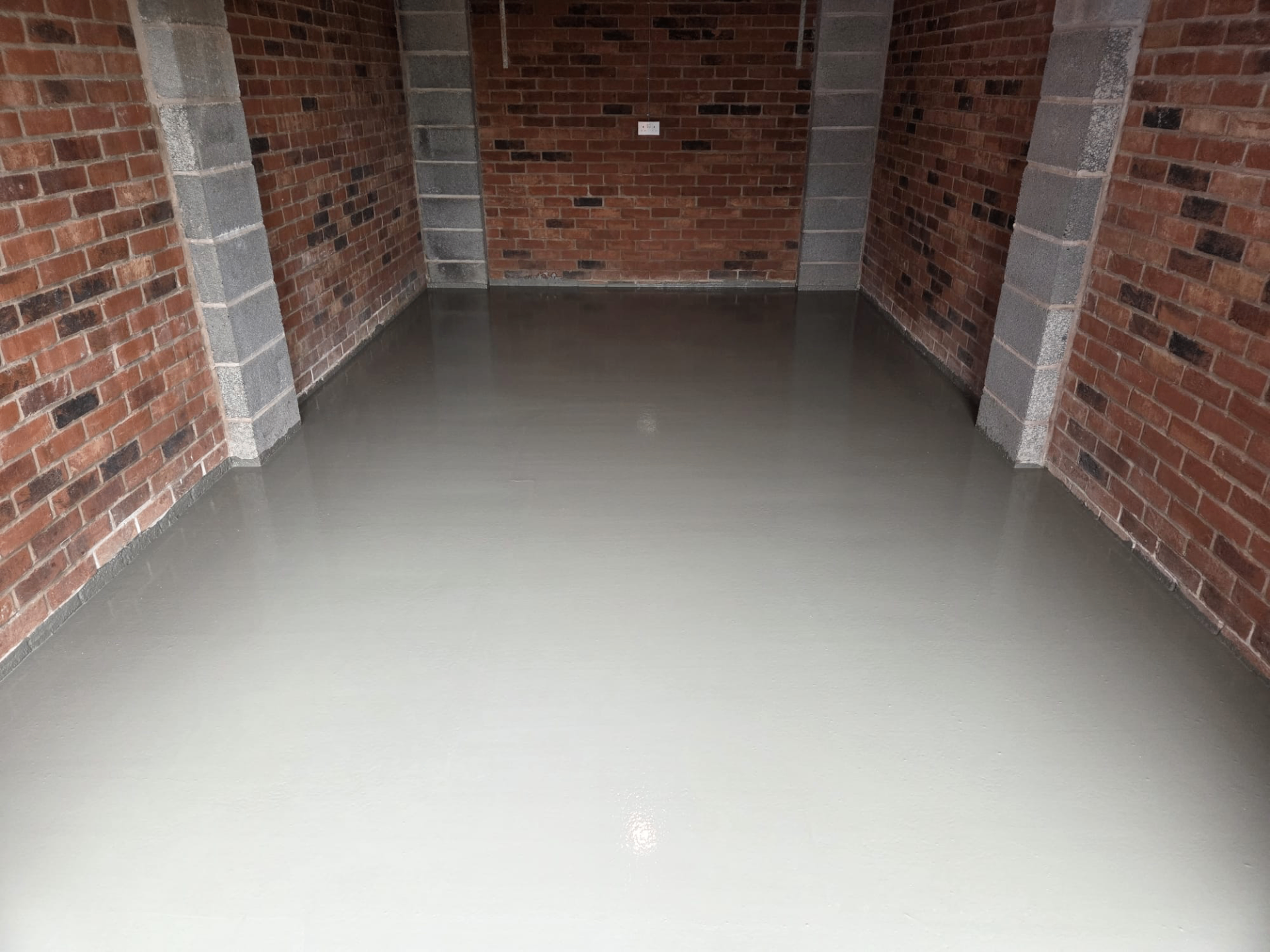
Why membranes change the depth calculation
With a slip membrane in place, the screed can move independently of the substrate, which is helpful for accommodating differential movement but means the layer has to be thick enough to resist cracking and deflection under its own loading regime.
The manufacturer's datasheet for unbonded applications will generally list a different, usually greater, minimum depth than for the bonded or floating variants of the same product.
Practical considerations at junctions
Where an unbonded screed meets a bonded area, or steps down at a threshold, the depth transition needs to be shown clearly on the screed schedule so the installer knows where the membrane starts and stops and how the change in depth is managed.
Confirming an unbonded screed is ready for handover
For an unbonded floor, compressive and flexural strength results confirm the free-standing layer has reached the class specified, since there is no substrate to fall back on if it hasn't.
A commissioning record naming the hygrometer or carbide reading, the date and the site conditions gives the client a document to check against later.
Protecting an unbonded floor before flooring starts
Because an unbonded screed has no bond to the base, early trafficking can shear it against the membrane before it has gained enough strength to resist point loads.
Around membrane laps and thresholds, agreeing an acceptable tolerance for making good avoids arguments about minor marks that don't affect performance.
Depth for unbonded build-ups — the points that decide it
- The separating membrane means the screed layer must be self-supporting, so minimum depths are typically greater than for an equivalent bonded application.
- Depth should be cross-checked against the designer's structural intent, particularly in commercial settings with point loads.
- Membrane laps and edge detailing at the perimeter affect how consistently the specified depth can be achieved and should be detailed on drawings.
- Unbonded systems are often chosen where the base condition is too poor or contaminated for reliable bonding.
- Movement joint layout becomes more important in unbonded work because the layer isn't restrained by the substrate.
- The strength class (see BS EN 13813 CT/CA designations) should be matched to the intended depth and loading, not selected in isolation.
Specifying an unbonded floor?
Talk to us about depth, membrane detailing and strength class before the design is finalised.
Or call our landline on 01392 237700
Depth for unbonded build-ups — your questions
In short
Unbonded screeds sit on a slip membrane rather than bonding to the base, so depth must be sufficient for the screed to perform as an independent structural layer.
Specifying an unbonded floor?
Talk to us about depth, membrane detailing and strength class before the design is finalised.