
Surface friability
Screed Surface Dusting: Causes and the Fix
If your screed sheds a fine powder every time it's swept or walked on, something has interfered with the surface cure — it isn't usually a sign the whole floor has failed.
Book a dusting-floor inspection
Name, phone, email — we'll reply the same working day with a fixed price.
Or call our landline on 01392 237700
Dusting is one of the more visible screed problems because it shows up on your shoes, your hoover filter and every dark-coloured floor covering laid over it before the issue is dealt with.
It's a surface-cure issue in the vast majority of cases — something interrupted the top few millimetres of the pour from hydrating or drying the way it should, while the body of the screed underneath is often perfectly sound.
This page covers what actually causes it, how we test the depth of the problem, and the sealing or grinding options that fix it before floor coverings go down.
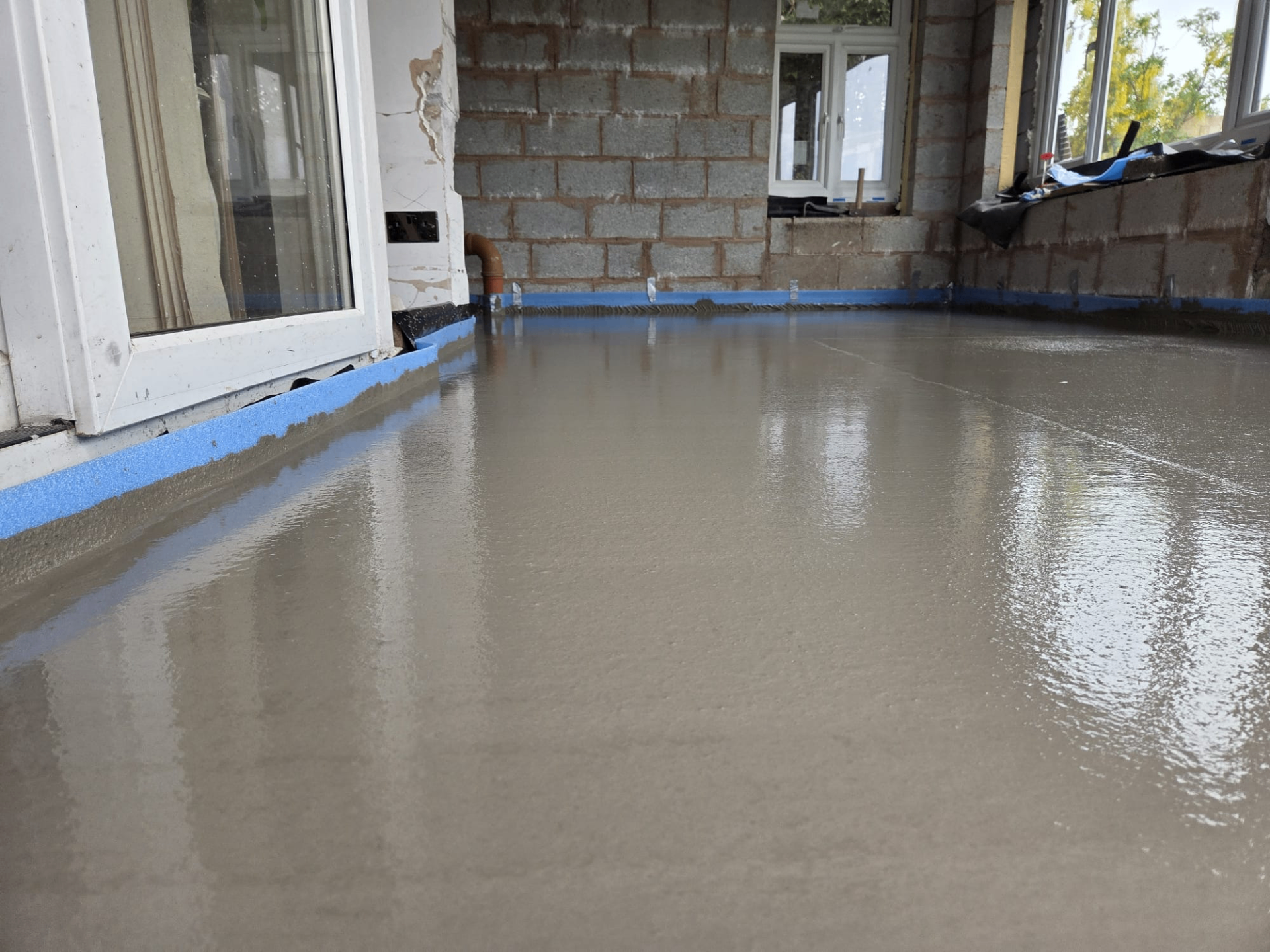
What typically causes a dusting surface
- Rapid surface drying — sun, wind or a heater running too soon after the pour
- Rain or condensation landing on the surface within the first 24–48 hours
- Trafficking the floor with dusty boots or trades before it was ready
- A protective membrane or dust sheet that trapped moisture unevenly at the surface
- Carbonation of an exposed, unsealed surface left too long before covering
Dusting depth vs likely fix
| What we find | Typical fix |
|---|---|
| Dust only in the top fraction of a mm | Mechanical scrape + sealer/primer |
| Dust with a soft, chalky feel to 1–2mm | Light diamond grind then primer |
| Dust plus low compressive strength on test | Full laitance removal, re-assess before covering |
Book a dusting-floor inspection
Tell us how long the screed has been down and what's causing the dust — foot traffic, weather, or something else. We'll scope the fix before we quote it.
Or call our landline on 01392 237700
How we get a dusting floor ready for covering
- 1
Scrape test
We drag a straight edge across the surface to gauge how deep the friable layer runs.
- 2
Vacuum & inspect
Industrial vacuum to lift loose material and expose the true surface underneath.
- 3
Mechanical prep
Light diamond grinding where the dust goes beyond a millimetre or so.
- 4
Prime and seal
Manufacturer-approved primer applied to consolidate the surface before adhesive or coating.
Why we don't just paint over it
A quick coat of sealer over a dusting surface without proper mechanical prep just traps the weak layer under the finish. It looks fine on handover and debonds within months once the floor covering starts flexing.
We'd rather spend an extra half day scraping and priming properly than hand back a floor that fails again as soon as someone drags a wardrobe across it.
Dusting Screed Surface — questions we get asked
Keep reading across the site
Book a dusting-floor inspection
Tell us how long the screed has been down and what's causing the dust — foot traffic, weather, or something else. We'll scope the fix before we quote it.