Debonding diagnosis
Hollow-Sounding Screed: Diagnosis & Repair in Exeter
A dull, hollow note under a tapped tile or a dragged coin usually means the screed has lost its bond to the substrate somewhere below. Not every hollow patch needs lifting — but every one needs checking properly.
Get a hollow-patch survey booked
Name, phone, email — we'll reply the same working day with a fixed price.
Or call our landline on 01392 237700
Tap a floor with a coin or a length of dowel and a hollow, drum-like note in one area against a solid click everywhere else is one of the most common calls we get after a screed has been down for a few months.
It doesn't automatically mean the floor has failed. Small, isolated hollow patches over a bonded pour are sometimes cosmetic and stable for the life of the building. Larger areas, or hollow patches that are spreading, are a different story and usually point to a genuine debond.
This page runs through what actually causes the hollow sound, how we work out whether it's a problem worth acting on, and what the repair looks like if it is.
What the hollow sound is actually telling you
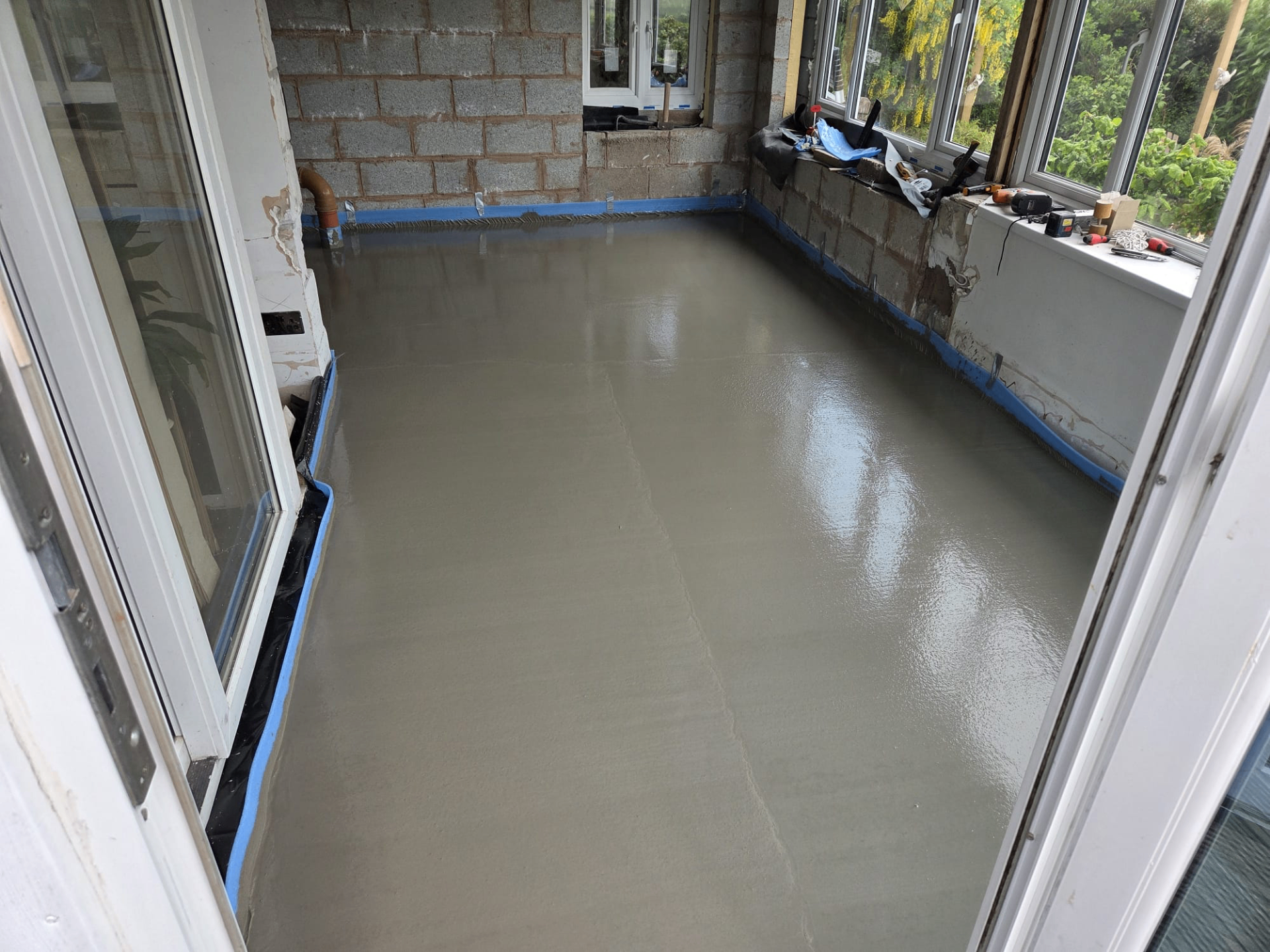
A tap test is measuring the difference between screed that's still fully bonded to the slab or membrane below it and screed that has separated, even by a fraction of a millimetre, creating an air gap that changes the acoustic response.
The size and shape of the hollow area matters more than the sound itself. A tight, localised hollow spot near a doorway or a pipe run is a different animal to a hollow zone running the length of a room.
Common causes we find on site
- Bonding primer applied too thin, too thick, or allowed to dry and skin over before the pour went on
- Dust, laitance or standing water left on the substrate before the primer went down
- Thermal movement between a screed and a substrate with very different expansion rates
- Impact damage — a dropped tool or heavy point load during the fit-out
- Isolated shrinkage as the screed dried, pulling away from the substrate at a weak point
How we confirm the extent before quoting anything
- 1
Full tap survey
We grid the floor and mark every hollow zone, not just the one you noticed.
- 2
Moisture check
A hollow area with a moisture spike usually means the two problems are connected.
- 3
Boundary test
We tap-test outward from each hollow zone to find its true edge before deciding on repair size.
- 4
Report with photos
You get a marked-up plan and a written recommendation, not just a verbal opinion.
Get a hollow-patch survey booked
Send us a few photos and a rough idea of where the sound changes. We'll come out, tap-test properly and tell you honestly whether it needs work.
Or call our landline on 01392 237700
A hollow tap test on its own isn't a verdict. It's a starting point for a proper survey — and plenty of hollow floors are perfectly serviceable once we understand why the sound is there.
— Exeter Liquid Screeders
Hollow-Sounding Screed — questions we get asked
Keep reading across the site
Get a hollow-patch survey booked
Send us a few photos and a rough idea of where the sound changes. We'll come out, tap-test properly and tell you honestly whether it needs work.