
Bond-failure repair
Debonded Screed Repair — Options That Avoid a Full Lift
Once a hollow area has been confirmed as a genuine debond rather than a cosmetic sound difference, there are three realistic repair routes — and picking the right one depends on the size and location of the affected area.
Get your debonded area scoped properly
Name, phone, email — we'll reply the same working day with a fixed price.
Or call our landline on 01392 237700
A debond means the screed has physically separated from the substrate or membrane below it, even if there's no visible crack. It's a structural issue for the floor covering that goes on top, because a debonded area can flex under point loads in a way a bonded floor won't.
Once our survey has confirmed a genuine debond rather than a stable cosmetic hollow, the decision is about scale: how big is the affected area, is it isolated or spreading, and what's going down on top of it.
This page sets out the three repair routes we use, in order of how much disruption each one causes, so you can see the trade-offs before we recommend one.
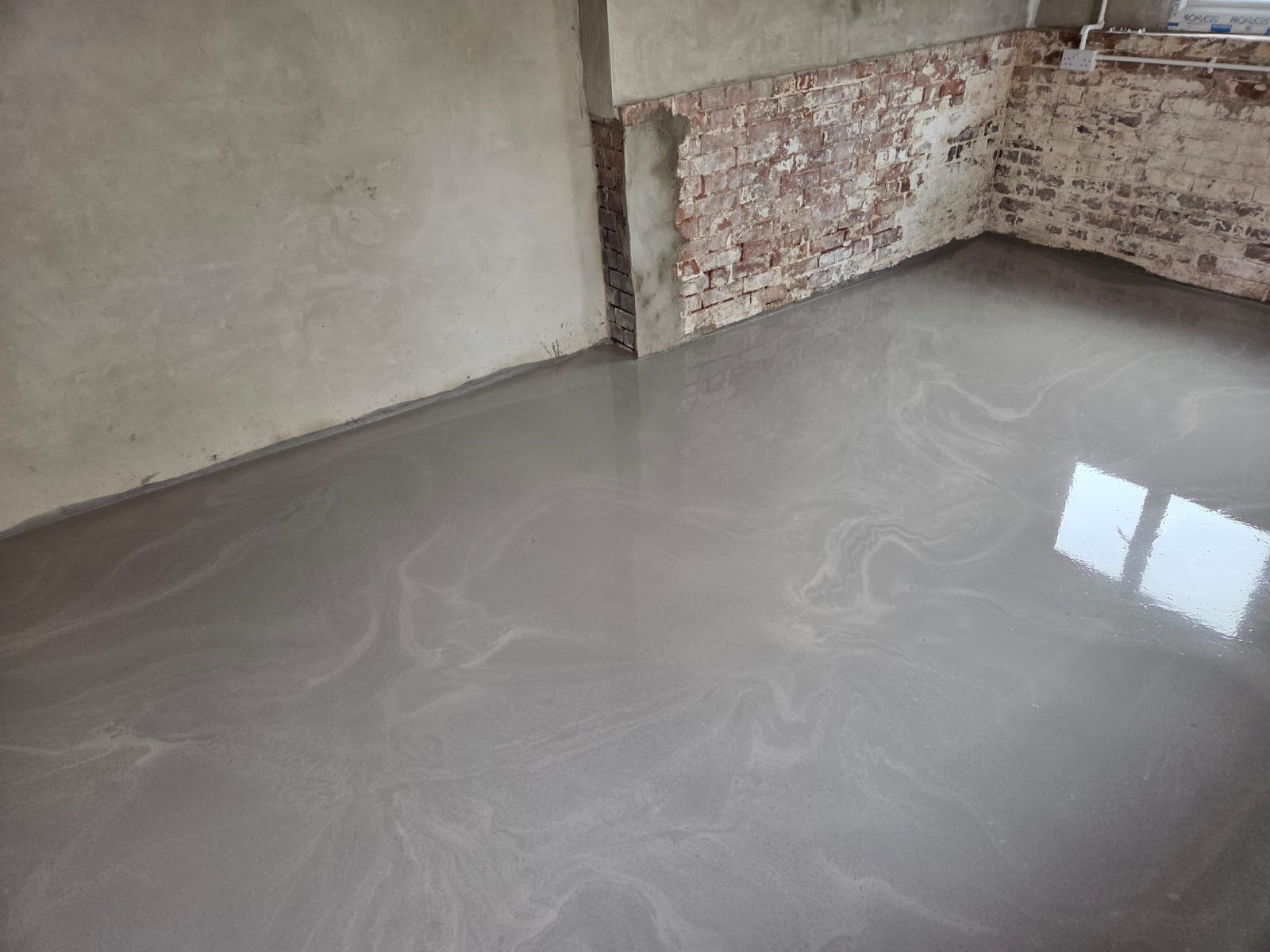
Resin injection vs cut-and-patch vs full lift
Resin injection
- Best for small, isolated pockets
- Minimal disruption — drilled ports only
- Cures within hours, floor usable same day
Cut-and-patch
- Best for medium areas up to a few square metres
- Affected screed cut out and re-poured in a bay
- Needs matching cure time before covering
When we recommend a full lift and relay instead
- Debonding covers a large percentage of the room, not an isolated patch
- The original bonding primer or substrate preparation was clearly wrong across the whole area
- There's evidence of moisture ingress underneath the screed as well as debonding
- The floor covering going on top (large-format tile, natural stone) can't tolerate any residual flex
Repair route vs typical downtime
| Repair route | Typical downtime before next trade |
|---|---|
| Resin injection | Same day to 24 hours |
| Cut-and-patch bay repair | 3–7 days, depending on bay size and dry time |
| Full lift and relay | New pour dry-time applies — 1–3 weeks typically |
Get your debonded area scoped properly
We'll survey the affected area, confirm the boundary and give you honest options rather than defaulting to the most expensive one.
Or call our landline on 01392 237700
How we decide, on site
- 1
Confirm the boundary
Tap survey plus moisture check to mark exactly where debonding starts and stops.
- 2
Check what's going on top
Large-format tile and natural stone tolerate far less residual movement than carpet or LVT.
- 3
Weigh disruption against risk
We'll always offer the least disruptive option that we're confident will actually last.
- 4
Written recommendation
You get the options in writing with cost and timescale for each before deciding.
Debonded Screed Repair — questions we get asked
Keep reading across the site
Get your debonded area scoped properly
We'll survey the affected area, confirm the boundary and give you honest options rather than defaulting to the most expensive one.