
Seasonal pouring risk
Pouring Screed in Cold Weather
Cold doesn't stop a screed pour, but it changes the plan. Temperature management before, during and after the pour is what keeps a winter job on track.
Planning a winter pour?
Name, phone, email — we'll reply the same working day with a fixed price.
Or call our landline on 01392 237700
Liquid screed can be poured in cold weather, but both cement-based and anhydrite screeds have minimum temperature thresholds for the pour itself and for the site conditions afterwards. Pour too cold, or let a fresh screed freeze before it's cured, and you risk everything from extended set times to permanent strength loss.
Most manufacturers won't warrant a pour below around 5°C ambient and rising, and won't accept any risk of frost reaching an uncured screed within the first 48–72 hours. In a Devon winter, that's a real planning constraint, not a technicality.
This page sets out what we actually do differently on a cold-weather pour — the checks beforehand, the protection during curing, and how we decide whether a site simply isn't ready for a winter pour yet.
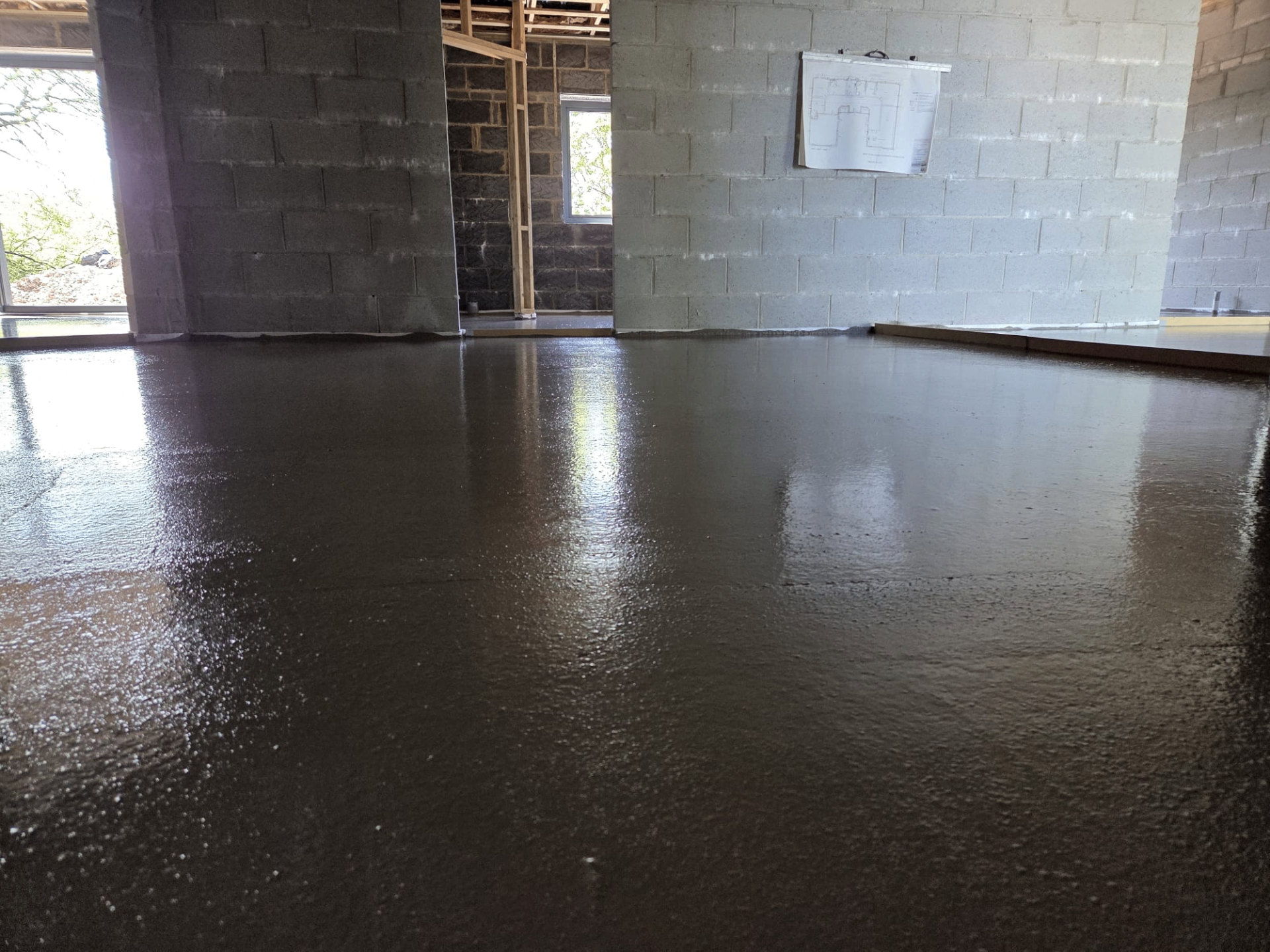
Cold weather thresholds we work to
5°C and rising
Min. ambient for pouring
5°C
Min. substrate temperature
48–72 hours
Frost-free period needed after pour
10–25°C
Ideal curing temperature range
What cold weather does to a screed pour
- Slows the hydration/curing reaction, extending time before foot traffic
- Increases risk of frost damage if the building isn't enclosed and heated
- Can cause surface crazing if the screed freezes before it has gained strength
- Extends overall drying time before floor coverings can go down
- Raises the risk of condensation on a cold slab affecting bond
Planning a winter pour?
Tell us your programme dates and building status, and we'll advise honestly on whether conditions are right, and what protection you'll need if they're borderline.
Or call our landline on 01392 237700
How we manage a winter pour
- 1
Check the building envelope
We confirm the building is weathertight and, ideally, has some background heat before agreeing a pour date.
- 2
Monitor substrate and ambient temperature
We take readings on the day and won't pour below the manufacturer's minimum threshold.
- 3
Protect the pour afterwards
Where heating isn't yet live, we advise on temporary heating or insulation to keep the screed above freezing for the critical first days.
- 4
Adjust the drying programme
We build extra time into the drying estimate to reflect lower ambient temperatures and humidity through winter.
We'd rather push a pour date back a week than pour into a cold, unheated shell and risk the screed. It's a cheaper conversation to have before the pump arrives.
— Exeter Liquid Screeders
Cold Weather Screed Pours — questions we get asked
Keep reading across the site
Planning a winter pour?
Tell us your programme dates and building status, and we'll advise honestly on whether conditions are right, and what protection you'll need if they're borderline.