Fault Diagnosis
Liquid Screed Poured Over the Wrong or Incompatible Primer
In a bonded screed application, the primer forms the critical link between the substrate and the screed above, and using a primer that is unsuitable for the screed type, substrate or application risks a weak or failed bond across some or all of the floor.
Suspect the wrong primer was used under your screed?
Let us know the substrate type, screed type and primer product used and we can help you assess the compatibility.
Or call our landline on 01392 237700
A bonded liquid screed relies on adhesion to the substrate below it to work as a thin, monolithic layer without the extra thickness a floating floor needs for stiffness. That bond depends heavily on the correct primer being used: one compatible with both the substrate material and the specific screed type being poured over it, applied at the right coverage rate and allowed to cure or tack appropriately before the pour.
Where the wrong primer has been used — for example, a primer intended for a different screed chemistry, an incorrect dilution, insufficient coverage, or a primer applied and left too long or not long enough before pouring — the bond between substrate and screed can be compromised across all or part of the floor. This often does not become obvious immediately, since a freshly poured screed can look entirely normal even where the bond beneath it is poor.
Because the primer sits at an interface that becomes inaccessible once the screed is down, confirming what was actually used, and whether it matches the screed manufacturer's requirements for that substrate, is usually the starting point when a bonding-related problem is suspected.
Incorrect Primer Used — the points that decide it
Why primer compatibility matters
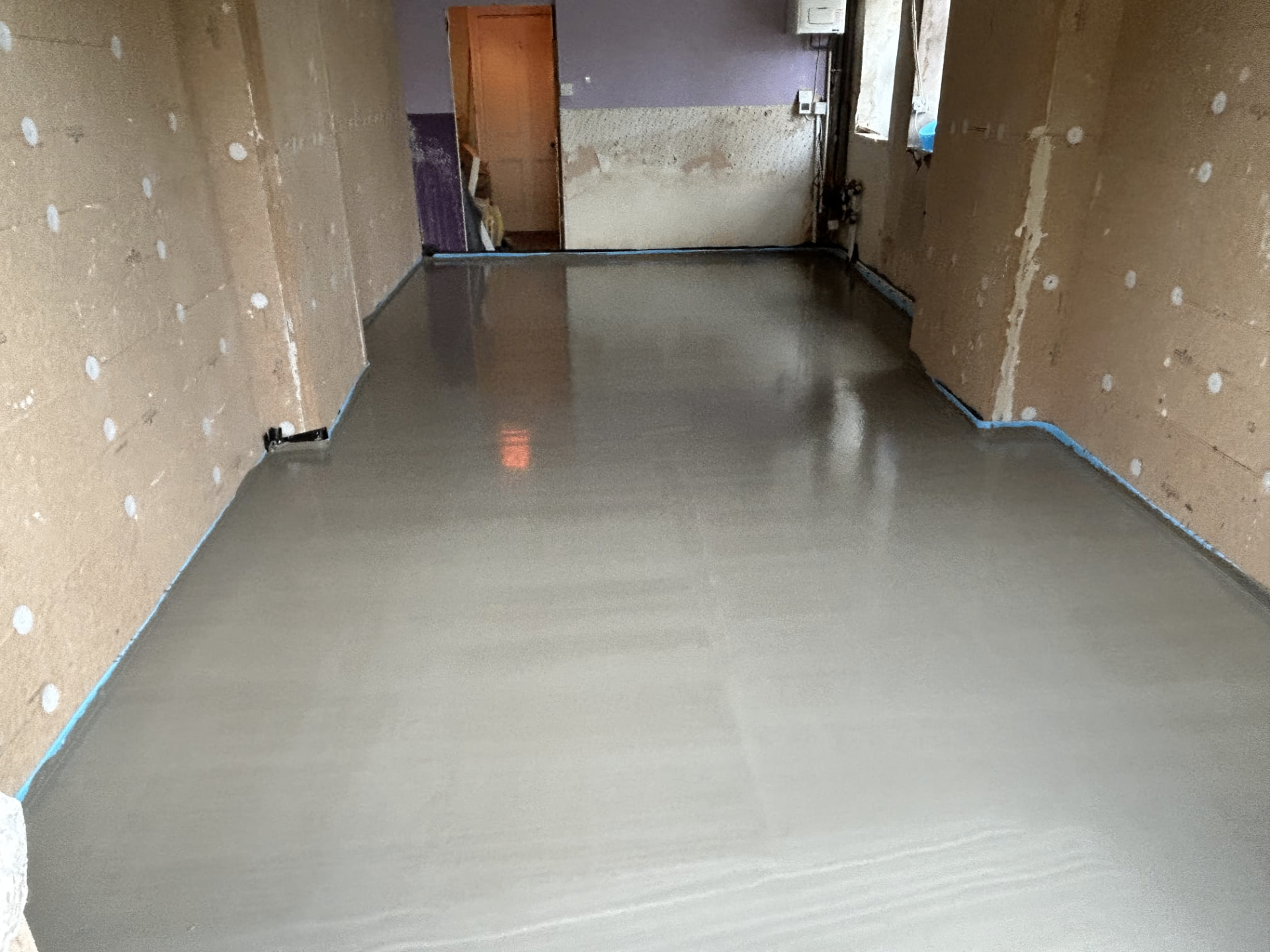
Screed manufacturers specify primers as part of a tested system, matched to particular substrate types and screed chemistries, because the primer needs to achieve the right balance of substrate sealing, absorption control, and surface tack to bond effectively with the specific screed being poured above it. Using a primer intended for a different screed type, or for a different substrate condition, can result in poor or inconsistent adhesion even if it looks visually similar once dry.
Application details matter too: too thin a coat can leave patches of substrate effectively unprimed, while pouring before the primer has reached the correct state of cure or tack, or leaving it too long so it has lost its bonding capability, both undermine the intended adhesion.
Investigating a suspected primer issue
Because the interface between substrate and screed is hidden after the pour, the first practical steps are usually to review what primer product was specified and used, and to compare that against the screed manufacturer's system requirements for the substrate type involved. Sounding the floor by tapping across its surface can help identify hollow-sounding areas that suggest debonding, which can then be targeted for closer investigation.
Where a bonding problem is confirmed, remedial options depend on the extent of the affected area, ranging from localised repair of debonded patches through to more extensive work where the failure is widespread.
Suspect the wrong primer was used under your screed?
Let us know the substrate type, screed type and primer product used and we can help you assess the compatibility.
Or call our landline on 01392 237700
In short
In a bonded screed application, the primer forms the critical link between the substrate and the screed above, and using a primer that is unsuitable for the screed type, substrate or application risks a weak or failed bond across some or all of the floor.
Incorrect Primer Used — your questions
Suspect the wrong primer was used under your screed?
Let us know the substrate type, screed type and primer product used and we can help you assess the compatibility.